
Senate advances crypto regulation bill to curb fraud, protect digital economy
The Senate on Tuesday advanced the Virtual Asset Service Providers Regulation Bill, 2026, to second reading, with lawmakers warning that the absence of a regulatory framework for cryptocurrency and digital assets is driving billions of naira in investments, jobs and government revenue into the shadows. The bill, sponsored by Deputy Senate President Jibrin Barau, seeks […]
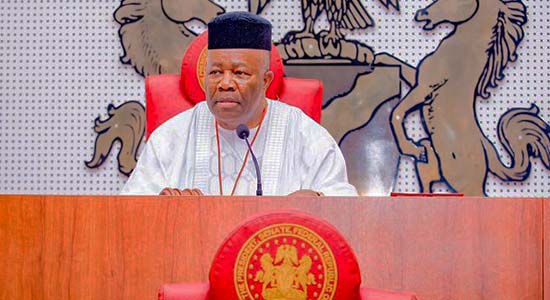
Senate President Godswill Akpabio
The Senate on Tuesday advanced the Virtual Asset Service Providers Regulation Bill, 2026, to second reading, with lawmakers warning that the absence of a regulatory framework for cryptocurrency and digital assets is driving billions of naira in investments, jobs and government revenue into the shadows.
The bill, sponsored by Deputy Senate President Jibrin Barau, seeks to establish a legal, regulatory and supervisory framework for virtual assets, digital assets and Virtual Asset Service Providers (VASPs) in Nigeria. It also proposes mandatory licensing, transparency and compliance requirements for cryptocurrency exchanges and other operators in the sector.
Leading the debate, Senator Tahir Monguno, who presented the bill on behalf of Barau, said Nigeria has lagged behind several African countries in regulating the rapidly growing digital finance sector.
Lawmakers who supported the bill argued that it would protect investors from fraud and exploitation while preserving opportunities created by the growing cryptocurrency ecosystem, particularly for young Nigerians.
They described virtual assets and cryptocurrencies as an unavoidable feature of the evolving global economy, warning that failure to regulate the sector could expose the country to financial crimes and stifle its contribution to economic growth.
According to the bill’s sponsor, Nigeria currently leads Africa in virtual asset adoption, but the lack of regulation poses significant risks.
“There are three challenges if we don’t regulate,” a senator said during the debate. “First, the market goes underground into a black economy. Second, it remains opaque and vulnerable to criminal activities. Third, it undermines the contribution of the digital economy to President Tinubu’s $1 trillion economy target.”
The proposed legislation aligns with international standards set by the Financial Action Task Force (FATF) and the International Monetary Fund (IMF), and seeks to establish clear operating rules for all virtual asset service providers.
“This bill does not seek to stifle innovation,” the sponsor stated. “Rather, it aims to create clear rules that promote order, confidence, accountability and consumer protection.”
Contributing to the debate, Senator Natasha Akpoti-Uduaghan said the lack of regulation was forcing many Nigerian technology entrepreneurs to establish their operations abroad.
She cited the example of her son, who runs an online gaming platform with about 100,000 real-time players worldwide.
“He constantly tells me that he cannot effectively operate from Nigeria because the gaming servers that provide backend support are not hosted here. Those services are now available in South Africa but not yet in Nigeria because we lack the required regulatory framework,” she said.
According to her, Nigeria is losing substantial investment opportunities in the digital space due to regulatory gaps.
“There are billions of dollars flowing into virtual services globally. Young Nigerians are creating jobs and generating income through gaming and other digital platforms. It would be a mistake not to put the necessary regulations in place,” she added.
Senator Adams Oshiomhole also threw his weight behind the bill, describing its objectives as straightforward and necessary.
“Whatever needs to be said has been said. The benefits are self-evident. We should support the bill and allow it to proceed,” he said.
Senator Adetokunbo Abiru urged lawmakers to ensure that the proposed legislation is harmonised with existing financial laws, including the Investments and Securities Act and the Bank and Other Financial Institutions Act (BOFIA).
“If we regulate crypto in isolation, we risk creating confusion. We need a coordinated framework for the entire digital finance industry,” Abiru said.
Summing up the debate, Deputy Senate President Barau said the bill would provide legal protection for investors and operators within the virtual assets ecosystem while promoting innovation and economic growth.
“You have all spoken eloquently about the need to establish a legal framework that will protect investors in the virtual assets ecosystem. This innovation can contribute positively to our economy, but the players within the sector must be protected by law to prevent exploitation and ensure accountability,” he said.
Following deliberations, the Senate referred the bill to the Senate Committee on Capital Market for further legislative scrutiny. The committee is expected to submit its report within four weeks.
If eventually passed into law, Nigeria would join countries such as Kenya, South Africa and Ghana in establishing a comprehensive regulatory framework for cryptocurrencies and virtual assets. The law would also empower regulators to license operators and tackle fraud, money laundering and terrorism financing within the sector.