
10th National Assembly and lessons of history
“Things are getting better, things are getting better, as Asiwaju Bola Tinubu is on the throne…” So sang Godswill Akpabio, the president of the Senate of the Federal Republic of Nigeria in one of his latest instances of adulation for President Bola Tinubu as the new messiah for Nigerians. In poor adaptation of the song, […]
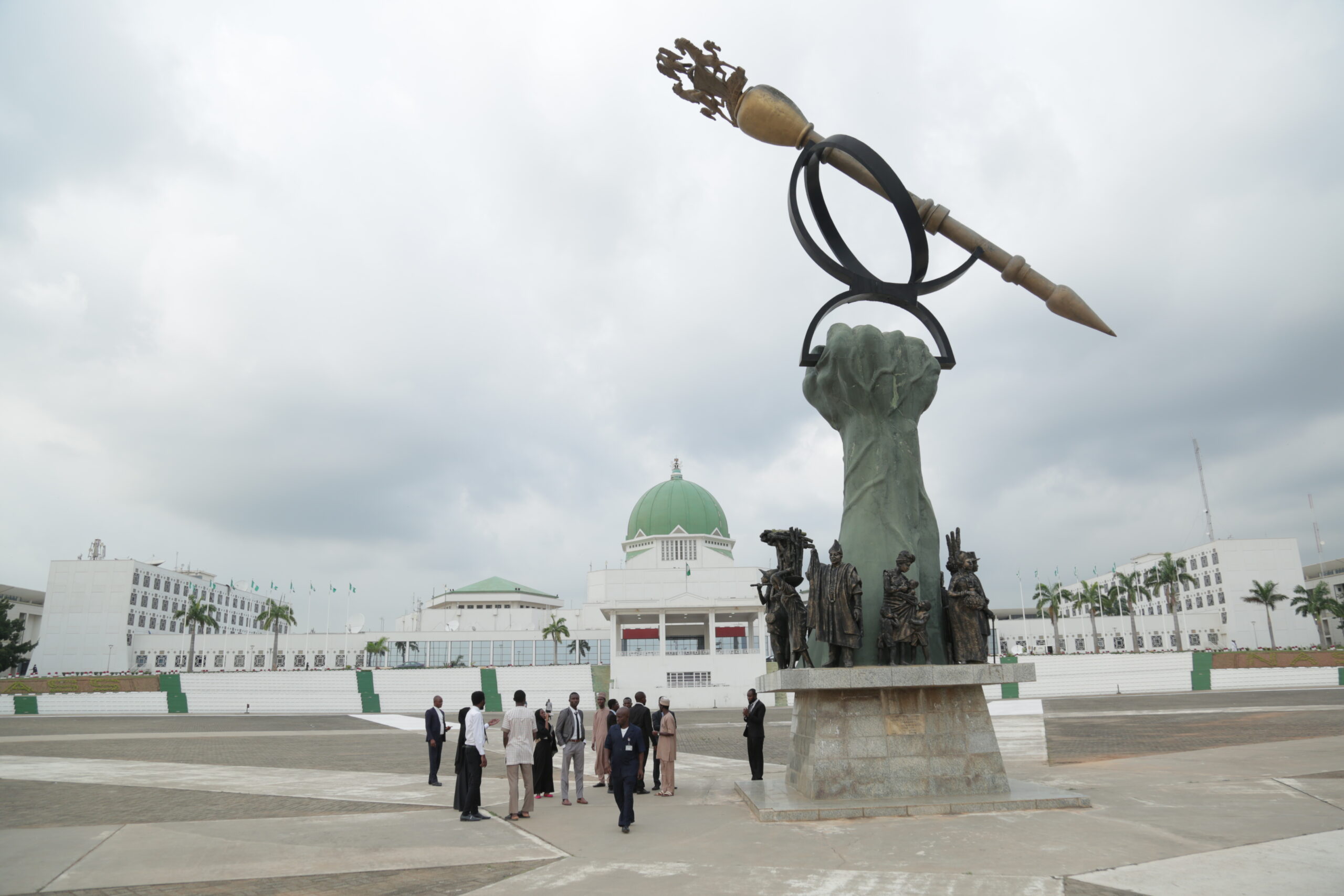
“Things are getting better, things are getting better, as Asiwaju Bola Tinubu is on the throne…” So sang Godswill Akpabio, the president of the Senate of the Federal Republic of Nigeria in one of his latest instances of adulation for President Bola Tinubu as the new messiah for Nigerians. In poor adaptation of the song, which serves as a most solemn expression of appreciation for God’s divine intervention in lifting distress off an appreciative soul for many Christians, Godswill Akpabio literally desecrated a most valued jewel of worship (a song of special praise to God) in a manner similar to throwing pearls at pigs to trample upon. Given the despicable degeneration of the Nigerian political terrain into its present level of vileputridness, he could have chosen any other song outside the terrain of religion.
Just as well, and with due apologies, while it is not the intention of this piece to disparage Mr Godswill Akpabio as an individual for hailing any political figure that catches his fancy, including heroic worshipping of same, this piece reflects on his status as the president of the Senate of the Federal Republic of Nigeria, which imposes on him the constitutional responsibility of providing leadership for the entire National Assembly, comprising its members and staff, in the course of the institution’s responsibility for over-sighting the various arms of government.
In that context, his pronouncements, which can be easily seen notionally as deriving from resolutions of the Senate, enjoy the imprimatur of gospel truth. And given the present state of affairs in the country, the least Nigerians expect from the Tenth National Assembly and its leadership is to hold the executive arm in check and not to serve as a fawning acolyte to another arm of government, given that the constitution provides stands on the principle of separation of powers.
It, therefore, should bother the National Assembly that its proclivities tally with the expectations of the ordinary Nigerian in the street who may literally not be sure of the next meal or shelter to lay his overburdened head.
Against the juxtaposition of the run so far of the Tenth National Assembly, and real life scenarios in Nigerian streets, the need exists for the institution to engage not only in deep introspection but also a recourse to history of the good, bad and ugly contributions of the legislature to the chequered political history of the country.
The foregoing contention derives from the dispensation that whereas the Nigerian legislature had always been a work in progress, most of the tendencies in Nigeria’s political terrain, which are incongruent with the constitution and out of touch with the people, derive their origin from the acts of commission and omission of the legislature, especially when popular will is displaced to the back burner by the institution.
In succinct terms, the power of the legislature rests not in any unholy dalliance with the executive, but entirely on alignment with popular will. And that is where the current dispensation needs to pay attention to. For instance, the First National Assembly, which was modelled after the British Westminster system, was inaugurated in 1960 at the country’s independence but was formalised in 1963 when the country became a republic with full autonomous status. There were no fresh parliamentary elections in 1963 as those who were inaugurated in 1960, simply continued in their roles with the coming of the republican status. Under the Westminster model, the executive and legislative arms converged under a single leadership.
Even though it laid the foundation for the country’s legislature as an independent country, historical records are replete with instances of the incontinence of such a system, which featured the exclusion of the bulk of the people in the country with its multi-ethnic character.
This tendency spawned a series of political crises, which in turn snowballed into irreconcilable differences and the eventual incursion of the military into governance with Nigeria’s first coup in 1966.
The Second National Assembly was due in 1967, but Nigeria’s first military coup of 1966 stalled it until 1979 when it was inaugurated. Its most significant contribution being the transition from the previous Westminster model, which operated on the principle of convergence of the executive and legislative arms, to the presidential system of governance, which provided for full separation of powers among the three arms of government.
A subsequent election of another National Assembly was carried out in 1983, but it also collapsed due to incongruities traceable to crises with roots in the dominance of personal interests instead of national interests.
The Third National Assembly was a victim of the convolutions in the polity, courtesy of the manipulation of the political process by the military government of General Ibrahim Babangida under the contraption of diarchy, being the subjugation of civil authority under military rule.
The result was the collapse of the dispensation with a series of turbulences, such as the exit of Babangida, the coming of Earnest Shonekan as an interim administrator of the country, his removal by General Sani Abacha, who later died and was succeeded by General Abdulsalami Abubakar, who in 1999 re-launched the country into the current democratic dispensation. Its collapse was spawned by its anti-populist essence.
The Fourth National Assembly (1999), along with the Fifth (2003), Sixth (2007), Seventh (2011) and the Eight (2015), all featured significant separation of powers between the executive and the legislature, even when the heads of the then ruling political party belonged to the same Peoples Democratic Party (PDP).
From 2015 till date since the All Progressives Congress (APC) took over governance, there has been a marked progression towards a one-party dominance of both the executive arm and the legislature. However, while the APC debunks any allegation in that direction, the lessons of history confirm that Nigerians hardly tolerate monolithic political direction.