
2 years after, Nigerians await affordable houses
Housing, all over the world, is considered a basic human need. The United Nations Habitat Agency describes shelter as a fundamental human right that should be a priority for every government. However, in Nigeria today, the rising shortage of affordable homes is gradually pushing a significant number of citizens into homelessness. Available statistics show that […]
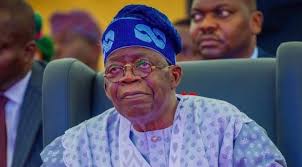
Tinubu
Housing, all over the world, is considered a basic human need. The United Nations Habitat Agency describes shelter as a fundamental human right that should be a priority for every government.
However, in Nigeria today, the rising shortage of affordable homes is gradually pushing a significant number of citizens into homelessness.
Available statistics show that Nigeria faces a housing deficit of approximately 28 million units, with experts predicting a need for 700,000 new homes annually over the next 10 years.
There is a general consensus among organisations that the lack of affordable housing has led to the proliferation of slums, especially in urban centres.
- Controversy rages over $300 helicopter landing levy for oil companies
- Life and times of Ahmadu Coomassie (I)
Findings revealed that the major challenges to home ownership remain the high cost of land acquisition and the rising cost of building materials, which have made it nearly impossible for developers to construct affordable homes.
In June 2023, the Central Bank of Nigeria unified the exchange rates, leading to a steep fall in the local currency and making it difficult for developers to import building materials.
Another major issue is the absence of a comprehensive mortgage system, which has created a huge barrier for middle- and low-income earners to purchase homes.
The Federal Mortgage Bank of Nigeria (FMBN), which is tasked with promoting mortgage access in the country, has on several occasions called for its recapitalisation—from the current N2.5 billion to N500 billion. According to its managing director, Shehu Usman Osidi, such recapitalisation would promote the growth and development of the mortgage system in Nigeria.
Similarly, the federal government’s National Housing Programme and other initiatives, although laudable, are facing slow implementation.
Government initiatives
Despite these challenges, the government has begun to roll out some policies targeted at guaranteeing affordable housing for Nigerians. These include rent-to-own schemes, non-interest mortgage loans, tax holidays for properties, the Renewed Hope Homes initiative, and urban slum upgrades.
Chairman of the Presidential Fiscal Policy and Tax Reforms Committee, Taiwo Oyedele, recently noted that the new tax laws would make housing more affordable and accessible by reducing the tax burden on the construction and real estate sectors.
According to him, value-added tax (VAT) on real estate transactions would be exempted, thereby lowering the cost of building materials and homes.
He added that the production of building materials, including non-metallic products, will be eligible for priority sector incentives to boost local production.
“The Tax Reforms Bill will improve the affordability of housing. It will provide relief for people who are paying rent because it is going to remove a lot of the tax burden,” he said.
Minister of Housing and Urban Development, Arc. Ahmed Dangiwa, also announced that the federal government has identified 26 pilot sites under its urban renewal and slum upgrade projects.
“Efforts are ongoing to revitalise ageing city centres, adopt sustainable urban layouts, and integrate smart technologies to manage rapid urban growth and establish local building material clusters,” he said at a recent event.
In February 2024, President Tinubu flagged off the Renewed Hope Housing Scheme for middle- and low-income Nigerians in Karsana, Abuja. The project is part of 20,000 housing units to be delivered in the Federal Capital Territory under a public-private partnership arrangement implemented by the Federal Ministry of Housing and Urban Development.
While performing the groundbreaking of the 3,112-unit project, tagged Renewed Hope City, President Tinubu reiterated his administration’s resolve to provide decent and affordable housing to Nigerians.
The president said his vision is to build dynamic, integrated, and self-sustaining estates equipped with amenities that will enhance the quality of life for residents.
“This is because my administration believes that every Nigerian deserves access to shelter that is affordable and adequate,” he said.
President Tinubu also noted that beyond the moral imperative of providing decent and affordable housing, his administration recognises the immense potential of the housing sector as a catalyst for inclusive economic growth.
Speaking on his government’s determination to bridge Nigeria’s housing deficit, he said he is resolved to face the challenge with the boldness and urgency it requires.
“We aim to promote Public-Private Partnership (PPP) collaborations that attract domestic, foreign, and diaspora investments. We also aim to design and implement incentive schemes, boost our capital market, and enhance governance and risk management frameworks to ensure stability, transparency, and integrity.”
Daily Trust understands that under the scheme, the Federal Ministry of Housing and Urban Development has already awarded contracts for the construction of 200 housing units in 12 states.
Also, the federal government recently announced plans to deliver 77,400 homes, with 80 per cent reserved for low-income earners who will pay gradually using one-third of their monthly income.
Additionally, 20 per cent of the units will be provided free of charge to vulnerable populations. The initiative aims to improve access to affordable housing and address Nigeria’s housing deficit.
The initiative, to be executed under the Renewed Hope Social Housing Programme, targets the construction of 100 housing units in each of the 774 local government areas across the country.
Nigeria far from achieving affordable housing – Stakeholders
However, stakeholders in the housing sector who spoke to Daily Trust noted that despite the nation’s immense potential, progress in providing affordable housing for citizens has been slow, hindered by legislative hurdles, economic constraints, and a rapidly growing urban population.
According to the experts, governments at all levels should provide incentives, create an enabling environment, and remove bottlenecks in land acquisition to ease access to bank financing.
A past president of the Nigerian Institute of Town Planners, TPL Steve Onu, criticised the planned 100 social housing units in each local government, stating that Nigeria’s approach to the housing crisis is not well thought out.
Onu told Daily Trust: “The country does not have a housing policy to address the housing needs of Nigerians. Rather, it is just giving out jobs to contractors.
“In the first place, I think the essence of the policy has not been thought out. There are critical questions that need to be answered: will people be willing to relocate to these houses from their ancestral homes? Has the federal government provided necessary infrastructure—such as electricity, water, and roads? What is the economic viability of these locations?”
He advised the federal government “to go back to the archives to check the success level of some of these housing programmes and see if they have worked.”
Similarly, Musa Ibrahim, a real estate expert, said Nigeria has grappled with a severe housing deficit estimated at over 28 million units, with an annual requirement of at least 900,000 new homes just to catch up.
He argued that Nigeria needs mass housing, not a paltry 100 homes per local government. “What is delivered annually remains a fraction of what millions of Nigerians need,” he said.
“Nigeria has had numerous housing policies, master plans, and government initiatives over the years, yet we remain stuck in the same cycle of unmet targets, abandoned projects, and unrealised dreams. This is because our governments have a history of not taking policy implementation seriously, and the new policy by this government looks like it is taking the same direction.
“With an annual population growth rate of about 2.6 per cent, the demand for housing is outpacing supply. What Nigeria needs to do now is to build at least one million new homes every year for the next 20 years to bridge the gap,” he said.
Also speaking, the immediate past president of the Real Estate Developers Association of Nigeria, Aliyu Wamakko, urged the federal government to establish manufacturing hubs for building materials, as developers can no longer bear the high cost of imports.
“About 90 per cent of building materials are imported into the country. As such, there is a need to first address the rising cost of building materials before embarking on these projects.
“If the federal government can build industrial hubs for building materials in each geopolitical zone, it will go a long way in reducing import costs and guaranteeing affordable housing,” he said.