
2018 World Sight Day: Association raises alarm over high rate of myopia
Nigerian Optometric Association (NOA) on Wednesday in Abuja raised alarm over high rate of myopia especially among children. The president of the association, Dr Ozy Okonokhua, made this known during a road walk organised by the Nigerian Optometric Association (NOA), in commemoration of the 2018 World Sight Day with the theme “Universal Eye care’’. Okonokhua […]
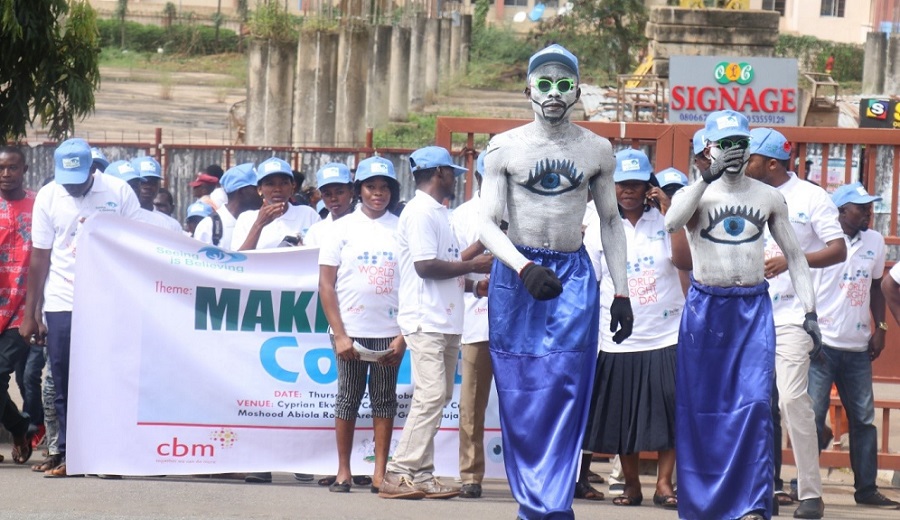
Nigerian Optometric Association (NOA) on Wednesday in Abuja raised alarm over high rate of myopia especially among children.
The president of the association, Dr Ozy Okonokhua, made this known during a road walk organised by the Nigerian Optometric Association (NOA), in commemoration of the 2018 World Sight Day with the theme “Universal Eye care’’.
Okonokhua said researches have shown that 50% of the world population by 2050 will be imparted by myopia, and children are going to be affected mostly.
Okonokhua attributed the high rate of the eye care challenge to hereditary, social lifestyle adding that the problem is on the high as a result of increase in the use of technology.
“Myopia is a condition that most children are born with.Again researches have shown that our social lifestyle is beginning to predispose us to myopia.We discovered that most of us are now locked up indoors.We now do everything within close range and children are also locked up inside and not allowed to go out for exercise. All these exposed us to all manner of myopia”
He said that the observance of World Sight Day “is an avenue for eye-care providers to enlighten the public on measures to adopt in order to reduce the prevalence of myopia’’.
Okonokhua, therefore, urged governments to collaborate with non-governmental organisations in preventing the eyecare challenge.
In her remarks, Mrs Regina Dung, Head Teacher,school of the Blind, Jabi, FCT, solicited the support of the government for improved funding to ensure academic excellence of the visually impaired pupils.
The head teacher expressed displeasure that the school was poorly funded considering expectations to be met, as well as the enormous challenges of the pupils.
On some of the challenges impeding quality academic performance in the school, Dung said they include lack of teaching aid, inadequate funding and lack of conducive learning environment.
“A book for the regular child goes for N50 while a brail paper for the visually impaired child goes for N3,500.
“The environment is not conducive for the visually impaired people to move around independently; so we solicit for government to come to our aid to improve their learning skills and well-being.
“So, if government is allocating one million naira to regular schools, it should allocate three million to visually impaired schools; this will enhance academic performance.