
2027: INEC urges N/Assembly to expedite action on electoral legal framework
Ahead of the 2027 General Elections, the Independent National Electoral Commission (INEC) has urged the National Assembly to speed up action to conclude the electoral legal framework. The INEC Chairman, Prof. Mahmood Yakubu made the appeal at a retreat with the joint committee of the National Assembly on Electoral Matters, on Monday in Lagos. He […]
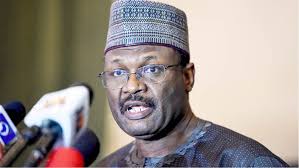
Prof. Mahmood Yakubu, Chairman, Independent National Electoral Commission (INEC)
Ahead of the 2027 General Elections, the Independent National Electoral Commission (INEC) has urged the National Assembly to speed up action to conclude the electoral legal framework.
The INEC Chairman, Prof. Mahmood Yakubu made the appeal at a retreat with the joint committee of the National Assembly on Electoral Matters, on Monday in Lagos.
He said that concluding the electoral legal framework will grant the commission enough time for implementation.
“I wish to appeal to the National Assembly to expedite action to conclude the electoral legal framework speedily so that the Commission will have enough time for implementation,” he said.
- Pensioners threaten protest over N25,000 palliatives, increment
- PenCom to recover N1.3trn owed journalists by newspaper outfits
The INEC boss, reflecting on the previous retreat, said, “Some of you here may recall that five years ago, a similar retreat was organised here in Lagos in March 2020 involving INEC and the two Committees of the National Assembly (NASS) on Electoral Matters.
“That effort, among many other initiatives, resulted in the repeal and re-enactment of the Electoral Act 2010 (as amended). The result is the current Electoral Act 2022.
“At that retreat, and for the first time in the nation’s effort to reform its electoral laws, the lawmakers, the election management body and critical stakeholders involved in the electoral process as observers and advocates for electoral reform, discussed various aspects of the nation’s electoral laws.”
Yakubu said that many of the electoral reforms discuss in the previous retreat had to be reviewed to provide legal backing to some of the innovations introduced by INEC itself, especially in the area of technology; make the nation’s electoral laws compliant with judicial pronouncements arising from pre-election and post-election litigations.
Also is removing ambiguities and provide clarity in some areas arising from the reports of national and international election observers; introduce good practices learnt from other relevant jurisdictions during study tours and election observation missions; and to implement some of the recommendations from the high-profile electoral reform committees, such as the Justice Mohammed Uwais Committee (2009), the Sheikh Ahmed Lemu Committee (2011) and the Senator Ken Nnamani Committee (2017).
Prof. Yakubu said the coming together of lawmakers, who also have field experience as practising politicians, and the commission as the election management body saddled with the constitutional responsibility of organising, undertaking and supervising all elections in Nigeria (except the local government elections) is a positive development for electoral reform in Nigeria.
He said that a retreat like the ongoing provides a focused engagement and a better insight into the challenges of election management beyond what can be achieved in a few hours of public hearing in a Committee Room at the National Assembly.