
2027: Yakubu must continue
I have been thinking about this issue for months, and whichever way I have looked at it, I have become ever more convinced that the continuation of Professor Mahmood Yakubu in post at the Independent National Electoral Commission (INEC) remains the surest bet for Nigeria to have a free and fair election in 2027. This is […]
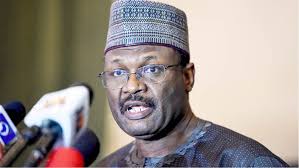
Prof. Mahmood Yakubu, Chairman, Independent National Electoral Commission (INEC)
I have been thinking about this issue for months, and whichever way I have looked at it, I have become ever more convinced that the continuation of Professor Mahmood Yakubu in post at the Independent National Electoral Commission (INEC) remains the surest bet for Nigeria to have a free and fair election in 2027. This is not a flippant proposition, and it is being made here for nothing else other than the further consolidation of Nigerian democracy, a theme that has been at the heart of this page for years.
First, by having to appoint a new—and almost certainly partisan—leadership for INEC just months to the 2027 election, President Bola Ahmed Tinubu gets to deal an unfair hand in an election in which he will be a candidate, but not the only one. Few defendants get to appoint a jury of their own choosing to hear their case, and yet, this is the opportunity the constitution has unwittingly handed Tinubu for the 2027 presidential election, which inevitably tips the scales of the contest massively in his favour. What is the guarantee that President Tinubu will appoint an impartial leadership to the INEC in the present circumstances? My answer is none.
The 2023 presidential election was so competitive that Tinubu won with only the slimmest of margins on record: just 1.8 million votes. But on current trends, the 2027 race will be even more difficult for him, given his government’s punishing economic policies, his provincial politics, and the increasing determination of the opposition coalition to mount a united front against him. Tinubu, in short, has few cards left to win through the ballot. But he gets to appoint a new INEC chair and about half a dozen commissioners just months before the election. Let no one be in doubt that he would use it to his own and only his own personal advantage, perhaps as crudely as Obasanjo did with Maurice Iwu in 2007, or worse.
Just consider Tinubu’s highjack of politics in vote-rich states like Rivers and Kano via a formal or informal state of emergency; his disrupting hand in major opposition parties by threats or inducements; his openly tribal grip on the security agencies; and as some say, his assured feel of the judiciary. All of these things point only in the direction of a candidate levelling the field for himself alone, not one to appoint an independent, competent, and legacy-minded umpire like Jonathan and Buhari did in 2010 and 2015 respectively. nor would he readily accept defeat as Jonathan, again, did in 2015.
Tinubu is not one to be much bothered by the moral precepts of free and fair elections like Yar’adua who criticised the very election that brought him to power, and sought to reform it, nor is he one to show indifference to his own electoral outcomes like Buhari. If anything, Tinubu’s politics since 2023 point in the opposite direction. This is one reason I firmly believe Nigeria is better off with the continuation of the current INEC leadership for the 2027 polls.
Moreover, given the President’s clear intention to bend everything to his reelection plans, who will he appoint to INEC that would be agreeable to Nigerians and the opposition parties? I have struggled with this question for months and cannot find a better answer than the current INEC leadership. We must note that whoever President Tinubu appoints to INEC will be easily confirmed, whatever their overt or covert partisanship, since he firmly controls this Senate and the House. This is another reason Nigerians are better off with the current leadership of INEC.
The opposition parties are certainly better off with the current INEC. As the quality and integrity of Nigerian elections have improved considerably during each election since 2011, the competitive fortunes of opposition parties and candidates have also vastly increased, where they almost never won anything before. The 2023 election is the best marker of this positive development for opposition parties so far, as demonstrated by the electoral fortunes of the PDP, LP, NNPP, SDP, ADC, and others across all the elections that year.
For example, a handful of otherwise “small” opposition parties won 70 National Assembly seats and two governorship seats between them for the very first time in their history, while seven incumbent governors lost their bids for the senate, itself another first in Nigerian elections. No party other than the PDP had ever won a presidential election in Delta State since 1999; but the Labour Party (LP) won it in 2023, even with scarcely a “structure” in the state. Since 1999, no party had ever won a presidential election in Lagos and Yobe states other than the party of the sitting governor; the LP and PDP won there respectively in 2023.
Overall, APC, PDP and LP won in 12 states and the FCT, while the NNPP won in Kano. This extent of diverse representation in electoral outcomes had never happened before in Nigerian elections, and I should think that Nigerians and the opposition parties would rather this INEC conduct the next polls than a new one. But it was achieved in 2023 for two reasons only: determination of the post-2010 INEC to conduct a free and fair election and President Buhari’s express non-interference.
This brings us to the fourth point because there is no guarantee this presidency will not interfere with INEC, beginning with the appointments of a new leadership. Democratic gains can easily be undone, but Nigeria cannot afford a reversal of gains at INEC at this point. Moreover, in our collective quest to build strong institutions, rather than strong men, we should know that institutions grow strong only when you find a natural fit between the person and the office, as we did briefly with the late Yar’adua and the presidency, and you give them time to develop. Institutions do not grow on their own; people, the right kind of people, grow them, an argument I made in the case of Prof Attahiru Jega in 2015.
Right now, we have a strongman in the presidency who cannot stand a strong National Assembly, or a strong judiciary, or strong states, or strong opposition parties, or indeed strong labour, media and civil society. How can we believe he would want a strong INEC at this time? This is yet another reason why the continuation of the current INEC, who have an established legacy to defend by all means, is our surest bet to free and fair elections in 2027, and retaining them is also possibly the most credible option for President Tinubu himself.
Finally, election management in Nigeria requires integrity, courage, and serious technical expertise, in equal measures. The current INEC leadership has demonstrated all three across 10 years of more than a dozen general and off-season elections that are among the very best we have ever had. There is no reason why they can’t do so again, even under a Tinubu presidency, and little confidence that a new leadership can match their record, let alone do better.
Any new leadership would have a steep and nearly impossible learning curve to deal with because the 2027 election process effectively kicks-off next month, with the continuous voter registration exercise. From that point onwards, the election process continues rapidly and non-stop until March 2027, with more than a dozen extremely sensitive events and activities, some of which can stymie the entire process if not handled correctly. This means there is scarcely time for any new leadership to acquire the technical competence required to lead INEC, given the sort of mistakes that inevitably come with learning on a new job. In other words, appointing a new chair and several commissioners at this point could be catastrophic for the electoral system.
Overall, the Nigerian Constitution has not yet gotten the appointment of INEC leadership right, particularly by giving the power to one player to appoint the referee who would officiate their game against other players. We must review and amend this section of the constitution, as well as any other provisions of our electoral laws to allow for a performing INEC to continue to grow stronger, rather than risk reversal and backsliding of our hard-earned electoral gains. We can do this right away, and we should, because it remains our best bet for free and fair elections in 2027 in the present circumstances. This is my considered view.