
4 controversies recorded under Gbajabiamila in 1 year
Under Speaker Femi Gbajabiamila, the House of Representatives recorded four key controversies in one year. The ninth session of the Green Chamber marked its first anniversary on Thursday. The parliament had its fair share of successes and challenges in its journey and business of lawmaking in the past one year. N/Assembly complex renovation furore Nigerians […]
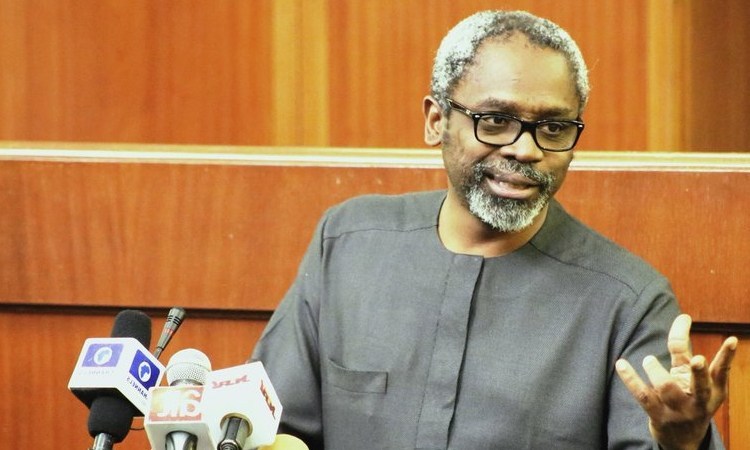
Hon. Femi Gbajabiamila, Speaker of the House of Representatives.
Under Speaker Femi Gbajabiamila, the House of Representatives recorded four key controversies in one year. The ninth session of the Green Chamber marked its first anniversary on Thursday.
The parliament had its fair share of successes and challenges in its journey and business of lawmaking in the past one year.
N/Assembly complex renovation furore
Nigerians got angry when N37bn was said to have been set aside in the 2020 budget for the renovation of the National Assembly Complex.
Amid the condemnations, Socio-Economic Rights and Accountability Project (SERAP) instituted a court action against the President of the Senate, Ahmad Lawan; the Speaker of the House of Representatives, Femi Gbajabiamila, as well as the Federal Capital Development Authority (FCDA) over the issue.
In the suit: FHC/ABJ/CS/1633/2019, filed at the Federal High Court, Abuja, SERAP asked the court to restrain them from accessing the funds for the project.
SERAP argued that spending N37bn to renovate the National Assembly Complex was misplaced as the country’s revenue declined amid rising debts thereby aggravating poor economic and social wellbeing of its citizens.
Although the amount was reportedly reduced to N9bn in the revised budget, the anger persisted as many did not believe there was any need for the renovation of the complex.
Quarantine Act replacement brouhaha
The House of Representatives courted another criticism with its proposed “Quarantine Act Replacement Bill” to be replaced with the proposed “Infectious Diseases Control Bill”.
This generated a lot of scathing attacks from within and outside the House, as NGOs and individuals attacked the bill.
It was discovered as alleged, that the bill smacked of a dictatorial and police state traits that would infringe on the human rights of Nigerians through the excessive powers given to the police and the Director General of the Nigeria Centre for Disease Control (NCDC).
Sen. Dino Melaye took the National Assembly leadership to court to put a stop to the bill.
Spokesperson of the Coalition of United Political Party (CUPP), Ikenga Ugochinyere, at a press conference, alleged that, a $10m was given to the sponsors of the bill; which was countered by the house. The house threatened to take legal action against Ugochinyere after the recommendations of an ad hoc committee it set up to investigate the allegation.
After much pressure, the “Infectious Diseases Control Bill” was subjected to public hearing.
Stakeholders, including the NCDC, Nigerian Medical Association (NMA) and the Nigeria Governors Forum (NGF) submitted memoranda with observations exposing the inadequacies of the bill.
The bill further received knocks during a two-day public hearing.
N5.04bn official vehicles purchase saga
Another controversial issue which also became an intense subject of discussion among Nigerians was the decision of the National Assembly to purchase vehicles for its members.
The vehicles for the 360 members of the House and the 109 members of the Senate was put at an estimated N5.04bn for the exotic Toyota Camry 2020.
On this matter also, SERAP and others filed a lawsuit at the Federal High Court, Abuja, asking it to stop the Speaker of the House of Representatives, Femi Gbajabiamila, and all members from buying the said vehicles.
It was, however, learnt that despite the call to halt the purchase, the House reportedly took delivery of some of the vehicles, but the House denied the reported delivery of the vehicles.
Immunity for lawmakers
A proposed bill for an act to alter Section 308 of the Constitution of the Federal Republic of Nigeria (1999) to give immunity to presiding officers of the legislature at both federal and state levels also became controversial.
The bill, sponsored by Olusegun Odebunmi, which had passed second reading, was described by critics as self-serving.
The proposed bill is to provide immunity for the four presiding officers of the National Assembly and the two presiding officers in the 36 Houses of Assembly.
The bill divided the House as the Speaker, Gbajabiamila, and some others said they would only support the bill if it would take effect from 2023 after the tenure of the current leadership ended.