
8 factors affecting tomato price in Nigeria
In the last two decades, experts and other stakeholders have identified several reasons that have contributed to the price volatility of Nigeria’s tomato business, impacting both farmers and consumers. About 65 per cent of all the tomatoes produced in West Africa come from Nigeria, which ranks second in Africa and 14th in the world. However, […]
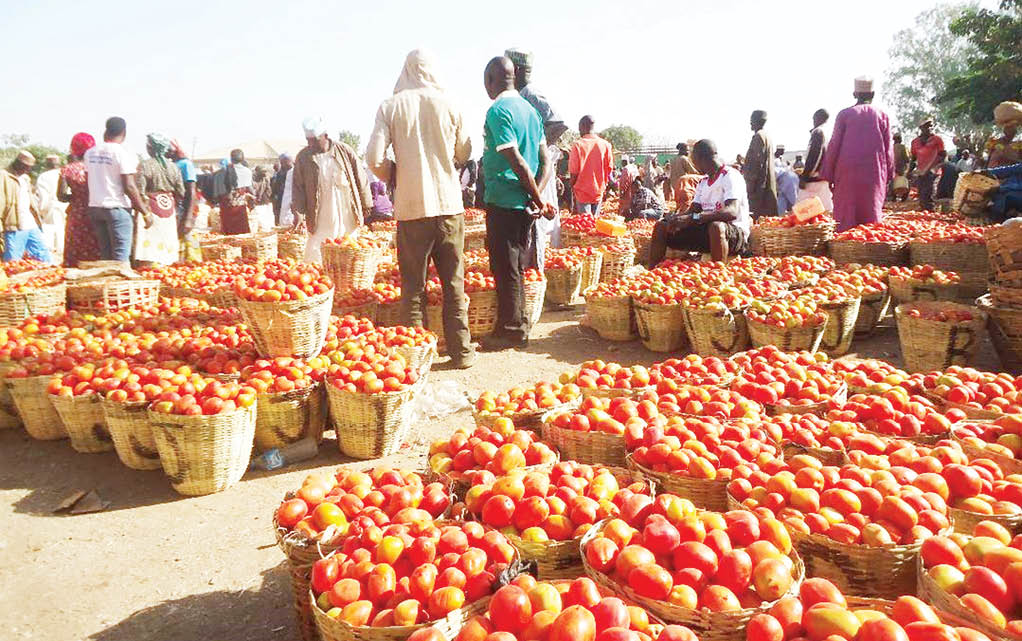
days of abundant tomatoes in jos
In the last two decades, experts and other stakeholders have identified several reasons that have contributed to the price volatility of Nigeria’s tomato business, impacting both farmers and consumers.
About 65 per cent of all the tomatoes produced in West Africa come from Nigeria, which ranks second in Africa and 14th in the world.
However, Nigeria imports about 150,000 tonnes of tomato paste concentrate annually, on average, worth about $170 million despite the potential for tomatoes, according to the former executive director/chief executive officer of the National Horticultural Research Institute (NIHORT), Dr Ephraim Nwanguma.
As a result, the country ranks third in Africa and 13th globally in terms of tomato paste and derivative imports.
- Benue attacks: Benue women’s battle for survival amidst insecurity
- Cassava production gaining attention among women in Kano
The United Nations Food and Agriculture Organisation attributed some of these challenges to post-harvest losses in the tomato value chain, which can reach up to 50 per cent, and that only 20 per cent of Nigeria’s tomato production is processed.
Tomato is a crucial ingredient in Nigerian cuisines, both at home and in restaurants, particularly as rice consumption rises.
Sahel Consulting estimated that Nigerians consumed various types of tomatoes at an average of 16 kilogrammes per person per year, about 24 per cent of all the vegetables consumed at home.
The Central Bank of Nigeria estimated that the country’s yearly production was at 1.701 million tonnes, while its annual consumption was over 2.93 million tonnes. This results in a yearly supply deficit of around 1.2 million tonnes, which is filled by importation and smuggling valued at roughly $2.5 billion annually.
But current estimates from Reportlinker, a market intelligence company, forecast that the demand for tomatoes started at 3.26 million metric tonnes in 2024 and would decrease annually to 3.01 million metric tonnes by 2028.
The company cited consumer behaviour shifts towards alternative or substitute products due to price instability and other factors.
“In 2023, the actual demand stood at 3.33 million metric tonnes, making the immediate year-on-year decline from 2023 to 2024, about 2.1 per cent. Over the last two years, the demand decreased by an average of 2.05 per cent annually, signaling a consistent downtrend. The compound annual growth rate (CAGR) from 2024 to 2028 reflects an average decline of approximately 2.1 per cent per year.
“Future trends to watch for include consumer behaviour shifts towards alternative or substitute products, government’s policies impacting agriculture, technological advancements in tomato farming that might affect production costs, and climate change factors that could influence crop yields,” it stated.
Some major issues facing the Nigerian tomato industry have been identified by the HortiNigeria programme (2021–2025) funded by the Embassy of the Kingdom of the Netherlands (EKN) implemented by IFDC, in collaboration with the East-West Seed Knowledge Transfer Foundation, Royal Tropical Institute (KIT) and Wageningen University and Research.
Other stakeholders like Mira Mehta’s Tomato Jos, FAO, PcW and many donor-funded projects have also identified similar factors.
Although the federal government, along with some international partners like USAID, GIZ, HortiNigeria and Investors Tomato, Jos, Tomatrix Nigeria and a few others, are prioritising the development of the horticulture value chain, these challenges overwhelm the growth of the industry in the country.
Seasonality of production
Seasonality has a big impact on tomato production in Nigeria, which causes price swings and irregular availability. The dry season harvest, which runs from November to March, is dominated by northern Nigeria, which causes short-term oversupply and price falls. However, because prices are typically higher during the rainy season, some farmers choose to do so, particularly those who have access to greenhouse facilities or irrigation.
Pest devastation
Outbreaks of diseases and pests significantly impact tomato production in Nigeria. Tuta absoluta, commonly referred to as the tomato leaf miner, is one such epidemics.
This pest, commonly known as “tomato ebola,” has the capacity to cause significant damage to tomatoes, which could lead to a scarcity of the product and increased costs.
Different diseases like blight and leaf spots, which are caused by different fungi, also pose a threat to tomato production.
The national president, Tomato Out-growers Association of Nigeria (TOGAN), Alhaji Abdullahi Ringim, in an earlier conversation with Daily Trust, estimated that farmers lost more than N1.7 billion in 2023.
In Kano State, a significant production centre, the chairman of TOGAN, Alhaji Sani Danladi Yadakwari, provided comparable estimations. He said that tuta absoluta attacked and damaged more than N1.5 billion worth of tomato plants this year.
Lack of cold chain facilities
In Nigeria, the tomato industry suffers from severe post-harvest losses due to a weak cold chain. Estimates indicate that more than 40 per cent of tomato production never reaches customers. The main cause of this is a lack of infrastructure for transportation and storage at a consistent temperature, which causes spoiling before products reach markets. The cold chain facilities are being invested in by donor partners in order to address this issue.
In a recent presentation in Abuja, Mohammed Salasi Idris, the programme director of HortiNigeria, said the project was working with Eupepsia Place and NIHORT to upgrade cold storage facilities in Ogun and Oyo and install local Zero Energy Cool Chambers (ZECC) in Kaduna and Kano. Because of these facilities, tomatoes have a longer shelf life, allowing farmers to hold off on selling at a loss right after harvest in favour of waiting for higher market prices.
Poor market data
Nigeria’s tomato production and distribution are severely hampered by inadequate market data, which also reduces post-harvest losses and development potential. Farmers and consumers are impacted by inefficiencies in the value chain caused by inadequate information on market prices, supply and demand.
Farmers find it challenging to plan production, and traders find it challenging to maximise distribution when there is a lack of trustworthy market information, such as price changes and supply levels.
Inadequate modern technologies
Nigerian tomato production is severely hampered by inadequate modern equipment, which results in low yields, large post-harvest losses and restricted market access. In contrast to countries with more developed agricultural practices, traditional farming methods and restricted access to newer technologies like disease-resistant seeds and effective irrigation systems lead to poorer yields.
Currency devaluation, shortage of workers
Many farm workers from neighbouring countries who were employed in tomato farms in southern Nigeria returned home after the naira depreciation since their currencies were now worth more valuable. Consequently, recruiting workers during crucial times like planting and harvesting presents challenges for many farmers. This has caused a significant disparity for farmers, increasing the cost of production.
Inconsistent tomato policies
Since 2013, the Central Bank of Nigeria has hosted multiple tomato-related summits and made some policy announcements in collaboration with federal ministries of agriculture and rural development, industry, trade and investment to reposition the sector but nothing much was achieved.
The federal government came up with the National Tomato Policy (2022-2026). This policy aims to reduce post-harvest losses, reduce the import of tomato concentrates by raising the import tariff from 5 per cent to 50 per cent and impose an extra $1500 fee per metric tonne. However, there have been obstacles to the implementation of the policy, including a lack of tomatoes, farmer agreements being broken, the Dangote tomato processing factory operating irregularly, and unsuccessful attempts to fortify the tomato value chain.
However, in 2024, HortiNigeria said it had “influenced revisions to the 2017/2021 tomato policy and helped push for increased credit risk guarantees (30% to 50%) for plastic crates, and supported the rollout of frameworks for organic agriculture.
Cost of inputs
The cost of agricultural inputs, especially fertiliser and seeds, has skyrocketed in Nigeria, affecting farmers’ ability to produce and their profit margins. High farm input costs are having a major effect on Nigeria’s agriculture industry, impeding the production of food and perhaps raising food prices.
Impact on farmers, consumers
Stakeholders reckoned that farmers who don’t have access to enough storage facilities are frequently compelled to sell their tomatoes at a loss when prices drop significantly after harvest. On the other hand, they might have little to no produce remaining to profit from growing prices during times of shortage, which are frequently brought on by weather shocks or pest outbreaks.
Because of this uncertainty, farmers are unable to obtain financing, reinvest in their fields or create strong financial plans. Many people are consequently still caught in cycles of food insecurity and low income.
This unpredictability, HortiNigeria said, deterred young people from seeking jobs in horticulture, which erodes the sector’s long-term sustainability and threatens national food supply plans.
Recommendations to addressing tomato price instability
In order to tackle the ongoing issue that the Nigerian tomato sector faces, the HortiNigeria programme has proposed the following practical solutions.
“Stakeholders should expand access to solar-powered irrigation systems and localised weather forecasting tools, especially for smallholders. This would allow consistent production during both rainy and dry seasons, reducing seasonal gluts or scarcities that drive price swings.
“Federal and state governments, with private sector partners, should prioritise the deployment of low-cost storage solutions, such as Zero Energy Cool Chambers (ZECC) and upgrade cold chain logistics nationwide. Additionally, incentives should be given to local processors to absorb tomato surpluses, stabilising demand during harvest peaks.
“Real-time price dissemination should be scaled up by FMAFS through a dedicated horticulture desk within the Ministry of Agriculture, transitioning HortiNigeria’s efforts beyond social media to include SMS-based alerts, radio broadcasts and community price boards in key markets. This enables informed selling decisions, helping to reduce panic sales and oversupply.
“Institutions like NIHORT should expand community-based demonstration plots and training on IPM practices, particularly for women and youth groups. Agro-dealer networks should be strengthened and monitored to ensure availability and affordability of bio-pesticides, pheromone traps and safe chemical alternatives.
“To mitigate labour shortages, especially in southern states, stakeholders should promote labour cooperatives and deploy subsidised mechanisation hubs offering shared access to harvesters and planters. Collaborations with platforms like Farmcas can further streamline labour availability.
“To support the implementation of the national strategy on tuta absoluta and reduce price volatility, a centralised data system managed by the Federal Ministry of Agriculture and Food Security should be established. This platform would track key indicators, such as production levels, input cost, market prices, demand and post-harvest losses. Timely insights from this system would enable early warning alerts and rapid responses to pest outbreaks or supply disruptions, helping to stabilise the tomato value chain.”