
A looming catastrophe in North East: The time to act is now
The withdrawal of critical humanitarian aid by United Nations agencies from Northeast Nigeria has pushed an already shattered region to the precipice of famine. Children waste away from malnutrition, families scavenge for survival, and a generation of displaced people faces annihilation. The Minister of Humanitarian Affairs, Dr. Yusuf Tanko Sununu recently delivered a chilling assessment, […]
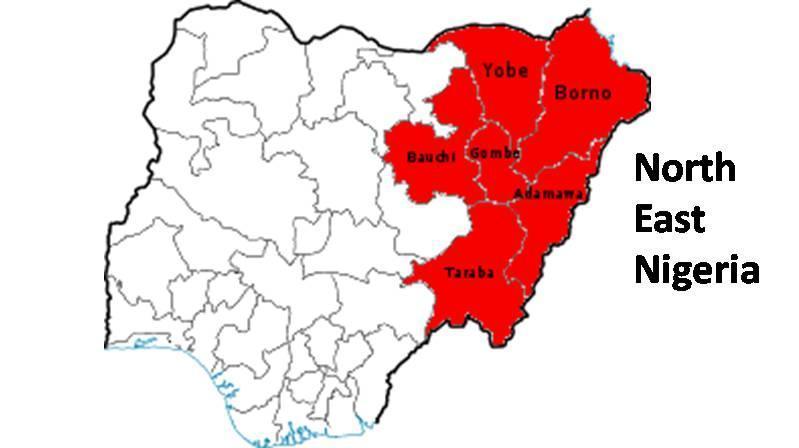
north east nigeria
The withdrawal of critical humanitarian aid by United Nations agencies from Northeast Nigeria has pushed an already shattered region to the precipice of famine. Children waste away from malnutrition, families scavenge for survival, and a generation of displaced people faces annihilation. The Minister of Humanitarian Affairs, Dr. Yusuf Tanko Sununu recently delivered a chilling assessment, warning that about 750,000 children now face severe malnutrition as a direct result of the aid withdrawal an urgent gap the federal government must bridge. Without immediate, massive intervention, we stand witness to an entirely preventable humanitarian catastrophe unfolding in real-time.
For 16 brutal years, BAY states (Borno, Adamawa, and Yobe) have endured the scorched-earth tactics of Boko Haram’s insurgency. Farmlands lie fallow and terrorised, markets are rubble, and communities survive only through the thin lifeline of humanitarian aid. The unintentional withdrawal of UN agencies, crucially the World Food Programme and UNICEF, severs that lifeline for millions. This disaster converges with Nigeria’s crushing inflation, making basic foodstuffs unattainable for displaced families. Without aid, starvation isn’t a risk; it’s an imminent certainty.
The Tinubu administration faces an existential test of leadership. Bureaucratic inertia is a death sentence here. President Tinubu must immediately appoint a high-powered Special Envoy for the North East, reporting directly to the Presidency. This envoy’s sole mandate must be mobilising resources from Nigeria’s vast private wealth, its powerful corporate sector, and international partners and cutting through red tape to ensure aid reaches the dying. This role demands urgency, authority, and the ability to coordinate across federal ministries, state governments, security agencies, and remaining NGOs.
Simultaneously, the federal government should launch an emergency funding surge. The North East Development Commission and NEMA need immediate, substantial capital infusion to scale food distribution and medical aid massively. History offers a blueprint: when USAID withdrew HIV/AIDS funding, Nigeria stepped up through NACA. That same decisive action is demanded now for the North East. Food insecurity in this region is not merely a social issue; it is a clear and present threat to national security. Budgets, and any supplementary allocations must urgently reflect this reality.
Yet, sacks of grain and packets of therapeutic food, while desperately needed now, are not salvation. The crushing dependency on handouts can only be broken by enabling the people of the North East to feed themselves again. This demands security. Nigeria’s military must intensify and refocus operations to not just hold territory, but actively reclaim and secure farmlands. Safe corridors for farmers, protected planting and harvesting seasons, and robust market security are non-negotiable prerequisites for recovery. The bitter truth is undeniable: as long as Boko Haram controls the fields, the North East remains trapped in a cycle of hunger and despair. This security push must be relentless and coupled with addressing the insurgency’s roots; poverty, joblessness, and lack of opportunity through long-term investment in infrastructure and education.
This crisis also casts a glaring spotlight on Nigeria’s privileged elite and corporate titans. Where is the urgent mobilisation from those who command vast fortunes built on this nation’s resources? The conspicuous silence of major corporations the telecommunications companies, traditional and online banks, and others amidst this suffering is deafening. Their expansive Corporate Social Responsibility budgets must be urgently redirected to fund life-saving food and medical supplies. Philanthropic giants like the Tony Elumelu Foundation and Aliko Dangote Foundation urged to move beyond their usual scope and spearhead a coordinated, massive relief operation. This is not charity; it is an overdue national duty and a moral imperative. The time for token gestures is over; concrete, large-scale action is demanded.
The unfolding tragedy in the North East is President Tinubu’s defining humanitarian challenge. His administration’s response will determine whether thousands succumb to starvation under our collective watch, or whether Nigeria rallies to save its own. The path forward, though arduous, is clear. Appoint a Special Envoy with power and purpose. Flood the NEDC and others with emergency funds and launch a federal food intervention programme immediately. Order the security forces to prioritise enabling safe farming as a strategic objective. Demand and facilitate the full mobilisation of Nigeria’s private wealth and corporate might.
The world observes Nigeria at this pivotal moment. History will record whether we acted with courage and compassion or succumbed to apathy and fatalism. Every hour of delay condemns more children to death, shatters more families, and pushes the North East closer to irreversible collapse. President Tinubu needs to lead this rescue mission with unprecedented urgency and resolve. The wealthy has to contribute not crumbs, but shiploads. Every Nigerian with means should recognise this as our shared battle for survival and humanity. We possess the resources. We lack only the collective will. The people of the North East have bled enough. We cannot, we must not, fail them now. Their lives hang by the thinnest of threads, it is our duty to strengthen it.
Adam, Ph.D wrote from Maiduguri