
A New Dawn for Nigeria’s Railways: Why Lagos’ permanent rail licence signals the future of national rail transportation
Nigeria’s railway industry has entered a defining phase in its long journey towards modernization. With the presentation of a Permanent Railway Operating Licence by the Nigerian Railway Corporation (NRC) to the Lagos State Government for the operation of the Lagos Rail Mass Transit (LRMT) Red Line, the country has taken one of its boldest steps […]
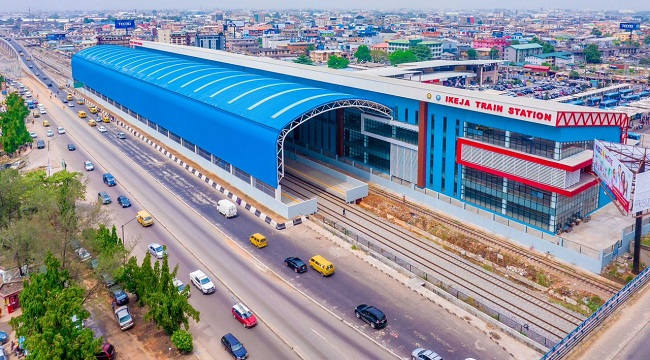
red line
Nigeria’s railway industry has entered a defining phase in its long journey towards modernization. With the presentation of a Permanent Railway Operating Licence by the Nigerian Railway Corporation (NRC) to the Lagos State Government for the operation of the Lagos Rail Mass Transit (LRMT) Red Line, the country has taken one of its boldest steps yet in transforming rail transportation into a truly collaborative national enterprise.
This development is far more significant than the issuance of a regulatory document. It represents the practical implementation of the Federal Government’s railway reform agenda and demonstrates that Nigeria’s rail sector is gradually evolving from a centrally operated system into one that encourages responsible participation by qualified public and private operators under the supervision of the Nigerian Railway Corporation.
For more than a century, the NRC stood as Nigeria’s sole railway operator. While the Corporation successfully connected major cities and communities across the country, increasing urbanization, rapid population growth, expanding commercial activities and rising transportation demands have made it clear that a single operator cannot adequately meet the nation’s growing mobility needs.
The decision to license Lagos State therefore marks a strategic shift. Rather than relinquishing its responsibility, the NRC is assuming a more modern role as the custodian of railway infrastructure, operational standards, technical regulation and safety compliance, while allowing competent operators to provide services that meet internationally accepted standards.
This is exactly how many successful railway systems around the world operate today.
The significance of Lagos becoming the first state in Nigeria licensed to operate both passenger and freight rail services cannot be overstated. It establishes a practical framework through which other states can confidently develop rail infrastructure while working within nationally regulated standards.
What makes this milestone even more remarkable is that it was not achieved through political declaration alone. According to the Managing Director of the NRC, Dr. Kayode Opeifa, the approval followed extensive technical inspections, operational assessments and safety evaluations conducted by the Corporation. Every aspect of the Lagos Red Line was carefully examined to ensure compliance with the provisions of the existing Track Sharing Agreement before the permanent licence was granted.
This demonstrates that railway operations in Nigeria are increasingly being driven by professionalism, technical competence and safety rather than mere administrative approvals.
The journey to this achievement has been a long one.
The foundation was laid in 2012 when former President Goodluck Jonathan approved the transfer of two federal rail corridors to the Lagos State Government for the development of the LRMT Red Line. More than a decade later, that vision has matured into one of Africa’s most ambitious urban rail projects, culminating in commercial passenger operations following its inauguration by President Bola Ahmed Tinubu.
Throughout the process, the Nigerian Railway Corporation remained an active technical partner by providing engineering guidance, institutional support, personnel training and operational expertise. The permanent operating licence therefore represents not just the success of Lagos State, but also the successful collaboration between the Federal Government, the NRC and the Lagos State Government.
Perhaps one of the greatest benefits of this development lies in what it means for commuters.
Lagos is one of Africa’s fastest-growing cities, with millions of residents battling daily traffic congestion, long commuting hours and rising transportation costs. The planned expansion of Red Line services from nine daily trips to twenty-four, alongside the procurement of three additional train sets, promises a significant improvement in passenger movement.
When fully operational, the Red Line is expected to move more than 200,000 passengers every day. Such capacity will ease pressure on roads, reduce travel time, lower transport costs and contribute to environmental sustainability through reduced vehicle emissions.
Beyond passenger movement, the inclusion of freight operations opens new opportunities for logistics, manufacturing and commerce. Efficient freight rail services reduce dependence on heavy-duty trucks, preserve road infrastructure, lower haulage costs and improve the overall competitiveness of Nigerian businesses.
The broader economic implications are equally compelling.
Railway development stimulates industrial growth by creating demand for engineering services, construction, maintenance, manufacturing, information technology and logistics. It also generates thousands of direct and indirect jobs while encouraging investments around railway corridors.
More importantly, improved rail connectivity supports national integration by making the movement of people and goods faster, safer and more affordable.
For the Nigerian Railway Corporation, this achievement reinforces its evolving position as a national railway regulator, technical authority and infrastructure manager. The Corporation’s role is no longer limited to operating trains; it is now setting standards, ensuring compliance, certifying operators and safeguarding the integrity of Nigeria’s railway network.
This institutional transformation aligns Nigeria with global railway governance models where infrastructure management and service delivery work together under clearly defined regulatory frameworks.
The successful licensing of Lagos State should also serve as an important lesson for other state governments.
As urban populations continue to expand across cities such as Abuja, Kano, Port Harcourt, Ibadan, Enugu and Kaduna, state governments must begin to view railway investment as a long-term economic necessity rather than a luxury. Urban rail systems improve productivity, attract investment, enhance property development and significantly improve citizens’ quality of life.
The NRC has demonstrated through this process that the pathway exists for states willing to invest responsibly and comply with national railway standards.
The issuance of the Permanent Railway Operating Licence is therefore not merely a celebration of Lagos State’s success. It is a declaration that Nigeria’s railway future has arrived.
It proves that collaboration between the Federal Government, the Nigerian Railway Corporation and state governments can produce modern rail systems that meet international standards while responding to local transportation needs.
As Nigeria continues its quest for economic diversification, improved infrastructure and sustainable transportation, the Lagos model offers a blueprint worthy of emulation.
The rail revolution has begun, and with sound regulation, strategic investment and sustained collaboration, it has the potential to transform mobility, strengthen the national economy and redefine transportation for generations to come.