
A year to deliver
President Bola Ahmed Tinubu’s New Year’s Day address struck an optimistic and confident tone as it projected 2026 as the beginning of a “more robust phase of economic growth.” It was a speech anchored on statistics, assurances and forward-looking commitments. For a country emerging from years of economic strain and social anxiety, the message was […]
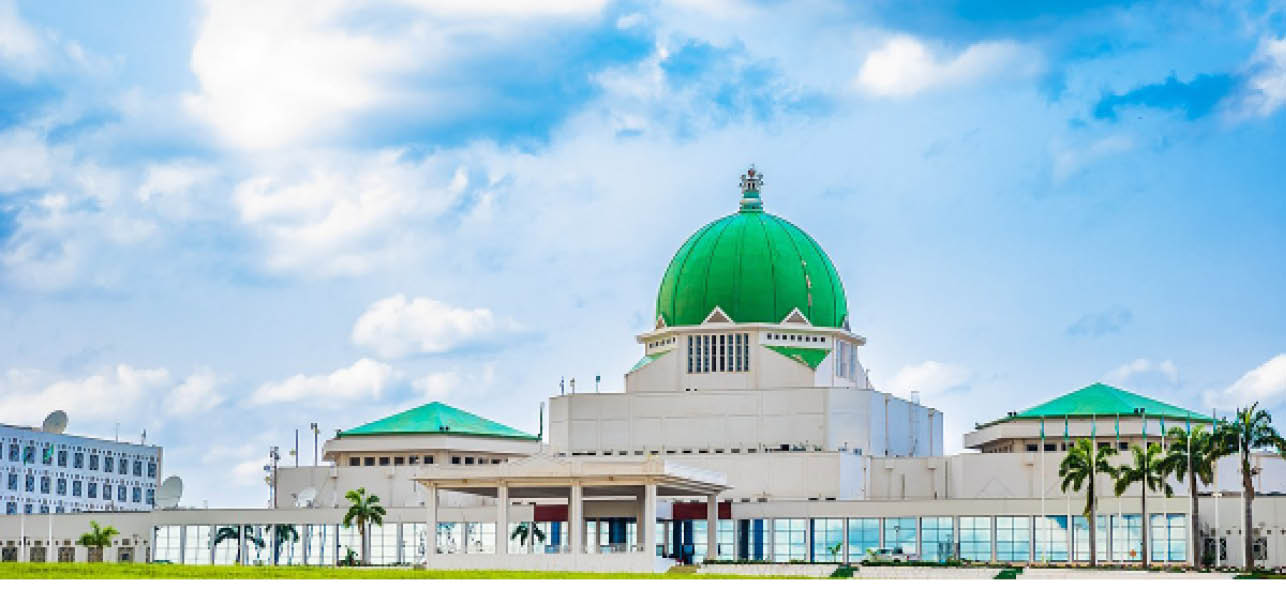
National Assembly
President Bola Ahmed Tinubu’s New Year’s Day address struck an optimistic and confident tone as it projected 2026 as the beginning of a “more robust phase of economic growth.” It was a speech anchored on statistics, assurances and forward-looking commitments.
For a country emerging from years of economic strain and social anxiety, the message was reassuring. Yet, as we argued on January 1, hope in Nigeria remains fragile, and optimism, though important, must now be matched with reality.
The president’s speech acknowledged that the reforms undertaken in 2024 and 2025 were painful but necessary. He cited declining inflation, exchange rate stability, growing foreign reserves and improved investor confidence as evidence that the economy is stabilising. These claims will resonate with Nigerians eager for signs that their sacrifices are yielding results. However, as we have consistently maintained, Nigerians will not judge governance by macroeconomic indicators alone. By the end of 2026, the administration will be held to its promises not by charts and projections, but by what citizens can feel in their daily lives.
We at Daily Trust believe, as we have reiterated several times, that central to this is security. The president rightly noted, in agreement with our position that economic progress cannot occur in the absence of peace and stability. His reference to intensified military operations and collaboration with international partners reflects the gravity of the challenge. Yet the reality remains stark: unless insecurity is decisively tackled, inflation will not fall to single-digit levels that can be meaningfully felt by ordinary Nigerians, particularly in rural communities. Farmers cannot produce optimally when fields are unsafe, traders cannot move goods freely, and local economies cannot thrive under the constant threat of violence. Without security, economic gains will remain uneven and fragile.
On inflation, the government deserves acknowledgement for recording a year-on-year decline. But Nigerians are still grappling with high food prices and weak purchasing power. Inflation figures that remain around 14 per cent may satisfy policy targets, but they do not translate into relief for households struggling to meet basic needs. A sharper focus on restoring confidence in local production, food supply chains and rural economies is essential if inflation is to fall to levels that genuinely improve living standards.
Closely linked to this is the value of the naira. While the administration points to improved stability and stronger reserves, the naira’s current value still does not augur well for the broader economy. Businesses remain under pressure, import-dependent sectors are constrained, and consumers continue to bear the cost of a weak currency. Stabilisation is important, but it should not be mistaken for success. Nigeria can, and should, aim for a much stronger and more competitive naira that supports growth, investment and affordability.
The president’s declaration that his government will “continue to invest in modernising Nigeria’s infrastructure – roads, power, ports, railways, airports, pipelines, healthcare, education and agriculture to strengthen food security and improve quality of life,” and that “all ongoing projects will continue without interruption,” is a welcome commitment.
However, as we have noted in previous comments, Nigerians are entitled to ask hard questions about priorities. The absence of an effective mass transit system continues to punish urban workers, while most highways remain dilapidated. The railway, once touted as a transformative alternative, is operating abysmally and, in many respects, remains in shambles. Electricity supply, perhaps the most critical enabler of productivity, remains unreliable despite repeated assurances. These are not peripheral issues; they directly shape the quality of life and the cost of doing business. Infrastructure must not only expand; it must work, and it must respond to the most pressing needs of the people.
The president’s emphasis on tax harmonisation and fiscal discipline also deserves scrutiny. As we noted earlier this year, tax reform will be one of the most contentious governance issues of 2026. Nigerians are wary of paying more taxes when public services remain inadequate. For reforms to succeed, trust must be rebuilt through transparency, accountability and visible improvements in service delivery.
Finally, the political context of 2026 cannot be ignored. As we warned on January 1, this is a politically sensitive year, with manoeuvring for the 2027 general election set to intensify. The president’s call for unity and responsibility is timely. However, good intentions alone will not suffice. He and his party, the ruling All Progressives Congress (APC), must lead by example, while the opposition must refrain from heating up an already tense society.
Above all, governance must not be relegated to the background as political calculations take centre stage. Nigerians expect those entrusted with power to remain focused on governing, regardless of the political season.
It is our conclusion that President Tinubu’s New Year’s address was promising and reassuring. But 2026 is not a year for lofty declarations alone. It is a year for consolidation, focus and discipline. Nigerians have heard the promises. They will be watching closely to see whether, by year’s end, those promises translate into safer communities, lower prices, stronger purchasing power and infrastructure that works. These promises must be met.