
Abolish state electoral commissions – Prof Sulaiman, DG NILDS
A former minister of National Planning and director-general of the National Institute for Legislative and Democratic Studies (NILDS), Professor Abubakar Sulaiman, in this interview, explained why the legislature is the most misunderstood arm of government. He also called for the abolition of state electoral commissions. What is your assessment of the country’s democracy, 21 years […]
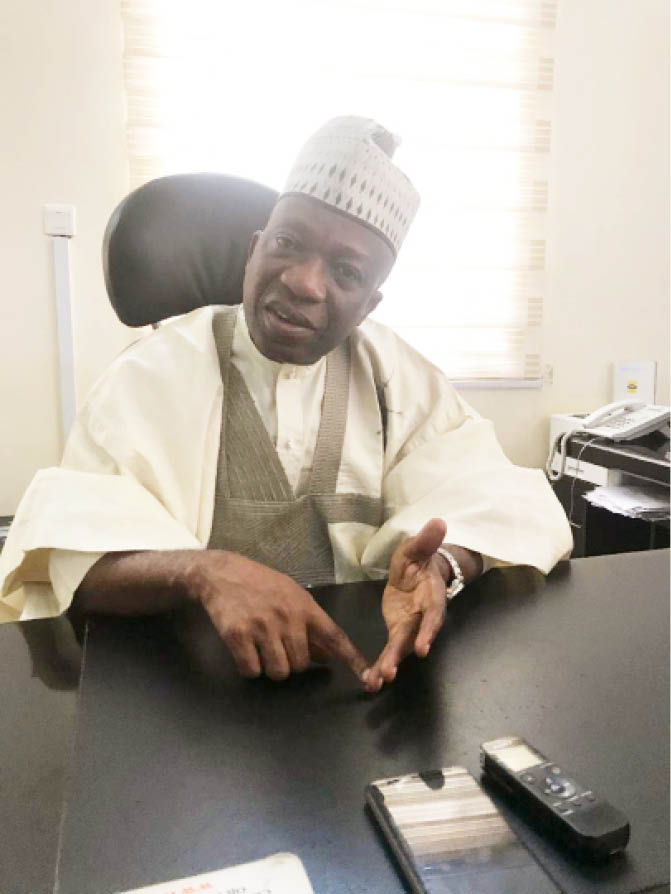
A former minister of National Planning and director-general of the National Institute for Legislative and Democratic Studies (NILDS), Professor Abubakar Sulaiman
A former minister of National Planning and director-general of the National Institute for Legislative and Democratic Studies (NILDS), Professor Abubakar Sulaiman, in this interview, explained why the legislature is the most misunderstood arm of government. He also called for the abolition of state electoral commissions.
What is your assessment of the country’s democracy, 21 years into the Fourth Republic?
In the last 21 years, democracy has been full of ups and downs. Being a system of government, it has a dynamic process built on a lot of deficiencies, challenges, obstacles, banes and losses. It takes the nexus between the ruled and the rulers, leaders and followers.
If these are the actual indicators or indices of democracy, we can say that in Nigeria, it has been at play. Election is a major attribute of democracy. In terms of challenges, we have been having a series of elections that are not yet perfect, especially considering whether they were free, fair or transparent.
I want to say that in the last 21 years, in spite of the challenges we are facing, democracy has come to stay in Nigeria. Most importantly, for the first time in our 60 years as a sovereign country, we have operated without military intervention despite various civil and religious crises.
Even if we have not enjoyed anything at all in terms of accomplishments, the fact that the military has stayed out of power in the last 21 years shows that we have achieved a lot in Nigeria as a democratic country.
Despite the fact that we have been practising democracy in the last two decades, many Nigerians are yet to have a thorough understanding of our parliaments. Why?
The answer to this question is very simple. The lifespan of the parliament in Nigeria is very short, unlike the judiciary and the executive that have 60 years uninterrupted operations and existence. Don’t forget that anytime the military stages a coup, the first casualty is the National Assembly.
This short lifespan due to military interregnum in politics has affected the operation, existence and workings of the parliament. That is why Nigerians are not in tune with parliamentary operations; and as such, that arm of government becomes the most misunderstood and undeveloped. It is also the most attacked.
In terms of skills, experience and knowledge, the parliament is yet to be at par with the other two arms of government because it doesn’t have free flow of operations since the creation of this country, either in 1914 or 1960.
To the average Nigerian, parliamentary operations still look very strange. A child that was born in the 1960s knows that the parliament, executive and judiciary exist or existed. But for a child that was born during the military regime, the only thing he sees is the executive and the judiciary. When you talk of the parliament, he will ask: Which one is that?
In terms of how many people know how the parliament works? They are very few in number. And that is a major problem. The parliament has a relatively strange perception as a strange organ of government in the country.
When you look at the number of parliamentarians at the local government, state and federal levels, compared to the executive and the judiciary, they are not many in number, even when the parliament or legislature is the real epitome of democracy.
Also, the only impression about stealing and perceived corruption is equally about parliamentarians, whereas, if you look at the resources allocated to them, compared to the executive, with due respect to the executive, it is very meagre. In fact, it is very inconsequential.
At the national level, for instance, today we are budgeting over N13trillion, and out of it, what goes to the National Assembly is not up to N200billion.
Agencies control billions and nobody asks questions. In the National Assembly we have 109 senators, 360 House of Representatives members and almost 5,000 supporting members of staff. Also, there are about five agencies under the National Assembly.
These are the people that share N125bn. So, where lies the justification behind the stigmatisation and branding the parliamentarians as a corrupt set of people.
Don’t you think 21 years are enough for parliamentarians to correct and put this into proper perspective?
It is one of the problems we are facing. We have the executive controlling the media. Till this moment, the parliament does not have its own media to speak for it. All the NTA stations belong to the executive; the radio stations are also controlled by the executive.
It is what goes into the public glare that people access. One of the major problems of the Nigerian parliament, which this 9th Assembly is trying to correct, is for the parliament to disabuse this perception through the instrumentality of the media. That is why the 9th Assembly, through this institute, is coming out with its own media, by way of floating a radio station, and probably, very soon, a television station. This is the starting point.
How do you see the relationship between the 9th Assembly and the executive? What is your perception of the rubber-stamp allegation against its leadership?
In the last one year, it has been very cordial, friction-free and robust. The two arms of government seem to understand their limits. They seem to understand the idea of jurisdiction. They know where their boundaries are and where to stop. On the issue of rubber-stamp perception, it is normal for Nigerians to have that kind of opinion or impression. But I keep on saying there is separation of powers and there should be checks and balances. However, separation of powers does not mean or amount to clear demarcation or distancing. It doesn’t mean there must be a gulf between the two. There is what we call delegation of legislation or delegated responsibilities.
The chairman of the Independent National Electoral Commission (INEC), Professor Yakubu Mahmood, has just been re-appointed. He is awaiting Senate confirmation. What areas do you think should be amended in the Electoral Act ahead of the 2023 general elections?
We have a lot of issues with our electoral laws. And to me, the failure of any electoral or INEC boss will not be determined by his personality or the commission, but largely by the laws or processes.
In other words, it is a symbiotic relationship between the instrument and authenticity of the system. The success of the electoral process in this country will begin with the law that guides the process and the people that recommend the law. That is to say, as long as our electioneering or electoral process is the one that gives more credence to manual operation as against electronic operation, we shall be finding a lot of things faulty in our electioneering exercise.
Look at what happened in the Edo governorship election. We tried to do some electronic transmission, and that made it. You stay in villages, hamlets with your gadgets and get results here and there. Nobody could fault this; nobody raised an eyebrow, so we have to go electronic.
Yes, we have permanent voters’ cards and the card readers, but the card reader is not backed by law. So when it comes to the issue of litigation, a presiding judge may say, “Yes, you used a card reader but there is no law that backed it up.”
I think the National Assembly must come up with a lot of amendments for our electoral process in a way that gives backing to the use of electronic instruments in our electioneering exercise – be it card readers or electronic transmission of results. Where they don’t use it, the result of that polling unit is a nullity. To me, that one is key, going forward.
If other countries in Africa could do it, I don’t see any reason we cannot do it here.
Thirdly, and most fundamentally, we fail to change our policy of hunting the personnel or body that manned the election. Our focus most times is on the centre; we rarely go to what obtains at the local level. A situation where states have their own electoral commissions should be abolished.
If we have the National Universities Commission (NUC), which regulates the university system, in terms of policies, the West African Examinations Council (WAEC) regulating exams in colleges in Nigeria, and the Joint Admissions and Matriculation Board (JAMB) conducting exams into tertiary institutions, I think the INEC should be able to conduct elections for all 36 states and the Federal Capital Territory (FCT).
In Nigeria, no State Electoral Commission (SEC) has been very neutral. No governor has ever lost any local government election.