
Abuja-Kaduna Expressway: A highway of broken promises and policy gaps
It was Thomas Dye the political scientist that said public policy is simply what government chooses to do, or not to do. Nowhere is this more evident than in the state of our roads. Public policy does not just decide which roads get built, it shapes how they are maintained, funded, and protected. When those […]
abuja kaduna
It was Thomas Dye the political scientist that said public policy is simply what government chooses to do, or not to do. Nowhere is this more evident than in the state of our roads. Public policy does not just decide which roads get built, it shapes how they are maintained, funded, and protected. When those policies fail or lose consistency, the cracks show, literally. Broken highways and neglected infrastructure become daily reminders of how policy decisions, or the lack of them, directly affect our safety and mobility.
The Abuja-Kaduna Expressway, a vital economic bridge linking the North to the South was once envisioned as a symbol of progress and national integration. Today, however, it stands as a striking example of public policy failure, plagued by construction delays, insecurity, inflated costs, and growing public frustration. What was meant to connect regions and boost commerce has instead become a reminder of how policy inconsistency can stall both development and trust.
The Abuja-Kaduna Highway forms part of the A2 route linking Abuja, Kaduna, Zaria, and Kano. The road was designed to improve economic growth, trade, investment, and regional integration. Yet beyond its role as a transport corridor, the highway has become the heartbeat of activity in Kaduna. Along its route lie strategic hubs like Panteka Market, one of Nigeria’s largest centers for vehicle spare parts and metal fabrication, as well as major industries such as Peugeot Automobile Nigeria (PAN) in Kakuri, the Kaduna Refining and Petrochemical Company (KRPC), and Nigerian Breweries.
Over time, the expressway has also spurred urban expansion. Areas like Kakau, Gonin Gora, and Kudende have grown into thriving residential and commercial communities, while Ungwan Romi, Kakuri, and Tudun wada have continue to stretch towards the corridor. What was once a simple highway now doubles as an economic artery and a growing urban spine, linking livelihoods, industries, and entire communities across the North.
Despite lofty promises, reality paints a different picture. Years of neglect, contract mismanagement, and recurring security crises have turned the Abuja-Kaduna Highway from a symbol of progress into a source of daily anxiety. Once seen as a smooth link between the South, the nation’s capital and the North, it now stands as a cautionary tale of how weak policy execution and poor oversight can turn a vital national asset into a commuter’s nightmare.
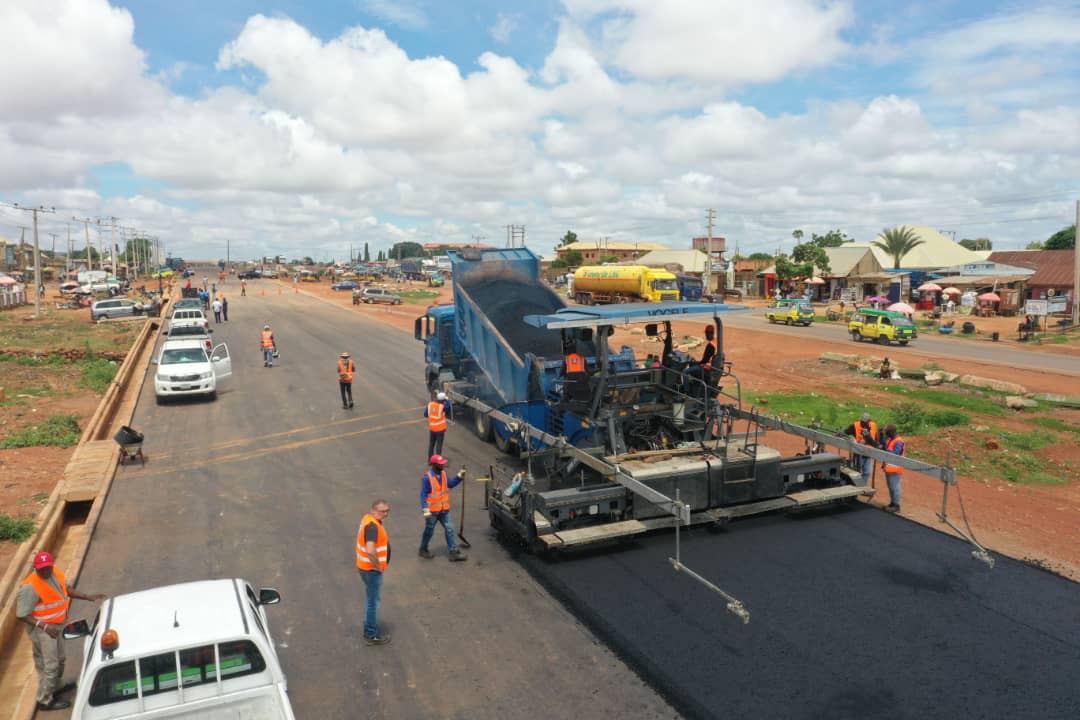
In July 2025, the government ordered emergency repairs on failed sections of the Abuja-Kaduna Highway near Kaduna. However, the deeper problem runs far beyond patchwork fixes. Reports show that the project’s cost has skyrocketed, from N155 billion in 2017 to an astonishing N797 billion by 2023, while completion remains at only about 60%.
The setbacks of the Abuja–Kaduna Highway project run deeper than potholes and delays, it is tangled in a web of systemic issues. Weak accountability and poor contract enforcement have allowed inefficiency to thrive, while a culture of neglect ensures that even ongoing projects quickly fall into disrepair.
Fixing the Abuja–Kaduna Highway requires more than promises. it demands discipline, transparency, and consistent follow-through. There is a need to enforce strict contract management and performance audits. Timelines should be strictly adhered to, and penalties stipulated in the event of default. The need for independent monitoring and regular performance audits, like those used on the Lagos–Ibadan Expressway, can not be overemphasised.
Dr. Abdussalam wrote from Kaduna metropolis, Kaduna State