
Abuja resettlement challenges and costs (II)
The original proposal was for all the indigenous population to be resettled outside the FCT. But even before the completion of the Abuja Master Plan production, the concept of resettlement within the FCT was introduced and factored within the plan, in which resettlement sites within the FCT were recommended. Subsequently, another concept of integration cropped […]
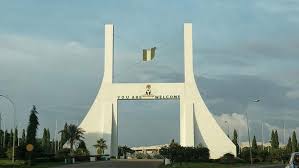
FCT
The original proposal was for all the indigenous population to be resettled outside the FCT. But even before the completion of the Abuja Master Plan production, the concept of resettlement within the FCT was introduced and factored within the plan, in which resettlement sites within the FCT were recommended. Subsequently, another concept of integration cropped up. That is, allowing the indigenes to remain at their locations and their houses to be integrated with the plans for the new developments.
On the part of the original inhabitants, integration would allow them to maintain their ancestral lands, barring many obvious implications. On the part of the government, integration would save it the cost of planning and developing new resettlement sites. Meanwhile, in order to ensure the comfort of the residents, infrastructure must be provided. The infrastructure must also harmonise with the standard of Abuja, not only as a modern city but also as the capital city and image of Nigeria.
However, the major challenge to integration is the difficulty, or impossibility, of provision of modern infrastructure amidst the planless local environment, while allowing it to remain undisturbed. If infrastructure must be provided, there must be demolition of many houses that would stand on the way. In that case, there must be relocation of those to be affected.
We were then back to square A. Thus, without planning and demolition for proper provision of infrastructure, all integrated sites would be akin to a blight amidst a modern city. This is exactly the prevailing situation in Garki in Phase I, Mabushi, Utako, Gudu and other villages of the original inhabitants in Phase II and beyond.
Other challenges of the continuous habitation of the local indigenes are the loss of their major original source of livelihood. Traditionally, almost all of them were farmers. The only option that would be possible for them to have farmlands to continue with their traditional livelihood would be if they were resettled outside the FCT. But, within, all the surrounding areas are for urban land uses.
The Late Alhaji Halliru was among the influential persons in Garki and was married to Hajiya Amaye, one of my aunts from Suleja. One of his sons, Dahiru was a customs officer before his death about 20 years ago. Late Dahiru once told one of my elder brothers, Alhaji Adamu Abdullahi Rachaniya an episode that happened at their farm either in the late sixties or early seventies.
The late Alhaji Halliru in the company of two of his very young children, late Dahiru inclusive, once took a visiting Islamic cleric to his farm. The origin of the Sheikh was not known to the boys. At the farm, the Sheikh struck his staff on the ground and told his host, that, in some years to come, not quite long from now, the world will gather on this spot. You and I, will not live to witness that day, but these young children would very much witness it. That farmland is where the Central Bank of Nigeria is located today in Garki II District.
As it is today, the new generation of the original indigenes, born from 35 years ago to the present, would only hear stories that their parents or grandparents were farmers. They grew up without witnessing any farmland around their houses as it used to be, prior to the advent of the FCT. The older ones, who were at least 15 years old 35 years ago, may only be able to identify the approximate locations of their ancestral houses and farmlands at a place now transformed to an expressway, junction, secretariat, international conference centre, filling station, commercial area, hotel etc.
The acquisition and total evacuation of the original inhabitants of Abuja in Phase I, and their resettlement outside or within the FCT, was 100 per cent completed ever since, with the only exception of Garki Village which is to be resettled at the Apo resettlement site. It is being delayed due to the delay in the completion of the Chief’s Palace.
The attention is now on the resettlement of indigenes located on lands for the second phase of the city development. While the total land area of Phase I is 6,000Ha that of Phase II is 6,537Ha. The cost of developments of resettlement sites has now skyrocketed much higher than when that of Phase I was undertaken.
Meanwhile, the somersault in the FCT resettlement policy was not only on the changes to the resettlement areas, but it is further compounded by official violations on the use of the completed projects, contrary to the earmarked uses. Jibi resettlement scheme located outside FCC, along the ONEX and adjacent to Kubwa has a size of 640Ha. It was to accommodate villages located in Phase II of the FCC, but it is now occupied by the Nigeria Police.