
Abuja will be run as an ICT compliant city — Minister
The FCT Minister, Malam Muhammad Musa Bello, said he foresees Abuja run fully as an Information and Communication Technology (ICT) compliant city in the future and reiterated the commitment of the FCT Administration to deploy ICT in the management of the territory. Malam Bello stated this when he received a delegation from the National Information […]
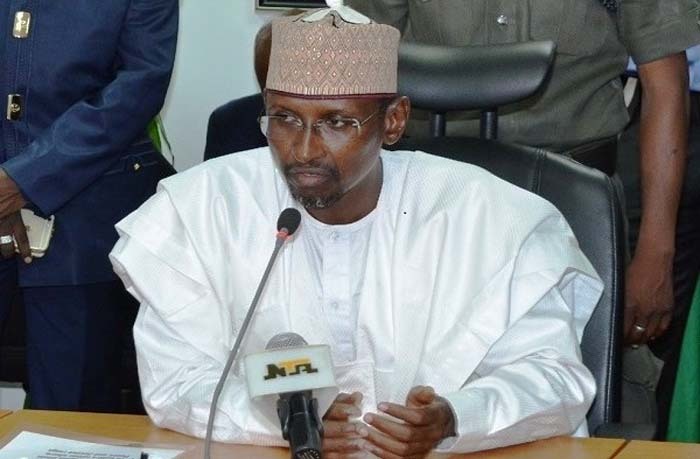
The FCT minister, Muhammad Musa Bello
The FCT Minister, Malam Muhammad Musa Bello, said he foresees Abuja run fully as an Information and Communication Technology (ICT) compliant city in the future and reiterated the commitment of the FCT Administration to deploy ICT in the management of the territory.
Malam Bello stated this when he received a delegation from the National Information Technology Development Agency (NITDA), led by its Director General, Engr Kashifu Inuwa Abdullahi, on a courtesy visit to the FCTA.
“At the FCT level, many of our agencies are already, in one form or the other, using ICT to do our work and we are moving towards improving that,” he said.
According to a statement by the minister’s Chief Press Secretary, Mr Anthony Ogunleye, he assured the NITDA team of the FCTA’s support to achieving the shared dream for the nation’s capital.
“I can assure you that we will always be available to partner with your organisation to deploy whatever you need to deploy, whether it is solutions to schools that are e-based or solution to security matters or traffic management or the health system. In all these areas, we have some form of IT deployment already,” Bello said.
Malam Bello also stressed that the COVID-19 experience had shown the need for technology and e-governance.
The DG of NITDA, Engr. Abdullahi solicited the support of the FCT Administration towards the establishment of an Information Technology Hub in the territory, akin to the popular Silicon Valley in California, USA.
He said: “NITDA is one of the drivers of that initiative and the initiative has identified five key stakeholders – universities as the producer of the human capital, government as the enabler because the government’s role in business is to provide the enabling environment.
“Then corporate organisations as the market because when you graduate from school, for most of the people, our mindset now is to look for white-collar jobs. Then we have the innovators and the entrepreneurs, who can be students or graduates. Then venture capitals which can invest,” he added.