
Abuja’s too many deaths
There is a quiet panic growing in the heart of Nigeria’s capital. Each day, another crash. Each week, another wrecked car. Sometimes it is a twisted frame at the side of the road, sometimes a shattered windshield or a shop flattened by a runaway trailer. What frightens me the most is that it’s becoming normal. […]
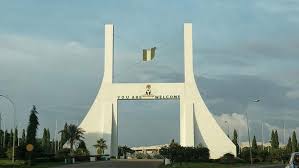
FCT
There is a quiet panic growing in the heart of Nigeria’s capital. Each day, another crash. Each week, another wrecked car. Sometimes it is a twisted frame at the side of the road, sometimes a shattered windshield or a shop flattened by a runaway trailer.
What frightens me the most is that it’s becoming normal. Abuja, once known for its calm and orderly charm, is fast becoming a playground for ghastly accidents.
As someone who travels across this city daily, I am no longer just a concerned observer—I am a witness to the chaos. Just recently, I stood frozen as a trailer veered off its lane and crashed into a roadside tin shop near Idu.
It took mere seconds to flatten a space that once served meals to daily wage earners. Not far from there, along the road leading to Nile University at the Coca-Cola Junction, another trailer ploughed into a Mercedes-Benz, smashing its bonnet.
Though no lives were lost, the sight of crushed metal was enough to make my heart skip. That wasn’t all. At the Area I roundabout, a car flew straight into a concrete barrier. At the Games Village roundabout, a vehicle flipped entirely—its tyres spinning helplessly in the air.
These are not isolated incidents. They are the new normal, and they leave a trail of shock, loss, and trauma in their wake. What is going wrong? Reckless driving stands at the core of the problem.
Abuja’s roads are filled with motorists who treat speed limits as suggestions and traffic lights as decorations. Drivers overtake blindly, tailgate carelessly, and fly through junctions with frightening audacity.
For many, driving is no longer a responsibility—it has become a reckless sport. Even more terrifying is the condition of many heavy-duty vehicles plying our roads.
These massive trailers and trucks, often with worn-out tyres, faulty brakes, and zero rear lighting, crawl through the city like ticking time bombs. When one fails, the result is often catastrophic.
And yet, most of these vehicles escape any meaningful inspection. Who is checking them? Who is holding them accountable? Sadly, not enough is being done by the authorities.
In a city that hosts the seat of power, road safety should be a matter of national pride, not a lingering crisis. The problem goes beyond bad drivers and faulty vehicles.
Abuja’s infrastructure is part of the problem. Faded lane markings, dysfunctional traffic lights, gaping potholes, and missing signs are all silent accomplices in this epidemic. The physical environment is supposed to support safety. In Abuja, it sabotages it.
The blame cannot rest with the government alone. We, the people, must change too. Too many drivers, whether in flashy private cars or commercial vehicles, lack patience.
They refuse to yield, swerve without warning, or drive as though they’re in a race against death. This mindset must change. Caution is not cowardice. Being careful is not a weakness.
It is a public service—a personal stand for life over haste. Personal responsibility matters more than we realise. Wearing a seatbelt, maintaining your brakes, obeying road signs, and resisting the urge to speed—all these are small habits that could save lives.
Road safety doesn’t begin on the expressway. It begins in the mind. I speak from experience, not theory. Every time I hear sirens or pass an accident scene, I imagine the stories behind it.
A mother who won’t make it home. A child who won’t see their father again. A life cut short by something that could have been prevented. Abuja cannot afford to continue this way. We need safer roads, but safety isn’t a miracle.
It is a commitment. The government must upgrade infrastructure, enforce laws, and hold violators accountable. Citizens must drive with empathy and discipline. We must act before the next crash.
We must care before the next casualty. Because road safety isn’t a luxury—it is a right. And in Abuja, that right is slowly being denied.
Aisha Ibrahim Halilu is a Mass Communication student of Nile University and an intern with PRNigeria.