
ACJL: Falana advocates expansion of Legal Aid, Public Defender’s Office in LGAs
Prominent human rights lawyer and Senior Advocate of Nigeria (SAN), Femi Falana, has commended the Kano State Government for its pioneering efforts in criminal justice reform, while calling for expanded access to legal aid for underprivileged citizens. Speaking at a recent legal forum in Kano, Falana hailed the state’s adoption and implementation of the Administration […]
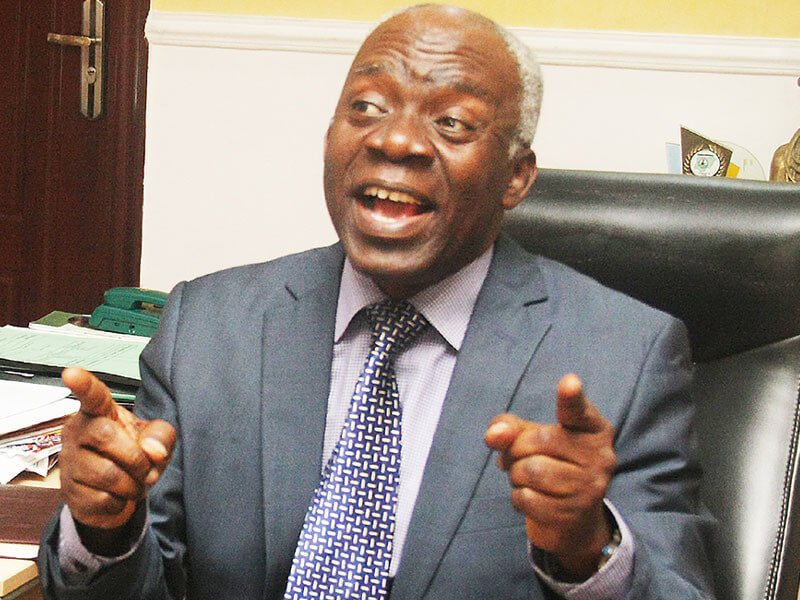
Human rights activist, Femi Falana
Prominent human rights lawyer and Senior Advocate of Nigeria (SAN), Femi Falana, has commended the Kano State Government for its pioneering efforts in criminal justice reform, while calling for expanded access to legal aid for underprivileged citizens.
Speaking at a recent legal forum in Kano, Falana hailed the state’s adoption and implementation of the Administration of Criminal Justice Law (ACJL) in 2019, describing it as a model for other states in Nigeria.
He noted that Kano remains the first and only state alongside one other to abolish the prosecution of criminal cases by non-lawyers, mandating that all such cases be handled by qualified legal practitioners.
“This is a progressive step. But as I emphasized during my presentation, to whom much is given, much is expected. There is still work to be done,” Falana stated.
The rights advocate urged the Kano government to strengthen its Office of the Public Defender (OPD) by ensuring it operates in all 44 local government areas of the state and is adequately staffed with legal professionals. He referenced Lagos State as a model, where each local government has a fully functional OPD to ensure access to justice for the indigent.
“Justice must not be a privilege reserved for the rich. In Kano, the OPD must be empowered to provide legal assistance to the poor, who are often denied justice due to financial constraints,” Falana said.
He also raised concerns about the condition of police detention facilities across the country, citing widespread violations of suspects’ rights including detention without family notification or access to legal counsel.
“Under the law, it is the duty of the police to immediately inform a suspect’s family upon arrest. No one should be held incommunicado for days. That’s now illegal,” he said.
Falana emphasized that legal representation must begin at the police station level, urging enforcement of laws requiring police to contact the Legal Aid Council to provide lawyers for those who cannot afford one.
Addressing skepticism around the impartiality of state-funded legal aid offices particularly in cases where the state is the prosecuting party Falana called for increased public oversight and professional accountability.
“If a government-assigned lawyer fails to do their job, citizens must report them. These offices were created to serve the people, not the system,” he said.
He concluded by urging broader public education on legal rights and the role of institutions like the OPD and Legal Aid Council, saying the media must play a greater role in informing the public.
“The poor must know their rights to be able to defend them. With public awareness, legal reforms like the ACJL can truly transform our justice system,” Falana asserted.