
After creating many tertiary institutions, FG places 7-yr ban
The Federal Executive Council (FEC) has placed a seven-year moratorium on the establishment of new federal tertiary institutions. The moratorium covers universities, polytechnics and colleges of education. Addressing State House correspondents after the FEC meeting, Minister of Education, Dr Olatunji Alausa, said the move was aimed at curbing the proliferation of under-utilised institutions and refocusing […]
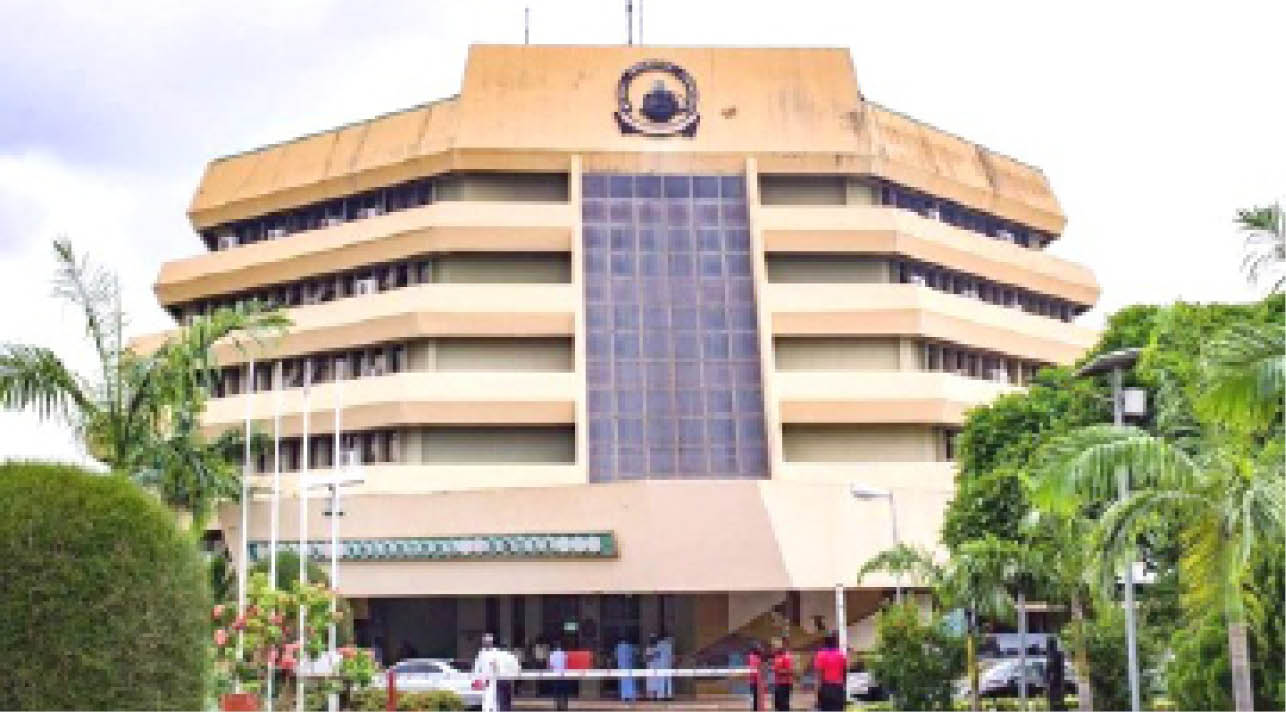
NUC headquarters
The Federal Executive Council (FEC) has placed a seven-year moratorium on the establishment of new federal tertiary institutions.
The moratorium covers universities, polytechnics and colleges of education.
Addressing State House correspondents after the FEC meeting, Minister of Education, Dr Olatunji Alausa, said the move was aimed at curbing the proliferation of under-utilised institutions and refocusing resources on improving existing ones.
Alausa disclosed that the meeting concluded after looking at the statistics available that access to tertiary education in Nigeria was “no longer the problem, “rather the unchecked duplication of federal tertiary institutions had led to inefficiencies, poor infrastructure, inadequate staffing, and declining student enrolment.
Alausa noted Nigeria currently has 72 federal universities, 108 state universities, and 159 private universities with similar trends in polytechnics and colleges of education.
He pointed to a growing mismatch between the number of institutions and available student enrollment.
He said several federal universities operate far below capacity, with some having fewer than 2,000 students, adding that in one institution, there are 1,200 staff serving fewer than 800 students.
“This is a waste of government resources. Today, we have 199 universities where fewer than 100 candidates applied through JAMB for admission. In fact, 34 universities recorded zero applications,” he said.
He went further to explain that the prevailing situation is not limited to universities as out of 295 polytechnics nationwide, some of them had fewer than 99 applicants last year, while 219 colleges of education recorded poor enrolment with 64 colleges of education having no applicants at all.
The minister warned that if the situation is allowed to continue, Nigeria risked producing poorly trained graduates, losing international respect for its degrees, and worsening unemployment.
The moratorium, he stressed, will enable the government to mobilise resources to upgrade facilities, recruit qualified staff, and expand the carrying capacity of existing federal tertiary institutions.
“If we want to improve quality and not be a laughing stock globally, the pragmatic step is to pause the establishment of new federal institutions. This way, we can sustain the respect the world has for our graduates,” Alausa said.
He pointed out that Nigeria currently has 72 federal universities, 42 federal polytechnics, and 28 federal colleges of education, in addition to hundreds run by states and private investors, adding that there are also specialised institutions, colleges of agriculture, health sciences, nursing and innovation enterprise institutions, many of which are also under-enrolled.
Notwithstanding the freeze, the minister disclosed that FEC also approved nine new universities.
Shedding more light on the development, Alausa explained that these were not fresh proposals but long-pending private applications, some dating back over six years, that had already undergone evaluation with the National Universities Commission (NUC) and investors having already built campuses and invested billions of Naira.
“When we came in, there were about 551 applications for private universities. Many had been in limbo for years because of inefficiencies in the NUC’s processing system,” he said.
The minister said his team overhauled the process, deactivating more than 350 inactive applications and introducing strict new guidelines with clear timelines. “Out of 79 active applications, nine met the criteria and were approved,” he added.
Federal institutions created in 2 years
Since assuming office in May 2023, President Bola Ahmed Tinubu had established at least 12 tertiary institutions, including eight universities, two polytechnics and two colleges of education.
They include the Federal University of Health Sciences and Technology in Tsafe, Zamfara State; Federal University of Sports, Afuze, Edo State; Federal University of Medical and Health Sciences, Kwale, Delta State; Federal University of Agriculture, Mubi, Adamawa State; and Federal University of Applied Sciences in Kachia, Kaduna State.
Others are Federal University of Agriculture and Development Studies, Iragbiji, Osun State; Federal University of Technology and Environmental Sciences, Iyin Ekiti, Ekiti State; Federal Polytechnic Rano, Kano State; Bola Tinubu Polytechnic, Gwarimpa, FCT; Federal College of Education, Ilawe Ekiti, Ekiti State; and Federal College of Education, Ididep, Ibiono, Akwa Ibom State.
In the first three months of this year, nine of these institutions have sprung up, including the repurposing of existing public tertiary and even moribund private universities. These are: Federal University of Agriculture in Obio-Akpa, Oruk Anam Local Government Area, Akwa Ibom; and Federal University of Environment and Technology (FUET) in Ogoni town of Tai, Rivers State.
Earlier in March, Tai Solarin University of Education, owned by the Ogun State government, was taken over by the federal government, just as Yaba College of Technology in Lagos, was upgraded to a university. Approval was also given for the establishment of Federal University, Umunna, Okigwe, Imo State. As a result, Nigeria has an aggregate of 278 universities, comprising 64, which are federal, 67 belonging to states, and 147 that are privately-owned. Last year, four colleges of education were upgraded to universities. They include Adeyemi College of Education, Ondo, Ondo State; and Alvan Ikoku Federal College of Education, Owerri, Imo State.
It’s a welcome development, but funding remains real crisis – Educationist
An educationist, Dr. Babayo Sule of the University of Lesotho, has described the federal government’s recent moratorium on the creation of new tertiary institutions as “a welcome development,” but warned that without sincerity and adequate funding, the move may not yield meaningful reform.
In a late-night chat with Daily Trust, Dr. Sule said, “If you are keenly following the struggles of the Academic Staff Union of Universities (ASUU), they have long agitated against the rampant proliferation of universities and institutions that are not adequately funded.”
He acknowledged Nigeria’s growing population and the need for more universities, comparing it to countries like the United States and Brazil. “Nigeria’s population is hovering close to theirs. They have hundreds of universities. So yes, we need more institutions, but only if there is sincerity, commitment, and political will,” he said.
Dr. Sule criticised the politicization of tertiary education, saying, “Education is too sensitive to be left at the discretion of politicians. Any lawmaker seeking re-election just sponsors a bill to establish a university—be it of agriculture, health sciences, fisheries, or forestry. It’s turned into a constituency project.”
He lamented the strain on the Tertiary Education Trust Fund (TETFund), noting that while the number of institutions has tripled, the fund’s allocation has not. “TETFund is being overstretched. It was created through ASUU’s struggles to support infrastructure and training. Now, it’s being deflated by political expansion.”
On student enrollment, Dr. Sule dismissed the notion that existing institutions are overwhelmed. “The truth is, we have enough institutions to absorb the 2.1 million UTME candidates. The problem is students and parents chasing prestige—UNILAG, UI, ABU, UNN—while newer universities remain under-enrolled.”
He cited examples: “University of Kachere struggled for years to fill departments. Federal Polytechnic Kaltungo and others are still looking for students. The issue isn’t capacity, it’s perception and politicisation.”
Dr. Sule praised the education minister’s stance, saying, “Even though he’s a medical practitioner, he’s done something commendable. We’ve long called for an end to turning universities into campaign tools.”
He urged the government to focus on expanding existing institutions. “Why not build three times the structures at University of Maiduguri or Bayero University? They’ll absorb more students. Look at Lincoln University — it has branches in Malaysia and the UK. Nigerian universities can do the same.”
On funding, he said, “Forget the charades. No country leaves education solely to private hands. Even in the U.S., universities struggle when the government cuts support. Nigerian universities need substantial public funding.”
He concluded with a warning: “This is why no Nigerian university ranks in the top 1,000 globally — except UI, barely scraping in. We must reshape and reinvigorate existing institutions to meet world-class standards.”