
Again, Dangote slashes PMS price
The Dangote Petroleum Refinery has announced a reduction in the ex-depot (gantry) price of Premium Motor Spirit (PMS), commonly referred to as petrol, by N30.00, from N850 to N820 per litre, effective from 12th August 2025. The refinery in a statement said this is part of the refinery’s “unwavering commitment to national development.” Group Chief […]
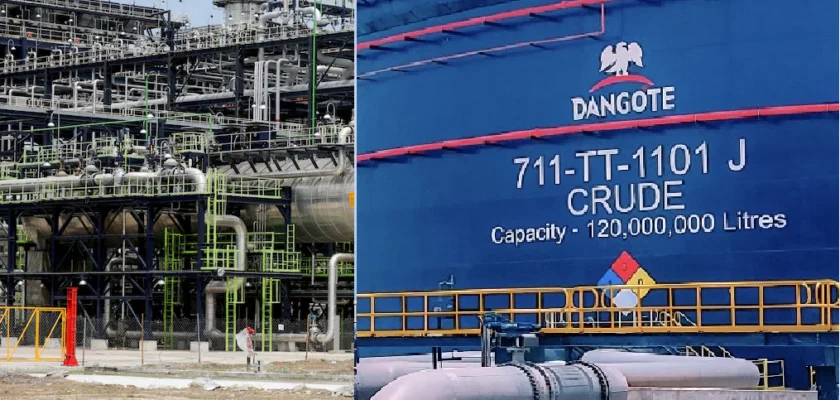
Dangote Refinery
The Dangote Petroleum Refinery has announced a reduction in the ex-depot (gantry) price of Premium Motor Spirit (PMS), commonly referred to as petrol, by N30.00, from N850 to N820 per litre, effective from 12th August 2025.
The refinery in a statement said this is part of the refinery’s “unwavering commitment to national development.”
Group Chief Branding and Communications Officer of Dangote Industries Limited, Anthony Chiejina, in a statement assured the public of a consistent and uninterrupted supply of petroleum products.
“In line with our dedication to operational excellence and sustainable energy solutions, Dangote Petroleum Refinery will commence the phased deployment of 4,000 Compressed Natural Gas (CNG)-powered trucks for fuel distribution across Nigeria, effective August 15, 2025,” he said.
Daily Trust reports that the move by Dangote Refinery to commence nationwide fuel distribution is already generating mixed reactions in the industry.
With the new price reduction by Dangote, it was not clear how much filling stations would dispense PMS as of yesterday.
Checks by Daily Trust indicated that a litre of PMS is sold between N885 and N890 in Lagos depending on the filling stations.
Most filling stations have not adjusted to the new price as of yesterday with a litre still sold at N885. Meanwhile, the Nigerian Labour Congress (NLC) has hailed the Dangote Petroleum Refinery as a transformative national asset, calling it a vital step in bridging Nigeria’s fuel supply gap, boosting employment, and restoring public confidence in the country’s industrial capacity. Speaking during a tour to the refinery and Dangote Fertiliser Limited, the Chairman of the Nigeria Labour Congress, Lagos State chapter, Comrade Funmi Sessi, praised the massive scale and strategic significance of the Dangote Group’s investments, stating that the projects are delivering tangible benefits to the Nigerian people.
“Today, we have seen the massive Dangote Refinery project, as well as the fertiliser plant. We have also observed some of Dangote’s other investments in this axis. It is truly enormous and highly impressive,” said the NLC chairperson. “I believe what we have seen is a clear effort to bridge the gap in the availability of essential products in the country and to create job opportunities for Nigerians and others as well as industrialise the country.”
The union acknowledged that following the Federal Government’s removal of petrol subsidies, Nigerians experienced an unprecedented surge in the cost of Premium Motor Spirit (PMS). However, the entrance of Dangote Petroleum Refinery into the market helped to stabilise prices.
“It wasn’t until Dangote came into the picture that we started seeing some relief. His intervention significantly crashed the escalated prices of PMS and other refined products. That’s a clear demonstration of private sector leadership,” she stated.
The NLC made a direct appeal to the FG to prioritise the sale of crude oil to the Dangote Refinery in naira. The union argued that forcing the company to import crude or purchase locally in dollars undermines the promise of lower fuel prices for ordinary Nigerians.
“This country has crude oil in abundance. So why is Dangote still being made to import crude or pay for it in hard currency?” the NLC queried. “If the government is truly committed to reducing fuel prices and supporting local refining, it must sell crude oil to Dangote in naira.”
The union stressed that sourcing crude locally in local currency would significantly lower operational costs and, by extension, lead to a more sustainable reduction in fuel prices.
“With a daily capacity of 650,000 barrels, this refinery can serve Nigeria and even the West African sub-region. We also saw big ships taking fertilisers to other countries. The government must maximise”