
Airlines may save N120m daily from MMIA fuel pipeline revival
Stakeholders in the aviation fuel value chain yesterday canvassed for the revival of the dormant 98-kilometer aviation fuel pipeline from Atlas Cove through Mosimi and Ejigbo in Lagos to the Murtala Muhammed International (MMIA). They said the rehabilitation of the pipeline would ease the supply challenges and reduce the cost of Jet fuel by about […]
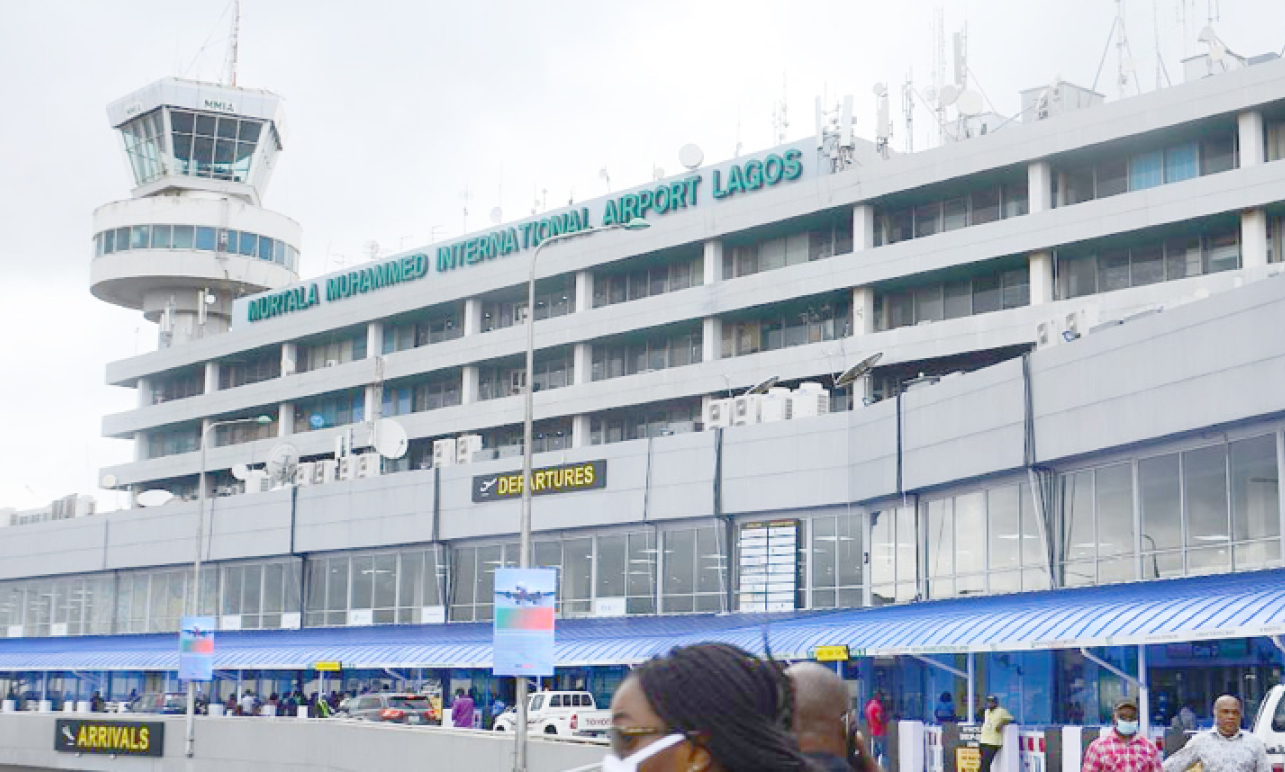
Murtala Muhammed International Airport
Stakeholders in the aviation fuel value chain yesterday canvassed for the revival of the dormant 98-kilometer aviation fuel pipeline from Atlas Cove through Mosimi and Ejigbo in Lagos to the Murtala Muhammed International (MMIA).
They said the rehabilitation of the pipeline would ease the supply challenges and reduce the cost of Jet fuel by about N40 per litre.
This emerged yesterday at the CITA Energies Colloquium with the theme: ‘Aviation Fuel Business in Nigeria: The Scenario and the Metaphor,’ organised in conjunction with the League of Airports and Aviation Correspondents (LAAC).
Daily Trust reports that the cost of bridging the product and transportation to the airports has added to the high price of Jet A1 as the pipeline system from Atlas Cove to the airport has not been fixed for the past two decades hence the use of trucks to convey the product to the airport.
The pipelines that transport fuel from the shore depot to the airport and from the fuel farms to the apron hydrants were ruptured in 1992 but till today, they have not been repaired despite agitation from experts and stakeholders.
Group Managing Director, CITA Energies, Dr. Thomas Ogungbangbe, while calling on the Federal Government to urgently collaborate with the private sector to revive the dormant pipeline estimated that reviving the pipeline would save the operator about N40 per litre.
Daily Trust reports that aviation fuel costs about N1,350 per litre as of yesterday. And with a daily consumption of 3m litres, airlines might save over N120m per day if the pipeline system was revived.
Ogungbangbe in his presentation reiterated that the restoration of the pipeline, which was shut down in 1998 after a reported incident, could drastically reduce the cost of aviation fuel, cut logistics expenses, and ease traffic congestion caused by hundreds of trucks plying Lagos roads daily.
He said, “Aviation fuel costs accounted for up to 40% of airline operating expenses, driven by exchange rate fluctuations and global oil price movements.
“The pipeline is still underground, and I believe it can be revived with pressure testing and proper rehabilitation.
“If government agencies like NNPC, the Navy, the Nigerian Maritime Authority, and the Ministry of Blue Economy collaborate with private operators, we can restore this line and eliminate the need for over 100 trucks on our roads every day.”
According to him, the pipeline revival would not only reduce costs but also strengthen Nigeria’s energy independence and stop the capital flight associated with routing petroleum vessels through neighbouring countries.
“At the moment, vessels go as far as Togo to berth, and we spend millions of dollars monthly freighting products back to Nigeria. Some even go to other countries to dry dock because we haven’t developed that capacity here,” he explained.
“If we fix this single piece of infrastructure, the ripple effects will cascade across the entire downstream value chain.”
Saying the pipeline restoration could lower aviation fuel prices by as much as N30 to N40 per litre, he added, “It’s not just about cost efficiency. It’s about restoring Nigeria’s operational advantage and ensuring our systems work seamlessly without enriching neighbouring economies at our expense.”
Dangote refinery a blessing but…
Ogungbangbe further disclosed that the birth of Dangote Refinery remains a blessing for the aviation fuel supplier but “the practical rollout of refined Jet A-1 into the domestic market has been slower and more restrictive than anticipated.”
He said: “We still import millions of Jet A1 to our neighbouring African countries in West African countries. However, some of these are being reduced due to the emergence of Dangote Refineries in the last 18 months.
“Now, our industry is growing, but we are groaning due to lack of adequate control. We used to have about six fuel marketers, but now, we have about 45, which is good for the industry, but now, we have a problem with the quality of the product.”
He said prior to the coming of Dangote Refinery, over 90% of Jet A-1 was imported from foreign refineries, exposing the industry to international supply disruptions.
The CITA boss said the current challenge with Dangote supply of Jet A1 has to do with pricing, access and allocation, forex exposure, among others.
He said, “Jet A-1 from Dangote Refinery is not yet cheaper than imported alternatives. The refinery sells in U.S. dollars, aligning prices with global benchmarks.
“The expected cost relief for airlines and marketers has not materialized. Airlines continue to face high operational costs.
“Marketers have limited direct access to Jet A-1 supply; distribution is still being structured through controlled offtake agreements.”
Need for stringent regulations of marketers
On his part, Chairman of Ndano Energy and former Managing Director of Arik Air, Chris Ndule, expressed concerns over the growing aviation fuel black market in Nigeria.
According to him, with the proliferation of aviation fuel marketers, the market is becoming saturated and has charged the Nigeria Civil Aviation Authority (NCAA) to be more stringent in its regulation of the marketers.
He said, “You will see that there are so many aviation fuel marketers in Nigeria. The NCAA has to look at the economic and financial health of fuel marketers. If an operator buys from those who steal the product, the operator will be providing a black market for aviation fuel.
“The black market is increasing as we see a multiplicity of small marketers. People jump into the business. We need to ensure the business guarantees safety, security and quality of aviation fuel. We need to focus on what we can do to provide regulations and guarantee the quality and safety of products the airlines are getting,” Ndulue said.
A former Managing Director of the Federal Airports Authority of Nigeria (FAAN), Richard Aisuebeigun, in his keynote address also emphasized the need for stricter regulations to ensure the quality of aviation fuel in the country.