
Akande: Presidential System Failure Highlights Over-Personalised Politics Ahead of 2027
Former presidential aide and veteran journalist, Laolu Akande, has warned that Nigeria’s current political trajectory underscores the deep failure of the presidential system, which he says has entrenched over-personalised politics and hollowed out party ideology ahead of the 2027 general elections. Speaking on My Take, a segment of Inside Sources with Laolu Akande on Channels […]
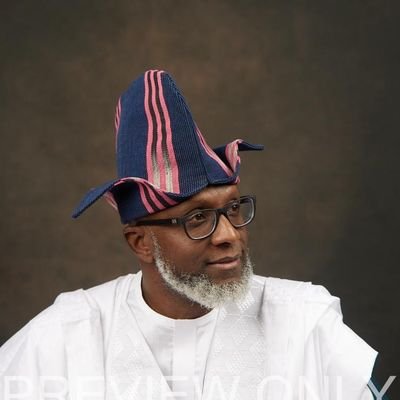
akande
Former presidential aide and veteran journalist, Laolu Akande, has warned that Nigeria’s current political trajectory underscores the deep failure of the presidential system, which he says has entrenched over-personalised politics and hollowed out party ideology ahead of the 2027 general elections.
Speaking on My Take, a segment of Inside Sources with Laolu Akande on Channels Television on Sunday, Akande analysed recent political defections and family divisions within opposition ranks, describing them as a powerful symbol of the collapse of principled party politics in Nigeria.
Tracing the roots of Nigeria’s weakened party system, Akande blamed former President Olusegun Obasanjo.
“One of the reasons why all of this rather uninspiring dispensation of party politics is upon us is because the nature of party politics in Nigeria had been heavily devalued, heavily destroyed, starting from when former president Olusegun Obasanjo was in office as our civilian leader,” he said.
Akande recalled that before 1999, political parties wielded real power.
“Before 1999, we have the SDP and the NRC in the Third Republic, and before that, we have political parties in the Second Republic that were strong,” he noted, adding that party supremacy still exists elsewhere.
“That kind of elevating party above individuals… is still in effect today in South Africa, where the ANC has prevailed against two presidents.”
He contrasted this with Nigeria’s experience, saying, “Here in Nigeria, it was Baba Obasanjo who changed the dynamics when he was president.”
Citing a famous encounter, Akande recalled: “The late Chief Audu Ogbbe told Obasanjo bluntly, and I’m quoting him now, ‘I’m not your cook, but your party chairman, so talk to me with respect.’ Now which party chairman do you imagine can assert such self-assurance in today’s Nigeria’s politics?”
Akande said Obasanjo’s actions weakened party institutions. “Before then, Obasanjo had dusted Solomon Lar, who was the founding chairman of PDP in 1999. Whether Obasanjo knew it or not, what he was doing was wrecking party politics in Nigeria.”
He added that Obasanjo went on “single-handedly to determine party candidates for gubernatorial and presidential elections,” citing “the frustration of Rotimi Amaechi’s emergence as River State PDP candidate for governor in 2007” as a notable example.
According to Akande, both PDP and APC later became mere vehicles for personal ambition. “In 2013, when APC… came on the picture, it was obvious that the party was and became a vehicle for the emergence of Muhammadu Buhari and then Bola Ahmed Tinubu as president,” he said, noting that APC at least had strong personalities behind it.
“ADC has not shown that kind of clout as yet,” Akande added, describing Abba Atiku’s defection as “the latest showcasing of the over-personalisation of politics in Nigeria and its reduction… to mere electoral vehicles.”
He concluded with a broader systemic warning: “This is one of the reasons we have to keep saying it on rooftops, that the presidential system has been close to a disaster for Nigeria.” Akande argued that leaders have exploited the system “for their own personal magnification and an aggrandisement of our resources with very little, if any, social goods delivered.”
Calling for structural reform, he said, “So let’s go back to parliamentary democracy. Even if we have to modify it to suit our circumstances, let’s do what it takes to reform party politics in Nigeria.”
According to Akande, “Former Vice President Atiku Abubakar is certainly the most prominent politician in the opposition wing of Nigerian politics today.
And in 2023, his son, Aba, formed a campaign organisation he called Atiku Haske Organisation to support his dad’s presidential campaign in a contest that had Asiwaju Bola Ahmed Tinubu in the race. Now Tinubu defeated Atiku and three years later, Abba Atiku Abubakar is now defecting, leaving his father behind to support Tinubu.”
He noted the political irony and symbolism of the move, adding, “Abba will be campaigning against Atiku’s new political party, ADC, which is set to do a rematch with Tinubu in 2027. That is quite a thing. So Abba has renamed that organisation, Atiku Haske Organisation, after Tinubu now.”
Akande said the development represents a major setback for the opposition.
“What a depression for our opposition politicians and for ADC,” he said, pointing out that the trend is not isolated.
“Similarly, Nasir El Rufai’s son, Bello, remains in APC after his father left the party, just as David Mack’s daughter, Blessing Onu, remains in APC even after her father was named ADC chairman. All of this weakens the opposition ADC in a significant manner whichever way you dice it.”
He argued that the inability of key opposition figures to convince even their own children about the party’s mission raises serious questions about its national appeal.
“El Rufai, David Mark, and Atiku Abubakar are not able to persuade or influence their own biological children about the mission and purpose of ADC, yet they hope to persuade Nigerians,” Akande said.
While acknowledging the unpredictability of Nigerian politics, he added, “This presents an almost hopeless proposition, except that in politics, especially Nigerian politics, everything can change in a moment, and so you never say never, and it’s really not over until it is over.” Still, he maintained that ADC lacks a unifying ideology.
“Certainly, there is no rallying national purpose or ideology that is driving ADC besides an obvious coming together to defeat Tinubu, and I’m not saying that that is itself entirely useless politically.”
Looking ahead to the next election cycle, Akande offered a final note of caution: “As for 2027, the politics and all of that, all I can say is that the Ides of March are closing in on us.”