
Almajiri education reform: Context, content and call to action
Mungo Park, on July 21, 1796, met us with an education system – over 230 years ago – as he wrote in his book titled; Travels In the Interior Districts of Africa. In the book, he said: By establishing small schools in different towns, where many of the pagans as well as the Mohamedan (Muslim) […]
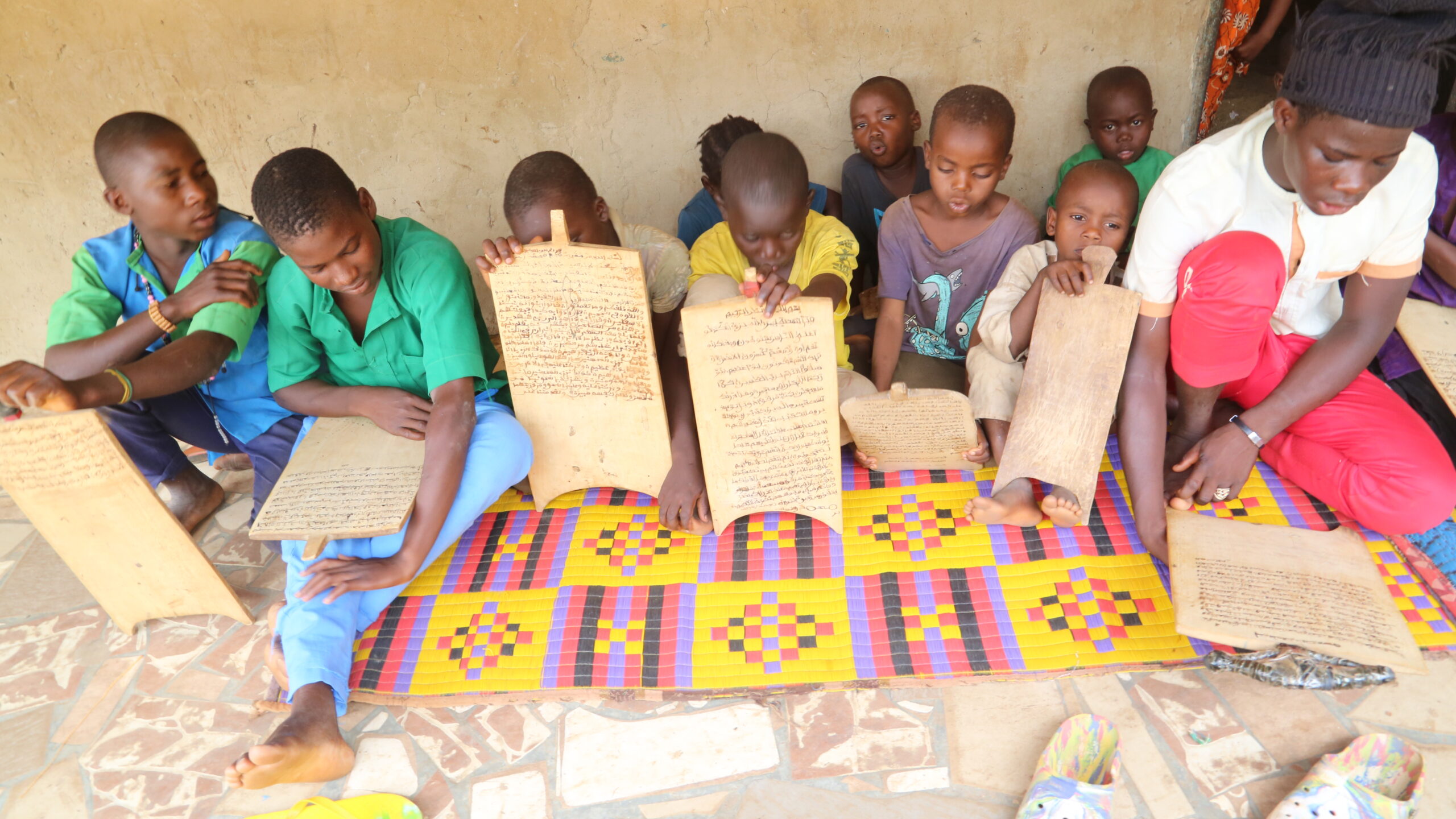
Plain, torture as almajiri system of education fails
Mungo Park, on July 21, 1796, met us with an education system – over 230 years ago – as he wrote in his book titled; Travels In the Interior Districts of Africa. In the book, he said: By establishing small schools in different towns, where many of the pagans as well as the Mohamedan (Muslim) children are taught to read the Koran and instructed in the tenets of the prophet…..’’ …. The students and people I met had remarkable education, industry and great skills.’’
“The colonialists deliberately stifled education in the Northern region, abolishing the indigenous Almajiri and Islamic schools’ systems while again refusing to invest in the conventional or so-called western education in the (Northern) region for decades.
This degradation or outright abolition of the African indigenous and traditional systems of education was not only enforced in the then Northern regions but also in the South where in the Oyo Empire and the Benin Empire, indigenous education systems were also forcefully abolished.
Since his installation in 1938, the Sultan of Sokoto, Sir Abubakar III, demonstrated his concern on the deliberate lack of advancement of education, indigenous or western by the colonial regime. He blamed the colonial authorities for the lagging behind of education infrastructure in the northern region.
- Suspected kidnapper operating in Abuja, Kogi, Nasarawa nabbed
- Kidnappers flee with victims as vigilantes comb FCT communities
At a farewell meeting with the first group of technical assistants sent by Saudi Arabia, the Sultan made a case against the colonialists. The Sultan informed the meeting that “The British were more concerned in making NA officials collect taxes to maintain their rule than in ensuring the education of our people…“ (Ref: Sultans of Sokoto.)
Waziri Junaidu Buhari, in his acceptance speech titled, ‘The Relevance of the University to our Society’, on the conferment of an Honorary Degree on him at the Ahmadu Bello University Zaria’s 1971 Convocation, challenged those who were steeped in the so-called ‘’western education’’ and at the same time ignored the intellectual achievements of their own people.
He said, “Knowledge is certainly universal and timeless but it has a social and cultural stamp. It also has a purpose and a commitment to a particular world view. It, therefore, cannot be neutral. This is amply demonstrated by development of learning in the empires of Mali, Songhai, Oyo, Benin, Borno and Sokoto, from which springs much of these community’s cultural heritage.”
The western education system brought by the colonialists has made education very, very expensive by not involving the communities in providing any input, especially land, buildings, furniture, books, skill acquisition centres, farms etc. It was deliberate because it is primarily aimed at ‘educating’ a person away from and without his/her community.
Therefore the aim is to ‘’educate’’ the person away from and insulate him/her from the community. The more he or she is ‘’western educated’’, the less he/she is identified with the indigenous community. Such was how our indigenous systems of education, specifically the Almajiri system of education, were bastardised by the colonial policies and unfortunately continued by successive governments after independence.
The colonised has to learn the language of the colonizers, their history, their laws, their food and manners. The colonisers believed that the colonised had no language, no history, no laws, no tradition and no systems of governance. At least that was how Mungo Park “discovered” the river Niger according to the colonialists!
The former Sokoto Caliphate and Kanem Borno Empire had tens of thousands of Qur’anic/Almajiri/Tsangaya schools in each of their emirates. At least for Sokoto Caliphate there were recorded more than 50,000 Education Inspectors (Sardauna Malami) across the emirate, supervising hundreds of thousands of schools.
The schools had three stages. The lower stage, middle stage and the upper stage, depending on the instruction of each pupil. The major differences with the colonial system of education are the language of instruction and the numbers involved with the provision of one teacher for each subject for the Colonial/Western system in contrast with Qur’anic/Almajiri education where one teacher can teach several subjects to a group of students or single student.
English is used as language of instruction in the former while Arabic/Ajami was used in the latter. The main content of the Almajiri education reform initiative is to provide an education system that infuses basic education with either religious education or vocational training or both and is specifically tailored to the peculiarities of each of the identified categories of children across Nigeria.
These reforms are very necessary as we all know the conventional school structure in the country does not provide the opportunity for children with certain characteristics and socio-cultural peculiarities to attend and get basic literacy and numeracy skills.
The reformation of the Almajiri education system is targeted to provide the flexibility and adaptability of capturing this unique set of children through the introduction of innovative schooling approaches, vocational skills as well as the use of e-learning and Open School innovations to get every Nigerian child back to functional and productive learning.
The proposition is to have three major components of Basic Education – the Religious Education and Vocational, Technical and Digital Training – components delivered to all Nigerian children of school going age from all backgrounds, social strata, belief or location.
The overall objective of these reforms is to contribute to the rapid mass reduction of the number of out-of-school children (OOSC) in Nigeria by providing the identified categories of children with access to quality basic education and skills in specialised settings, with opportunities that the conventional schooling systems are not designed to address.
These affected children are well known and include the Almajiri, children in IDP camps, children from poor homes, victims of insurgency and social and environmental dislocation, street and market children, children in correctional facilities, among others, by providing access to inclusive and equitable quality education to the Almajiri pupils and OOSC in Nigeria using methods of education that meet the children where they are, we will significantly reduce itinerancy and child begging in the country.
This approach will also provide opportunities for these children to develop lifelong supporting skills from vocational and entrepreneurial training, foster understanding, national unity, cohesion and patriotism of all children and citizens from diverse backgrounds in the country.
Providing functional/productive all-inclusive education to Nigerians and making every Nigerian child/youth participate in educational and economic activities for national development are the key pillars of the national education reform drive. It aims to democratise, decolonise and liberalise our education systems, where education is truly for the PEOPLE, of the PEOPLE and by the PEOPLE.
The National Assembly and the federal government had set the pace, demonstrated leadership and committed significant resources in solving the perennial existential threat of the Almajiri and OOSC phenomenon, a matter that is primarily and constitutionally the responsibility of states!
It is, therefore, incumbent on our governors and state legislatures, particularly of the North, to show greater interest and commitment to solving the challenges of Almajiri and OOSC in many ways than one and by at least establishing an Almajiri and OOSC education commission in their respective states to tackle this peculiar problem head-on to coordinate and synergise efforts with NCAOOSCE and the Federal Ministry of Education.
Hon Kakale is the lead sponsor of the Almajiri and OOSC Education Commission Bill 2023 [email protected]