
Alumni body asks govt to review MAPOLY funding
The National President of the Moshood Abiola Polytechnic (MAPOLY) Alumni Association, Ayinde Soaga, has called on the Ogun State Government to increase funding for polytechnic education. Daily Trust reports that the Senior Staff Association of Nigerian Polytechnics at MAPOLY, had revealed that while monthly salaries total ₦210 million, the institution receives only ₦20.75 million monthly […]
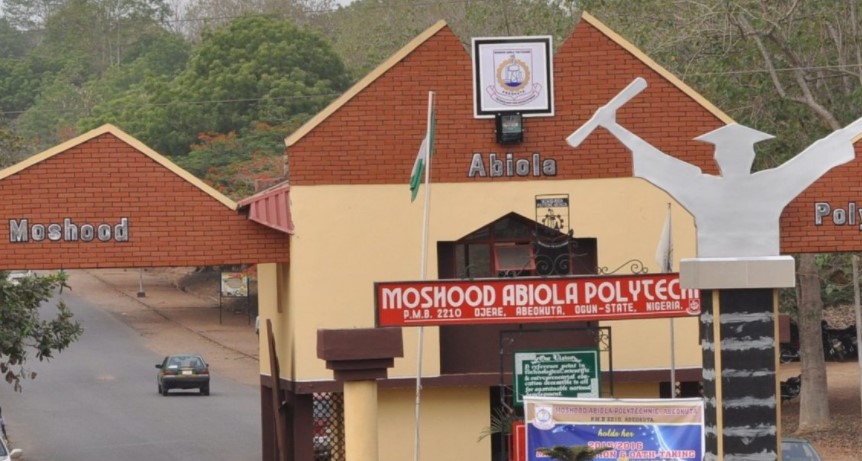
The National President of the Moshood Abiola Polytechnic (MAPOLY) Alumni Association, Ayinde Soaga, has called on the Ogun State Government to increase funding for polytechnic education.
Daily Trust reports that the Senior Staff Association of Nigerian Polytechnics at MAPOLY, had revealed that while monthly salaries total ₦210 million, the institution receives only ₦20.75 million monthly from the state government — a figure unchanged for over a decade.
SSANIP noted that management has relied heavily on internally generated revenue to meet salaries and maintain basic infrastructure.
Speaking at a press conference at the polytechnic, Soaga stressed the need to increase funding to the institution by the government.
“I believe that the government should increase its allocation to education, particularly to polytechnic education.
“For institutions like MAPOLY, much more funding is required. The current funding is inadequate for the kind of teaching and hands-on training that polytechnics demand,” he said.
Soaga, a veteran broadcaster and former General Manager of NTA, said polytechnic education focuses on practical competence and demonstration, hence, it needs adequate funding.
He commended MAPOLY for producing graduates who excel nationwide in fields such as accounting, mass communication, architecture, and engineering.
“Polytechnic education is not just about reading and theory; it is about demonstration and competence. I am proud that MAPOLY has distinguished itself by producing graduates who have excelled nationwide, especially in hands-on fields such as accounting, mass communication, architecture, and engineering, among others.
“These institutions need more resources to provide the level of practical training required. What is currently provided is simply not enough,” he said.
Soaga urged graduates to prioritise entrepreneurship over job-seeking, citing his personal experience after graduating in 1985.
“My message to graduates today is this: be self-reliant. Do not depend solely on salaried jobs, especially government jobs. Use the skills you have acquired here. Polytechnic training equips you with practical abilities—skills you can use to create opportunities for yourself,” he stated.
On infrastructure, Soaga expressed concern over the poor state of campus roads and pledged that the alumni association would collaborate with stakeholders to improve facilities.
He described MAPOLY as “a beacon of technical, vocational, and professional excellence” and called on alumni, stakeholders, and partners to support the institution through mentorship, infrastructure development, scholarships, and strategic initiatives.
“MAPOLY is more than a school; it is a crucible where intellect, discipline, and innovation meet opportunity. Over the decades, it has produced leaders, innovators, and change-makers who continue to impact Nigeria and the world,” he stated.