
An encounter with Ramaphosa
Last night I had a dream. I met with South African president, Cyril Ramaphosa. I confronted him over the targeted xenophobic attacks against Naija people in his country. I warned him that if he did nothing to stop it, I was going to do something incredible – bring back apartheid. He did not find it […]
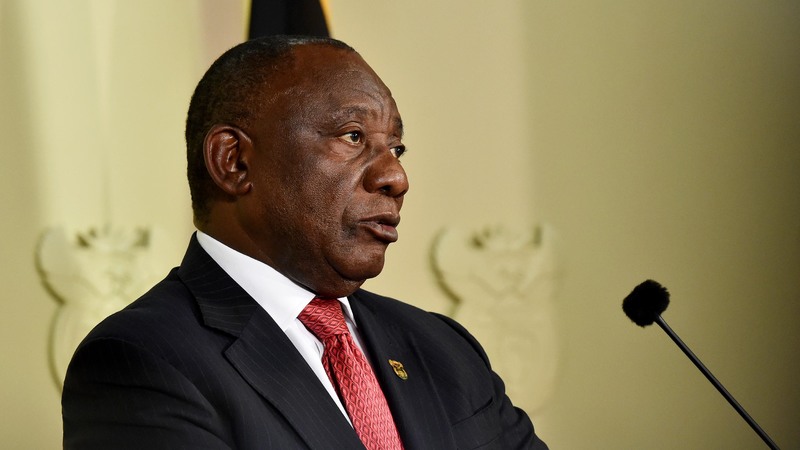
Cyril Ramaphosa
Last night I had a dream. I met with South African president, Cyril Ramaphosa. I confronted him over the targeted xenophobic attacks against Naija people in his country. I warned him that if he did nothing to stop it, I was going to do something incredible – bring back apartheid. He did not find it funny, but he asked me to sit down. He ordered a cup of Umqombothi while he sashayed into his inner chambers to emerge with a thick file.
‘I know you’, he said and thanked me for my friendship. He recalled the sacrifices that my nation’s leaders gave during the tortuous days of apartheid and said he could have been happy to assure me that apartheid, as we knew it was gone and buried forever. ‘Except’, he said, ‘apartheid has only changed name. Please tell me, what do you call it when an elected president of a country surrounds himself with people from his own family, clan or religion?’
I warned him not to go there adding ‘there were qualified hands in America when Donald Trump found his daughter and son-in-law worthy of appointment as members of his inner cabinet.’
‘In other words, you’re accusing Trump of laying the foundations of nepotism in governance?’
‘I am not accusing anyone of anything.’ I responded, adding ‘nepotism exists everywhere’.
‘How do you feel when an unelected leader of a western democracy takes the permission of another unelected leader to suspend an elected parliament so as to impose an unpopular will on the electorate and the citizenry’, he asked?
‘I did not come here to evaluate your credentials as the global umpire of democracy. What happens in those places is news to me, but I am not inclined to comment on them. I came here to protest the inhumane treatment of my people in the hands of people who ought to be grateful for the sacrifices we made for the freedom they enjoy today. If we as Africans do this to ourselves, how do we protest the injustice constantly being meted to us in foreign lands,’ I queried?
He opened the big file on his lap as my lips again savoured the taste of the mkombothi.
‘Don’t make it look so bad that foreigners are killing your people here’, he said. ‘Africa has a long way to go mfowethu. But please tell me, how happy are Yorubas when they encounter their Hausa neighbours?’
‘We get along quite fine’, I opined.
‘Like two unidentical peas in a pod, you really do,’ he said, his sarcasm biting through the effect of the liquor we were both consuming.
Then he opened the file on his lap and showed me a picture. ‘This picture,’ he said showing me a shot of many roughly dressed young men being paraded by the police. ‘This picture; is it a good evidence of how much you people get along. According to the report, 123 youths from Jigawa have just been subjected to apartheid era-pass-screening system in your federation. You want anyone reading this to respect you in South Africa?’
‘Overzealous Lagosians ridiculing our unity, again’, I responded.
‘Oh, so you people think that the apartheid in your country is excusable but demand that you be treated as kings and queens here’?
I was silent for a while because I did not expect a foreigner to know how we treat each other at home.
He continued, ‘and I tell you it is not the first time this has happened. I mean, that one state would ‘deport’ citizens from another state in a federation. So, we have a long way to go my brother. What I find very interesting is when you Naija people ignore the troubles at home and unite in condemnation of what is going on here. We are not perfect, neither are you.’
My stomach rumbled. How do I tell him that protests could earn detention? I summned courage and assured him that what happened in Lagos was a sad development that is condemnable by all people of goodwill.
‘Ha, it is the same thing here my brother. All people of goodwill condemn what is happening to makwerekwere in South Africa. Our people are going through challenging times and what is happening is condemnable because it is unfortunate. The best among us are better than the worst of us. So we continue to work on expanding the island of good neighbourliness. I hope that you work on your challenges too.’
‘We are capable of dealing with our challenges, we just want a little respect and the dignity extended to human beings everywhere we go. We have no trouble with the law punishing those who break its rules, but we can’t just sit idly by and watch our people slaughtered anyhow, their businesses and life ruined while you guys do nothing.’
‘These problems mfowethu, these problems are everywhere. My advise is that you people should demonstrate that you value your citizens at home for them to be valued elsewhere.’
‘And what is that supposed to mean?’
‘Work on making the Hausa to like and trust the Ibo; the Ibo to embrace the Yoruba; the Muslim should see his Christian and animist brother and sister as the handiwork of the same God. We all have work to do.’