
ANALYSIS: Tinubu’s body language Raises Questions about PFIPC Probe
Within days, the Presidency made three major decisions that have come to define one of the most controversial episodes of the President Bola Tinubu’s administration. First, it publicly cleared the President’s Chief of Staff, Femi Gbajabiamila, of allegations linking him to the alleged phantom Presidential Foreign Intervention Promotion Council (PFIPC). It then ordered the Independent […]
Within days, the Presidency made three major decisions that have come to define one of the most controversial episodes of the President Bola Tinubu’s administration.
First, it publicly cleared the President’s Chief of Staff, Femi Gbajabiamila, of allegations linking him to the alleged phantom Presidential Foreign Intervention Promotion Council (PFIPC).
It then ordered the Independent Corrupt Practices and Other Related Offences Commission (ICPC) to investigate the same controversy.
Then, before the dust could settle, Tinubu handed the Chief of Staff another strategic national assignment.
Each decision, taken in isolation, appears straightforward. Together, however, they have transformed what began as a controversy over an alleged phantom council into a broader debate about governance, public perception and the credibility of official investigations.
For many Nigerians, the issue is no longer simply whether the alleged phantom council ever existed or whether the allegations against Gbajabiamila can be substantiated.
Increasingly, attention is turning to whether the Presidency’s actions have inadvertently created mixed signals by simultaneously expressing confidence in a top aide while directing an anti corruption agency to investigate the wider controversy.
That question has become even more significant because the allegations are not routine political accusations.
They involve claims of forged appointment documents, alleged impersonation of presidential authority, disputed financial transactions running into billions of naira.
To this end, the Presidency, the National Assembly, anti corruption agencies and other government institutions are now finding themselves under intense public scrutiny.
For the “Director-General” of the PFIPC, Adeniyi Adeyemi, he is ready for a probe into the whole saga.
Adeyemi has repeatedly alleged that the council operated with official backing and claimed the Chief of Staff played a role in its activities.
Gbajabiamila has firmly rejected the allegations.
Through his lawyers, he described the claims as false, malicious and defamatory, demanding a public retraction and apology while threatening legal action seeking N10 billion in damages.
The Presidency equally moved to distance itself from the controversy.
Presidential officials insisted the PFIPC was never created by President Tinubu, maintaining that Gbajabiamila neither appointed Adeyemi nor authorised the operations of the purported council.
That position appeared, at least initially, to have settled the government’s side of the story.
However, the controversy took a dramatic turn after reports emerged that the same council which the Presidency insisted did not exist was allocated about N1.3 billion in the 2026 Appropriation Act.
The revelation transformed what had largely been a dispute between individuals into a broader governance issue and test of institutional accountability.
Questions quickly shifted from who said what to how an organisation officially described as non-existent allegedly found its way into the national budget.
Although the National Assembly later explained the controversial budget entry, the development intensified calls for an independent investigation capable of answering the lingering questions.
Perhaps in response to the growing public pressure, President Tinubu directed the ICPC to investigate the matter and submit its findings within 30 days.
For many Nigerians, the directive signalled that the administration intended to allow an anti corruption agency to establish the facts.
Barely had that announcement settled when another presidential decision changed the conversation.
The President appointed Gbajabiamila Chairman of the newly inaugurated Presidential Working Group on the National Policing Bill, a committee expected to drive one of the administration’s most ambitious governance reforms.
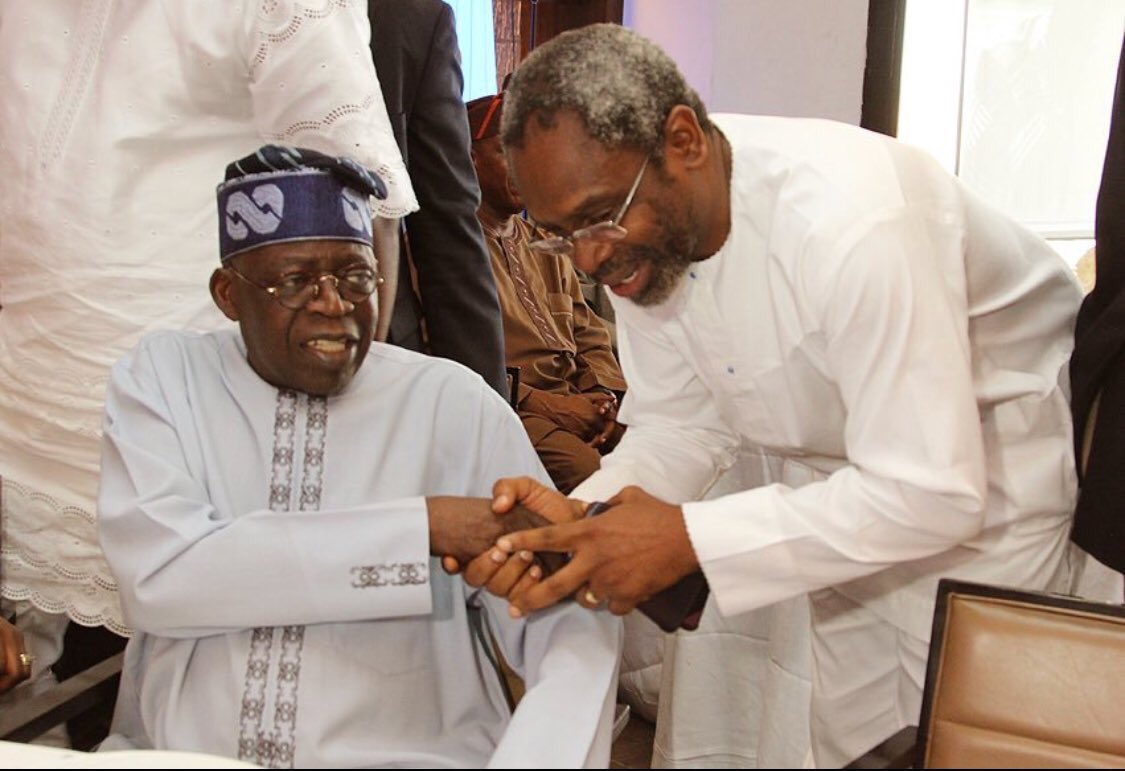
The Chief of Staff was also seen alongside the President during the inauguration, images many interpreted as a clear demonstration of presidential confidence.
It is this sequence of events that has become the real subject of national debate.
To supporters of the administration, there is no contradiction.
They argue that the Presidency had already publicly reviewed the available information and found no evidence linking Gbajabiamila to the alleged phantom council.
From that standpoint, they contend the ICPC investigation is directed at uncovering those behind the alleged fake organisation and any associated fraud, not the Chief of Staff.
Critics, however, insist the issue goes beyond legal technicalities.
For them, assigning additional responsibilities to a senior official whose name remains central to public allegations while an investigation is underway creates an impression that the government has already reached a conclusion before investigators complete their work.
Whether that perception is fair or not has become one of the defining questions surrounding the controversy.
History has also entered the conversation.
Several commentators have drawn comparisons with the handling of former Secretary to the Government of the Federation, Babachir Lawal, under the administration of former President Muhammadu Buhari.
In 2017, Buhari directed Lawal to step aside following allegations arising from the grass cutting contract scandal linked to the Presidential Initiative on the North East.
Although Lawal denied wrongdoing throughout the investigation, he remained out of office until the presidential panel concluded its assignment before he was eventually removed from government.
Supporters of that decision argued at the time that stepping aside was not an admission of guilt but a necessary measure to preserve public confidence in the investigative process.
The phantom council controversy is different in important respects.
No investigative agency has publicly indicted Gbajabiamila and the Presidency insists it has already examined the available records before publicly expressing confidence in him.
However, critics contend that the present controversy eclipses the Babachir Lawal case in terms of the seriousness of the allegations and the potential implications for governance, institutional credibility and public trust.
Even so, experts argue that perception often becomes inseparable from accountability whenever allegations reach the highest levels of government.
Reacting to the latest developments, the Executive Director of the Media Advocacy and Technologies Centre, Comrade Musa Aliyu, said the Presidency’s handling of the matter has created the impression that influential interests are being shielded instead of allowing an investigation to proceed without questions over impartiality.
According to him, the interest of justice, transparency and accountability requires that any senior official whose name features prominently in such allegations should temporarily step aside pending the outcome of investigations.
“We are dealing with very weighty allegations. Nobody is saying the Chief of Staff has committed any offence. But in the interest of fairness, he should excuse himself while the investigation continues. If he is eventually cleared, he can return to office. That is how public confidence is built,” Aliyu said.
He argued that the allegations go beyond ordinary political disagreements because they involve claims relating to appointment letters allegedly bearing the authority of a very high office, the operation of an office within the Federal Secretariat and reports that the disputed council had a budgetary allocation despite the Presidency’s insistence that it never existed.
According to him, assigning Gbajabiamila another strategic national responsibility shortly after announcing an investigation inevitably raises questions about the credibility of the process.
“In matters like this, perception matters. Even if he is eventually exonerated, the public may still question whether the investigation was truly independent if one of the key figures continued to occupy such a powerful office throughout the process,” he added.
Aliyu urged Nigerians not to lose faith in democracy, saying citizens must continue to demand accountability from elected leaders while using the ballot box to determine the country’s future.
A public affairs analyst and development advocate with the Community Outreach for Development and Welfare Advocacy (CODWA), Comrade Taiwo Otitololaye, believes the controversy points to a much deeper institutional problem.
According to him, the alleged phantom council could not have generated such widespread attention if government institutions responsible for oversight had functioned effectively from the outset.
“The whole thing is a systemic failure. We are operating within a failed system, and it is not even only about Gbajabiamila but about the government in power.
“This issue reportedly went through ministries, departments and agencies, to the National Assembly, and there was an appropriation that warranted the allocation of funds.
“The DSS, EFCC, ICPC and other security agencies could not raise any alarm then. In a healthy society, Gbajabiamila should be suspended to allow investigators to do their job thoroughly. That should not be seen as a declaration of guilt but as a step that will strengthen public confidence in the investigation”, he stated.
He also faulted the reported arrest of Adeyemi’s father, arguing that investigations should focus strictly on individuals directly connected to the allegations.
“The reported arrest of Adeyemi’s father also raises concerns. You cannot arrest the father of an accused person in place of the person you are looking for. If that is the case, then he should be released immediately”, he noted
Otitololaye maintained that suspending the Chief of Staff while investigations continue would not amount to declaring him guilty but would strengthen public confidence in the integrity of the process.
“The appointment of Gbajabiamila, who is at the centre of this controversy, to another important national assignment leaves a question mark over the government’s handling of the matter. Suspending him pending the outcome of the investigation would reinforce confidence in the integrity of the process”, he submitted.
Aside from the exchanges between government officials and critics, the ICPC now finds itself under intense public scrutiny. Its assignment is no longer simply to determine whether any criminal conduct occurred.
The commission must also demonstrate that its investigation is independent, evidence based and insulated from political influence.
Whether it succeeds may shape public confidence not only in the outcome of this particular case but also in the administration’s broader anti corruption credentials.
For now, the phantom council saga has become a test of institutional credibility and political accountability.
As the 30 day deadline draws nearer, whether the ICPC ultimately clears or indicts anyone may not be the only issue that shapes public judgment.
For many Nigerians, the credibility of the investigation will depend not only on its findings but also on whether the process is seen to have been transparent, independent and free from political influence.
It is that test of public confidence, perhaps more than anything else, that now confronts the Tinubu administration.