
Anti-graft fight: We uncovered mind-boggling corruption in oil sector – EFCC
The Economic and Financial Crimes Commission (EFCC) said yesterday that it has commenced investigation into the financial records of the nation’s oil and gas sector and has uncovered “mind-boggling” level of corruption. The Chairman of the EFCC, Ola Olukoyede, stated this in Abuja, during the National Conference on Public Accounts and Fiscal Governance organised by […]
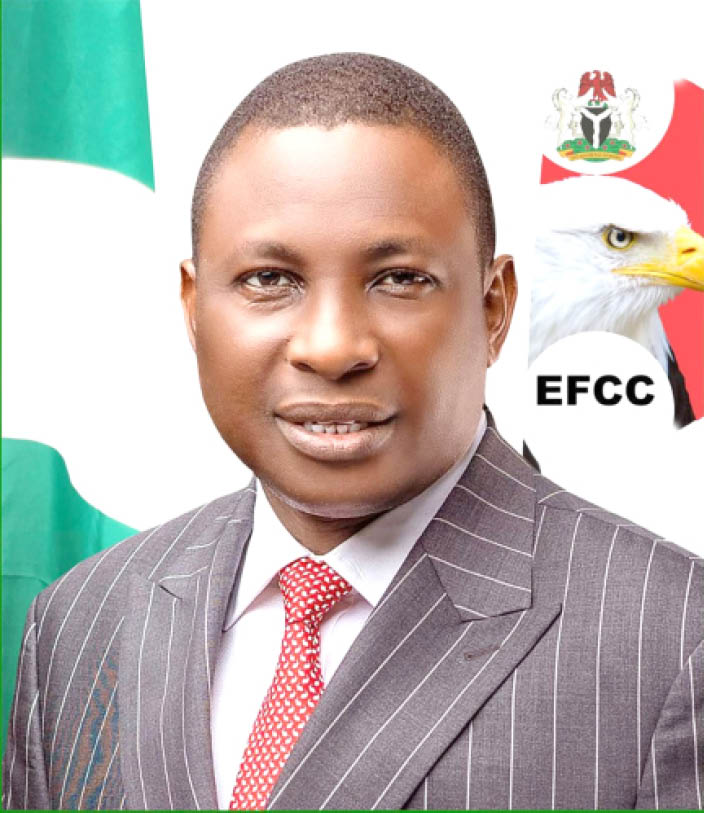
EFCC Chairman, Ola Olukoyede
The Economic and Financial Crimes Commission (EFCC) said yesterday that it has commenced investigation into the financial records of the nation’s oil and gas sector and has uncovered “mind-boggling” level of corruption.
The Chairman of the EFCC, Ola Olukoyede, stated this in Abuja, during the National Conference on Public Accounts and Fiscal Governance organised by the Public Accounts Committees of the Senate and House of Representatives.
Olukoyede described the scale of corruption in Nigeria’s public sector as deeply disturbing.
He said the investigation was only scratching the surface of widespread fiscal malfeasance, even as he charged the National Assembly on legislation that would criminalise unexplained wealth.
“In the last three weeks, we started a commission-wide investigation into the extractive industry, particularly the oil and gas sector. What we have discovered is mind-boggling. And we have only just opened the books. So, much more corruption is to be unravelled. If this is what we’re seeing at the surface, imagine what lies beneath,” Olukoyede said.
He said fiscal rascality and mismanagement of public resources were at the heart of the country’s economic challenges and rising insecurity.
“There is a very strong connection between the mismanagement of our resources and insecurity. When you look at banditry, kidnapping, terrorism, trace it back, and you will find a pattern of corrupt practices and diversion of funds that were meant to improve people’s lives,” he said.
He noted that current laws prevent the EFCC from prosecuting individuals with suspicious wealth unless a specific “predicate offence” like theft or fraud is proven.
“Help me pass the Unexplained Wealth Bill. I’ve been begging for the past one year. This same bill was thrown out in the last Assembly. If we don’t make individuals accountable for what they have, we’ll never get it right.
“Someone has worked in a ministry for 20 years. We calculate their entire salary and allowances. Then we find five properties — two in Maitama, three in Asokoro. Yet we’re told to go and prove a predicate offence before we can act. That is absurd,” he said.
He explained that the proposed legislation would make it a strict liability offence for any individual to possess assets far beyond their known and legal income sources.
“Once you are living beyond your means, you should be held to account. Until we do this, there will always be an escape route for the corrupt,” he added.
Olukoyede painted a grim picture of the global trail of Nigeria’s looted funds, disclosing that the commission was tracking illicit assets in several countries, including some unlikely destinations.
“Last month alone, I visited four or five countries chasing Nigeria’s stolen assets. An ambassador even told me they discovered an estate in Iceland owned by a Nigerian. Iceland of all places!” he said.
He admitted that even the most efficient anti-corruption agency cannot recover more than half of Nigeria’s looted funds, largely due to resistance from foreign custodians of stolen assets.
“There is no amount of capacity I can build, no level of effort I can put in, that will enable me to recover even half of what has been stolen from Nigeria because the custodians of those assets in foreign countries don’t want to let go. And they won’t,” he said.
He criticised foreign governments for enabling corruption by retaining stolen Nigerian wealth under various pretences, insisting that international law holds them complicit.
“I told them at the United Nations Forum last December that if you are holding onto Nigeria’s stolen assets, we see you as an accessory after the fact. They grumbled, but I didn’t care,” Olukoyede said.
He also decried the culture of impunity in Nigeria’s public sector, where individuals under prosecution are often celebrated while institutions disregard basic financial accountability.
“We are doing this work. We see people who have stolen our money. We have shown you evidence. We’ve traced where the money went. We are already in court. Yet, they’re being celebrated all over the place. Does that show we’re serious?” he asked.
He said over 700 federal Ministries, Departments and Agencies (MDAs) still operate without effective internal control mechanisms, posing a challenge for oversight.
“How many books can you check? How many files will you read? We need to build strong internal compliance systems that can proactively checkmate corruption,” he said.
According to him, corruption is stalling Nigeria’s development and contributing to unnecessary borrowing.
He cited his analysis presented during his Senate confirmation, revealing that 90% of stolen public funds in a single year ended up abroad—funds that could have built hospitals, schools, and funded education.
“If we execute even 60% of our capital budget efficiently between 2025 and 2026, we will empower small and medium-scale industries. We’ll build infrastructure. We’ll be fine,” he said.
He said Nigeria has no business borrowing to survive given its vast natural and mineral resources.
“What we need is transparency in revenue generation and accountability in public expenditure,” he said.
‘Current administration may be Nigeria’s last shot at redemption’
Olukoyede urged politicians to rise above ethnic and partisan interests to tackle corruption, warning that the current administration may be Nigeria’s last shot at redemption.
“If we miss it under this administration, I pity Nigeria. Let’s put politics aside. Let’s put ethnicity aside. This is about rescuing the soul of Nigeria,” he said.
He also appealed to lawmakers and citizens to ignore pushback from vested interests and social media trolls.
It would be recalled that President Bola Ahmed Tinubu had, in April 2025, in a sweeping reconstitution of the NNPCL board, removed the chairman, Pius Akinyelure and the Group Chief Executive Officer, Mele Kyari. The GCEO was consequently replaced by Bashir Ojulari as the new CEO, effective from April 2, 2025.
Among the officials affected by the shakeup was the Managing Director of Warri Refinery, Tunde Bakare; Ahmed Adamu Dikko, former MD of Port Harcourt Refinery and Ibrahim Monday Onoja, former MD of Port Harcourt Refinery.
The shakeup, which affected other top officials of the NNPCL, came amidst concerns being raised by civil rights groups over the management of the turnaround maintenance of the nation’s refineries which gulped multi billion naira.
Few months after Kyari’s sack, the anti-graft agency clamped down on top former officials of the oil firm including the Managing Directors of the three refineries -Kaduna, Port Harcourt and Warri – in its bid to probe where the funds were allegedly expended amid refineries’ failure to function.
The EFCC launched an investigation into the activities of the former management team, inviting some key officials for questioning over allegations of mismanagement of public funds.
While details of the investigation remain largely confidential, sources within the anti-graft agency confirmed that several high-ranking officials, including directors had been queried as part of a broader forensic audit into the company’s books.
Civil society organisations and other groups have been calling for a full-blown probe of the past NNPCL management, especially its handling of the turnaround maintenance of refineries among others.
They argue that the alleged corruption within NNPCL is deeply systemic and must be confronted head-on if Nigeria is to make any meaningful progress in reforming its oil and gas sector.
Two weeks ago, the detectives of the EFCC were said to have arrested a former Chief Financial Officer (CFO) of the oil firm, Umar Ajiya Isa.
Isa, as the CFO, was in charge of release of funds for the turnaround maintenance of the three refineries.
However, Isa denied reports of his arrest by the antigraft agency, saying, he only responded to their invitation.
Other officials involved in other key NNPC projects are being investigated for alleged abuse of office, corruption, diversion of funds and kickbacks from contractors, it was gathered.
Although not much has been heard of the former GCEO of NNPCL, Mele Kyari, since his removal, sources said he is currently out of the country.
The source said he had been away from Nigeria for weeks and lived in the United Arab Emirates. It was learnt that he took part in the just concluded Hajj, and that there is no actual date for his return to the country.
One of the sources said: “After the Hajj exercise, Kyari went back to the UAE…he will be there for some time.”
Strong political will needed to fight corruption – CISLAC
The Executive Director of the Civil Society Legislative Advocacy Centre (CISLAC), Auwal Musa Rafsanjani, in an interview with Daily Trust, said the corruption in the oil and gas sector could not be fought without strong political will.
He stressed that the position of the president as the substantive Minister of Petroleum constrains the independence of anti-corruption investigations.
“There’s a limit to what the EFCC or even ICPC can do when the president himself is the Minister of Petroleum. It’s not just about EFCC’s willingness — political interference is a major stumbling block.
“Let’s not make the mistake of thinking it’s just about a particular GM. If you want a fair and transparent investigation, start from 1999 till date,” he stated.
Rafsanjani backed the EFCC’s call for the passage of the Unexplained Wealth Bill, which seeks to criminalise possession of assets or funds that cannot be justified by lawful income.
He said the legislation is long overdue, especially in a country where public officials live extravagantly without accountability.
“You see people in government earning N500,000 monthly but owning estates, plots of land, and living in obscene luxury. This bill can help discipline that impunity,” Rafsanjani said.
He noted that institutions like the Code of Conduct Bureau, which are supposed to enforce asset declaration laws, have become ineffective and politicised.
“Since the Code of Conduct has become toothless, maybe the Unexplained Wealth legal framework can help restore sanity. It can complement asset declaration and help track looted public funds,” he said.
“EFCC needs moral support, but political blessing is key”, he said.
While applauding the EFCC and ICPC for their efforts, the CISLAC director admitted that no real progress can be made without direct support from the president.
“They are doing their best, but to take decisive action like recovering stolen assets, they need more than moral support — they need the political blessing of the president,” he said.
Rafsanjani said if Nigeria truly wants to reform its oil and gas sector, it must go beyond media headlines and allow independent institutions to do their jobs without interference.