
APC crisis and Buni’s exceptional approach
On June 25, 2020, Nigeria’s ruling political party, the All Progressives Congress (APC) took a decisive measure to save itself from imminent collapse. The party was sitting on the edge of a cliff, drifting towards disintegration. Numerous internal wrangling, several court cases and power play were threatening the existence of the party. Buni, Zulum as […]
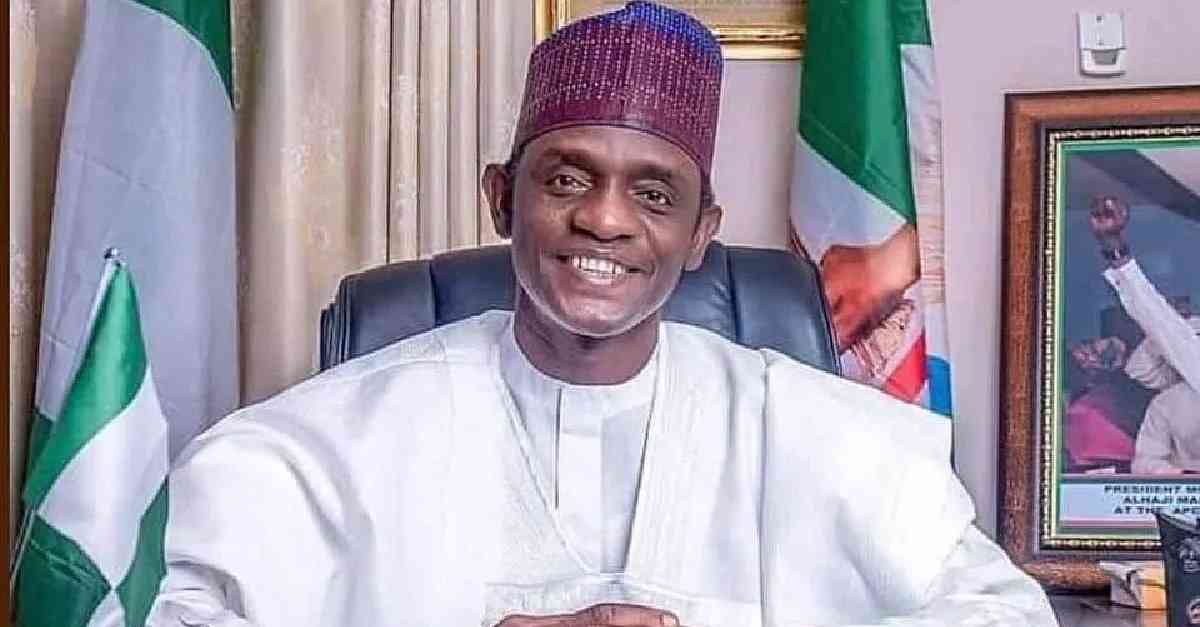
Governor of Yobe State and Chairman, Caretaker Committee of the All Progressives Congress (APC), Mai Mala Buni
On June 25, 2020, Nigeria’s ruling political party, the All Progressives Congress (APC) took a decisive measure to save itself from imminent collapse.
The party was sitting on the edge of a cliff, drifting towards disintegration. Numerous internal wrangling, several court cases and power play were threatening the existence of the party.
The party’s National Executive Committee (NEC) was left with the only option of dissolving the National Working Committee (NWC). Consequently, the NWC was dissolved.
The next challenge was to get the right person for the job at this challenging moment. The unanimous decision of the NEC to nominate Governor Mai Mala Buni of Yobe State to chair a 13-member caretaker committee to rescue the party became necessary.
Inaugurating members of the committee, Governor Buni reminded them that the task ahead was herculean, yet achievable. He emphasised the policy of true reconciliation, justice and fairness to all, as the major antidote to reclaim the party.
The first major reconciliatory/consultation move was a visit to Chief Bisi Akande at his Ila Orangun country home in Osun State. This became the beginning of the success story for the assignment.
Governor Buni, supported by Abubakar Bagudu of Kebbi State, the chairman of Progressives Governors Forum; Governor Abubakar S. Bello of Niger State , and their Osun State counterpart, Gboyega Oyetola, consistently expressed optimism that it would be a true reconciliation of all members and a successful rehabilitation of the party.
Akande, a key founding member of the party, did not mince words while receiving the team. He said in clear and unambiguous terms that the calibre of people on the committee and others who visited him had renewed his hope for a new APC. He said with Mai Mala chairing the committee, there is light at the end of the tunnel.
“There is great hope in what l have seen today in this committee. The party will certainly bounce back to life and much stronger. I will continue to leave myself open to the committee. I also call on other stakeholders to support the promising committee to rescue the party,’’ he said.
For Buni, the reception accorded the committee by Akande was a tonic to work assiduously to achieve the set goal of reinventing the party.
“With such support and encouragement from founding members like Chief Akande, we are strengthened and confident that all stakeholders will extend the required support for the party to emerge stronger,” he said.
Most stakeholders of the party were, however, sceptical over the possibility of the Buni-led commitee to convince Asiwaju Bola Ahmed Tinubu. The sceptics believed that the Adams Oshiomhole NWC that was dissolved was a political structure of Tinubu.
It was feared that the national leader would not forgive the dissolution so easily. However, his acceptance to see the Buni committee within such a short notice, to many, came as a surprise.
What was more surprising were his comments after their meeting. Tinubu said, “The meeting was about consultation and not reconciliation.
There is no problem in the party that calls for reconciliation. What we have is consultation for the growth of the party.”
That outing by Gov Buni and his team was a turning point towards repositioning the party. This was supported by other talks going on between the committee and other seeming aggrieved stakeholders, who were quick to embrace the policy of true reconciliation preached by the committee.
For those closely following the caretaker committee, it was not surprising when, on Friday afternoon, Gov Buni led former Speaker of the House of Representatives, Yakubu Dogara, to the Presidential Villa to see President Muhammadu Buhari. The outcome of the meeting was the announcement of Dogara’s return to the APC.
Dogara left for the PDP when he fell out with the former governor of Bauchi State, his home state, Mohammed Abubakar.
The return of Dogara to the APC is by all standard and measure, a big catch for the party. Dogara remains a national figure, with a lot of political influence within and outside Bauchi State.
His earlier defection from the APC to PDP before the 2019 elections caused political havoc to the APC as it lost Bauchi State to PDP. He is indeed a valued treasure for any political party.
The policy of fair play and justice as preached by the caretaker committee was practicalised in the just concluded APC primary election in Ondo State.
Dialogue dominated the campaigns, which saw many aspirants stepping down in the interest of the party, while those who contested were given equal opportunities and fair hearing.
This became a solution to the initial fear of violence in the Ondo primary election.
Dogara’s return to the APC within just a month after the caretaker committee was constituted, significantly implies that more bigwigs who left the party for feeble reasons and now engaged by the Buni-led committee, are definitely on their way back.
As events unfold, all eyes are now looking towards Yola for the return of Atiku, Kano for Kwankwaso, Kwara for Saraki, Sokoto for Tambuwal and others.
Buni’s approach, centred on true reconciliation, justice and fair play, has no doubt taken the path of building a sustainable internal democracy in the APC and opening a new chapter of developmental democracy for national growth.
It also builds the capacity of political parties on fairness, transparency and opportunities for politicians to actualise their ambitions.
The approach, if sustained, would check unnecessary cross-carpeting, which has become a political fashion in Nigeria’s democracy.
This is an approach that needs to be supported by true democrats and emulated by all political parties, including the PDP, which had to pay the price of losing the 2015 presidential election.
Mohammed is the director-general, Press and Media Affairs to Governor Mai Mala Buni.