
Arase, how could you?
The time was 5.25am on Sunday. Sleep had eluded me all night. My doctors attribute that to a couple of my medications – smallish things, very effective – but they deny me sleep now and then. Tired of tossing about and around the bed, arranging and rearranging the pillows as advised since 1.30am, I picked […]
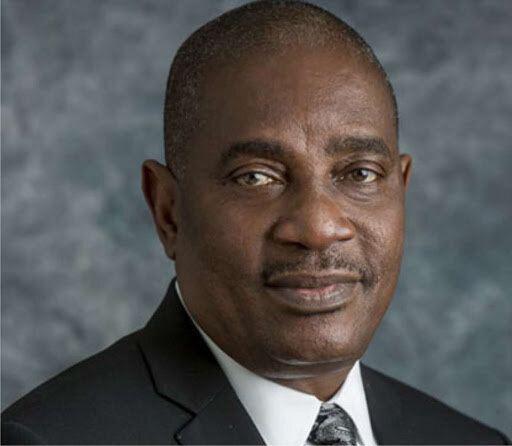
Former IGP, Solomon Arase
The time was 5.25am on Sunday. Sleep had eluded me all night. My doctors attribute that to a couple of my medications – smallish things, very effective – but they deny me sleep now and then.
Tired of tossing about and around the bed, arranging and rearranging the pillows as advised since 1.30am, I picked up my phone. It was 11.25am in my beloved country, Nigeria, to which I can’t wait to go back.
Loneliness is definitely a terrible illness. These guys here work unbelievably hard, almost 24/7. So when they “dash” you $20, appreciate it. It didn’t come easy. When they go to work, I just stay with my medication and this big, lovely, playful cat as company; then, of course, books, television and my phone. It can be boring. Sometimes I talk to the cat and try to interpret every of its moves. His name is Jasper. I call him Jappy.
So, on Sunday at 5.25am, hungry for home news, especially from Rivers State after the local council poll of Saturday, August 30, I began to go through my WhatsApp messages. The first one I regrettably read was about a retired Inspector-General of Police. I say regrettably because from the moment I read it, my day was ruined. I lost myself and couldn’t coordinate. Confusion set in. My throat became tight and began to hurt. So did my eyes. The tears streamed down my cheeks uncontrollably. By 3.30pm, I was still in the room; in bed staring at nothing. No breakfast, so none of my morning medications were taken – something I should have taken since 7am. Where was the strength to do that? My mouth had turned dry. I was too depressed to think straight. And I was very angry at the world. I hardly knew what to think or believe.
The WhatsApp message was a one-liner. “My sister, Arase is dead!” I quickly sat up, rubbed my eyes with my right hand to make sure I was not “seeing double.” Then I spoke to nobody in particular: ‘Arase, you? How could you?’ And I began to sweat profusely. Two hours later, I was still sitting up. Then the calls started coming. I couldn’t talk. I tearfully answered some and ignored others. I am a journalist. They were breaking the news to me to write, but this was one story I refused to break. I was in self-denial! How would I refer to Solomon Arase in the past?
I first met Arase in 2008 when I had just been inaugurated as a federal commissioner on the Board of the Police Service Commission (PSC). Retired Deputy Inspector General of Police, the irrepressible Parry Osayande, was the chairman. We were appointed by the President Olusegun Obasanjo Government, but were eventually inaugurated during the late President Umaru Yar’adua government.
It was two days after our inauguration and the first day we had a meeting with the Police Management Team and very senior police officers. I think it was from the rank of AIGs and above, at the Force Headquarters.
They welcomed us with full baskets of complaints – marginalisation, favouritism, irregular and illegal promotions, promotions that neither passed through the PSC nor were approved by it. We were overwhelmed. One by one, those who spoke asked for a reversal because they insisted that it was affecting the morale of officers whose juniors were suddenly promoted above them. We were compelled to first pay attention to their compliments. Uniformed services take that seriously.
It happens. When an officer stands out and performs exceptionally well, special promotions are allowed. The problem is that at times, it is annoyingly abused. I remember insisting and fighting for such promotions in favour of the gallant officers who arrested billionaire kidnapper, Evans. When the name of one of the officers, in fact, the one who took the most risk, Philip, was inexplicably omitted, I hit the roof. The name was finally included. In that operation, he was the star.
But the complainants during our first meeting insisted that merit was not the case. They said it was favouritism. However, what eventually counted against a couple of the promoted officers was that their promotions did not pass through the PSC. In one case in particular, the PSC, before we assumed office, had, through the permanent secretary, rejected his promotion twice and dismissed it as illegal.
I don’t quite remember the names of the officers now, but I remember Solomon Arase and the now National Security Adviser, Nuhu Ribadu – both brilliant and gallant officers. Ribadu’s promotions, as explained to us by both the PSC permanent secretary and the Force Headquarters, came from the Presidency. It was not his fault.
Ribadu was the chairman of the Economic and Financial Crimes Commission (EFCC) and was doing a great job, so he deserved the promotion. But it was done illegally, they pointed out. Why not pass it through the PSC? Why not pass it through the right channel – from Force Headquarters (IGP’s office) to the PSC, which would either reject or endorse it?
In my unprecedented 10 years on the Board of the PSC, only two times did it reject such requests from the Presidency. Incidentally, both happened during Osayande’s leadership of the PSC. And, guess what: it came from a former First Lady who wanted her aide de camp (ADC) promoted. Only an Osayande could reject such a request in the manner he did. He used his red pen to run across the list, which was, insultingly, signed by the ADC. Then, he sent across a strong warning, in writing, which a couple of us took away and aborted its delivery. But he insisted on inviting the ADC through the then IGP for disciplinary actions. Again, a couple of us intervened to “cool temper.”
Behind Arase, many people recommended him for the office. He stood out. But Jonathan, some said naive, others said patriotic, yet some said a man desirous of unity, refused Arase’s elevation to the IGP. Reason: He said the then Director-General of the State Security Service (SSS), Ekpenyong Ita, was from the South-South. He reasoned, therefore, that he would be accused of nepotism if he appointed Arase, also from the same zone as the IGP. I wonder if Jonathan regrets that now, seeing that such appointments from the same zone meant nothing to his successors –Muhammadu Buhari and President Bola Tinubu. In such sensitive offices, they added competence to loyalty. Arase was very competent to have been appointed the IGP at the time, irrespective of his region of origin.
The applause will remain. But the clock stopped so suddenly; the bells too. And the infectious smiles, the laughter. A good man exited just like that at 69. Dear brother, what went wrong?
Fare thee well, great patriot, fare thee well, good officer. I weep. I mourn with your family and the Nigeria Police Force (NPF). Good trip; rest well in the Lord. Intercede on behalf of your shattered and devastated family. They are not alone. And they are not the only ones whose hearts are broken. It has not quite sunk in. It is like a bad dream. I wish it were! But we take solace in our belief that God knows best. Some consolation.
This is an abridged version of the tribute by Obi, who is the Editor-in-Chief/Chief Executive Officer of The Source magazine.