
ASUU reveals what Tinubu promised then before 2023 election on Inside Sources
Professor Emmanuel Osodeke, President of the Academic Staff Union of Universities (ASUU), has disclosed details of promises made by President Bola Tinubu before the 2023 presidential election. Speaking while featuring on Channels TV’s Inside Sources with Laolu Akande, Osodeke said, “When we were on strike, Mr. President [Bola Tinubu] was in touch with us. That […]
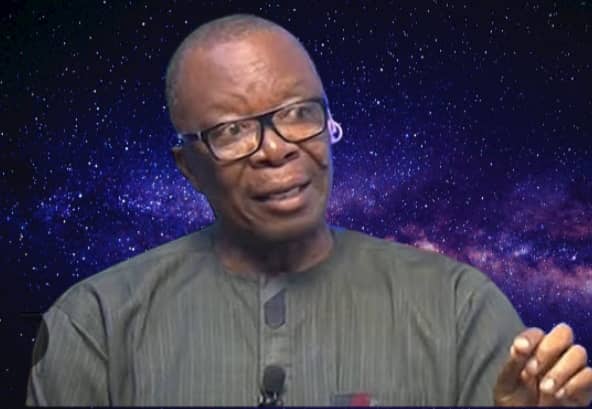
ASUU National President, Prof Emmanuel Osodeke
Professor Emmanuel Osodeke, President of the Academic Staff Union of Universities (ASUU), has disclosed details of promises made by President Bola Tinubu before the 2023 presidential election.
Speaking while featuring on Channels TV’s Inside Sources with Laolu Akande, Osodeke said, “When we were on strike, Mr. President [Bola Tinubu] was in touch with us. That was before he got elected as president, when we were on strike in 2022.
He told us, ‘We will solve all these problems.”
However, despite this commitment, the ASUU leader revealed that there has been little progress since Tinubu assumed office on the issues around which they discussed then regarding the situation in Nigerian universities.
But the ASUU leader added that they did not relent and still pursued the president after he was elected.
According to him “when he was elected, we put up a team of strong-brained economists together and we came up with a blueprint of what we think we can give to him to look at. We wrote requesting for a meeting, and till today, we didn’t get a reply.”
ASUU’s proposals, which were crafted by experts from various fields, are aimed at addressing long-standing issues plaguing Nigeria’s tertiary education system, including funding, staffing, and infrastructural deficiencies.
Despite writing to the president directly and making their efforts public, ASUU has yet to receive any response from the government.
“We also wrote again recently [in June]. We even published it in the papers so that people will know what we are doing,” Osodeke added.
One of the most contentious issues remains the government’s use of the Integrated Payroll and Personnel Information System (IPPIS) for paying university staff salaries. According to Osodeke, the IPPIS system was imposed by external forces, namely the International Monetary Fund (IMF) and the World Bank, and is ineffective in managing the complexities of university payroll.
“Nigeria is using IPPIS to pay salaries. It was given to them by IMF and World Bank, which was developed for them for which we are paying in dollars every month. We said this thing cannot solve our problems.”
In response to the shortcomings of IPPIS, ASUU developed its own payroll solution—the University Transparency and Accountability Solution (UTAS).
“We produced UTAS within three months. We tested it. The first time, it scored 93.7% by government results. They said no, there is issue with integrity. We said fine. Let’s test all of them, including IPPIS together, and UTAS came first out of the three tested. IPPIS came distant last,” Osodeke explained.
Despite the clear superiority of UTAS, Osodeke lamented that the government has continued to use IPPIS.
“This regime, to be fair to them, directed that all tertiary institutions should be exited from IPPIS as of December last year. As I speak to you now, they paid my September salary with IPPIS,” he said, emphasizing the disconnect between government directives and the actions of civil servants, particularly the Accountant-General’s office.
The persistence of IPPIS, despite its flaws, has also led to widespread payroll fraud, Osodeke revealed.
“There are many people today who are no longer in the universities or have traveled abroad who are still earning salaries under IPPIS. And there is no way the VCs will know. Now, you cannot even punish many staff. You put someone on suspension, and he still gets his salary.”
The ASUU president expressed dismay at the lack of consultation with the country’s academic institutions when it comes to national problem-solving, a practice that he believes should be standard in any country serious about growth. “In countries that want to grow, when there is an issue or problem, you consult the universities to help you resolve those problems. But here, nobody does that. Our universities are ignored. You’re running abroad. And those you are going to meet abroad are not as good as your people here. When we go for contests, we are on top.”
Osodeke’s remarks also touched on the creation of the Tertiary Education Trust Fund (TETFUND), an initiative born from ASUU’s collaboration with the government during the military regime of the 1990s.
“In the 1990s, the government asked us how they were going to generate money to fund education. We asked for one week to go and think. And after one week, we helped draft a Decree to establish TETFUND. That was during the military.”