
Atiku: Onanuga’s defence of Gbaja generates more questions than answers
Former Vice President and Presidential Candidate of the African Democratic Congress (ADC), Atiku Abubakar, has accused the Presidency of attempting to explain away the scandal surrounding the Presidential Foreign Intervention Promotion Council (PFIPC). In a statement issued on Thursday by his Senior Special Assistant on Public Communication, Phrank Shaibu, Atiku said the response by Presidential […]
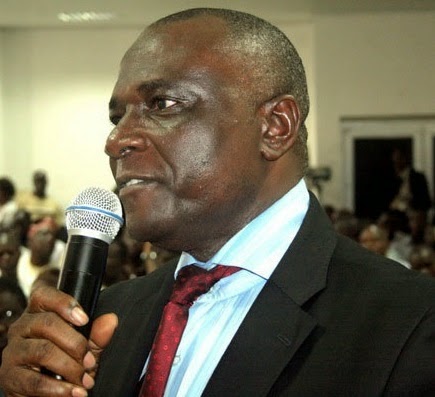
Former Vice President and Presidential Candidate of the African Democratic Congress (ADC), Atiku Abubakar, has accused the Presidency of attempting to explain away the scandal surrounding the Presidential Foreign Intervention Promotion Council (PFIPC).
In a statement issued on Thursday by his Senior Special Assistant on Public Communication, Phrank Shaibu, Atiku said the response by Presidential Spokesperson Bayo Onanuga was not a defence of the government but a public confession of institutional collapse.
“There is an African proverb which says that ‘the man who points at the moon should not have blood on his finger.’ A government cannot claim to be exposing fraud while simultaneously struggling to explain how that same fraud found its way into the very heart of the Nigerian state.”
“What the Presidency intended as damage control has become self-indictment. Rather than extinguish the fire, it has illuminated how deeply the flames have consumed the foundations of governance.
“The Presidency now wants Nigerians to believe that one private citizen single-handedly forged presidential documents, impersonated senior government officials, established an office inside the Federal Secretariat, allegedly opened dozens of bank accounts—including accounts bearing government identities—hosted foreign ambassadors without diplomatic clearance, secured official recognition across several government circles, and all but embedded a phantom agency into the machinery of government without a single insider aiding him. That explanation demands far greater faith than the scandal itself.
“There is another timeless African proverb: ‘When termites consume a tree from within, it still appears healthy until the first storm.’ The fictitious agency scandal is that storm. What Nigerians have witnessed is not merely the exposure of an alleged impostor; it is the exposure of institutions hollowed out by years of negligence, incompetence and impunity.
“Even more troubling is the glaring contradiction that the Presidency has failed to explain.
“On one hand, it insists that the PFIPC never existed and was nothing more than an elaborate scam. On the other hand, public records reportedly reveal that approximately ₦1.3 billion was appropriated for that very council in the 2026 Appropriation Act, listed alongside the Presidential Economic Advisory Council.
“This contradiction is too monumental to ignore. If the agency was fictitious, who prepared the budget estimates bearing its name? Which ministry submitted them? Which officials defended those estimates before the National Assembly? Which committees scrutinised them? Which lawmakers approved them? Who inserted the allocation into the Appropriation Bill? And ultimately, who signed that budget into law?
“As Chinua Achebe wisely observed, ‘A man who has been asked to carry a basket of eggs does not break them all and then blame the road.’ The road did not insert a phantom agency into an Act of Parliament. The road did not appropriate public funds. The road did not assent to the budget.
“The National Assembly stands thoroughly exposed. Billions of naira allegedly found their way into the national budget for an agency the Presidency now claims never existed, yet lawmakers neither detected the anomaly nor demanded explanations. That is not oversight; it is legislative abdication.
“The Central Bank of Nigeria cannot escape scrutiny either. Nigerians deserve to know how an alleged fictitious agency reportedly navigated financial processes that ordinary businesses struggle to complete. If regulatory safeguards exist only on paper, then the integrity of our financial institutions is itself under serious question.
“The Economic and Financial Crimes Commission has also been exposed by its selective zeal. An agency established to combat corruption appears increasingly consumed with pursuing opposition figures while exhibiting remarkable hesitation whenever allegations point towards the corridors of power. Anti-corruption loses all credibility when it becomes selective prosecution.
“There is yet another African proverb which says that ‘the lizard that jumps from the top of the iroko tree and praises itself often forgets that someone may have pushed it.’ The Presidency cannot congratulate itself for exposing this scandal while pretending it bears no responsibility for the institutional failures that allowed it to flourish.
“Whether this was an elaborate fraud aided by insiders or a catastrophic failure of governance, one conclusion is unavoidable: government failed.
“A government that cannot protect the integrity of its own budget cannot be trusted with the destiny of over 200 million Nigerians. A government that cannot distinguish between genuine agencies and fictitious ones has forfeited the moral authority to lecture anyone on transparency and accountability.
“The consequences of this institutional collapse are already evident in the daily suffering of Nigerians. While education, healthcare, agriculture and social protection continue to suffer chronic underfunding, billions mysteriously find their way into questionable structures.
“Nigerians were told to endure the hardship occasioned by fuel subsidy removal and the chaotic floating of the naira because sacrifices were necessary to rebuild the economy. Yet, while citizens tighten their belts, those operating within the corridors of power continue to discover astonishing new pathways through which public resources disappear.
“This is not simply poor governance. It is governance captured by dysfunction. It is a government where institutions no longer check one another but instead appear united only in explaining away failure after failure.
“As the Yoruba say, ‘When the wall develops cracks, the lizard is not the architect of its collapse.’ Prince Adeyemi may ultimately answer before the courts for whatever offences the law establishes against him. But Nigerians deserve answers to the far bigger questions that this scandal has thrown up. The Presidency cannot prosecute one man while refusing to explain the institutional contradictions that made his alleged activities possible.
“The PFIPC scandal is therefore no longer about one individual. It has become a metaphor for the Tinubu administration itself—a government where official explanations generate more questions than answers, where accountability begins only after public outrage, and where transparency has become a casualty of political expediency.
“As another African proverb reminds us, ‘A toad does not run in broad daylight for nothing.’ Something is fundamentally wrong within the machinery of this administration. Nigerians deserve the whole truth, not carefully scripted press statements.
“We therefore demand a truly independent investigation that follows the evidence wherever it leads. No sacred cows. No political protection. No selective justice.
“As Nigeria approaches another defining election, this scandal should remind every citizen that governments are judged not by the elegance of their excuses but by the weight of their record. The fictitious agency saga stands as yet another compelling reason why Nigerians must reject this administration and rescue their country from a government that has become a hostage to incompetence, institutional decay, and those who profit from both.”