
Bad Bananas and Blowback: Trump, Nigeria, and the Danger of Déjà Vu
In the early 1950s, bananas were a big deal in America. To many, they were symbols of American abundance and international trade. To others, they were the cornerstone of the idea that what was good for America was, somehow, always good for the rest of the world. The banana’s rise in American life was largely […]
canada, mexico, china kick as trump announces us tariffs
In the early 1950s, bananas were a big deal in America. To many, they were symbols of American abundance and international trade. To others, they were the cornerstone of the idea that what was good for America was, somehow, always good for the rest of the world.
The banana’s rise in American life was largely thanks to a company called United Fruit. On paper, it was a company that produced bananas. But in practice, it was something far more complicated. It was one part business and one part power broker. You see, United Fruit owned railways and controlled docks. And in places like Guatemala, the company quietly shaped who held political power — and who did not.
At the time, Guatemala was experimenting with something new: democracy. The president, Jacobo Árbenz, was not your typical revolutionary. He did not march in the streets for change, or call for an upending of the status quo. His revolution was quieter and much more strategic. He wanted to return unused farmlands to the indigenous people. So, he passed a law. A simple one called ‘Decree 900’ that would take Guatemala’s idle lands and give it back to everyday Guatemalan farmers. The problem was, much of that land belonged to United Fruit.
As you might assume, Washington was not happy. This is because, history has shown that in the American playbook, democracy is only welcome until it stops obeying American interests. In response, the United States overthrew him.
But of course, that is not what they said publicly.
Publicly, they said that they were stopping the spread of communism. That Árbenz had opened the door to Soviet influence. That the free world was under threat. But behind the scenes, their intelligence network went to work. They trained rebels, launched psychological operations, and flew threatening missions over the capital. Eventually, Árbenz resigned and United Fruits banana shipments kept moving.
Many of us like to tell ourselves that history is shaped by big ideas and grand concepts, but more often than not, it is shaped by simple things like bananas. That single intervention gave us a phrase we still use today, “banana republic.”
So what does any of this have to do with Nigeria? More than it should.
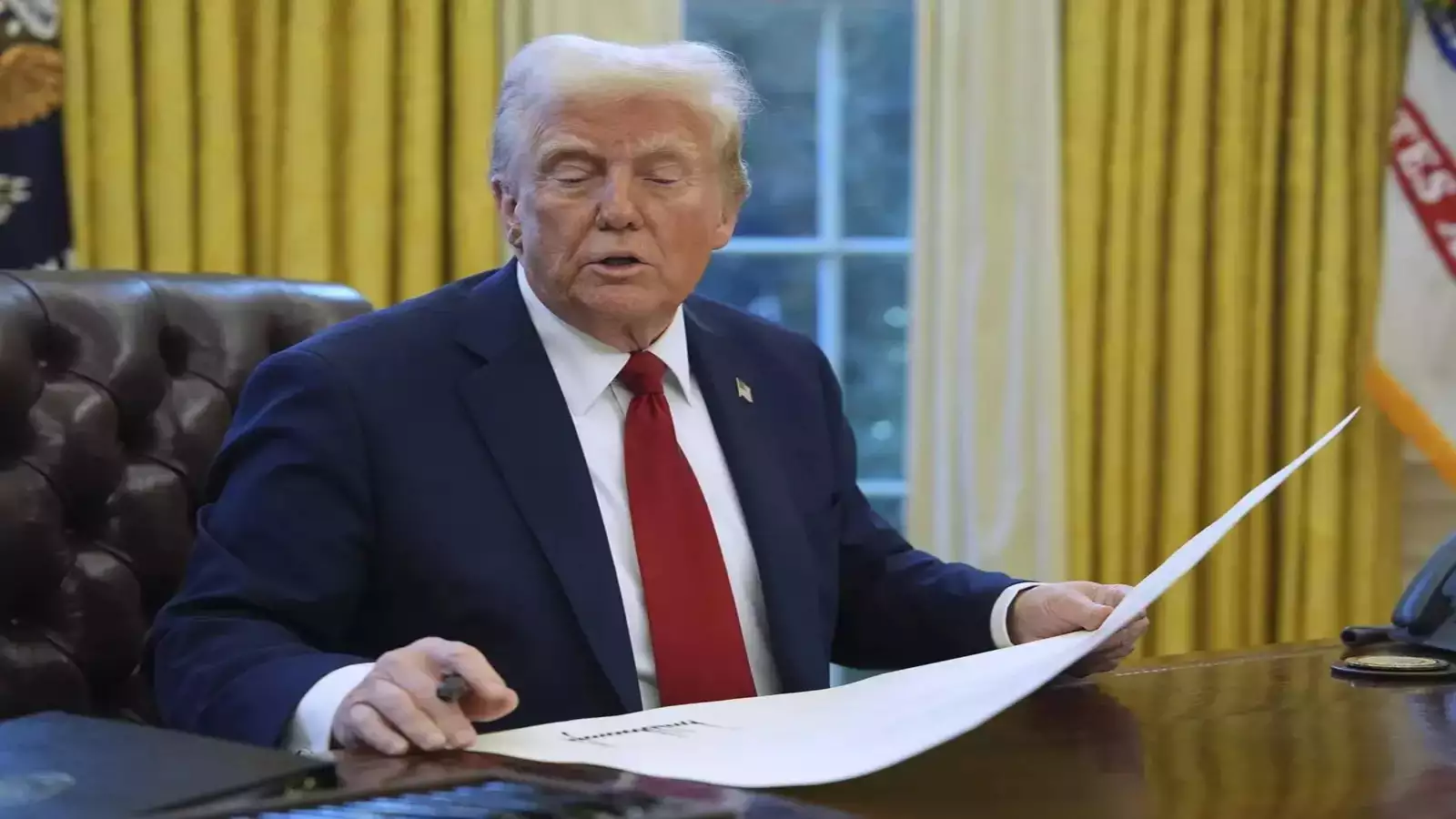
Trump’s recent posts on Truth Social have set the stage for a dystopian version of the Guatemalan banana story. At the center of this script are two actors, Trump, with his posts warning that Christians in Nigeria are facing “mass slaughter,” his declaration of Nigeria as a “Country of Particular Concern,” and his promise to come in “guns-a-blazing” to “protect” Christians from terrorists if the Nigerian government fails to act, and President Bola Ahmed Tinubu, the opposite of Árbenz — a man known to focus on Nigeria’s select partisan and political few, in contrast to Árbenz, who focused on the everyday suffering many.
Together, they revive a familiar dance, one that begins with threats, escalates into action, and ends with everyday people paying the price. In Guatemala, it was about land. In Nigeria, they say it is about lives. But in both cases, the danger lies in the flawed assumption that foreign power can fix what local failure refuses to confront, namely, insecurity.
Now, here is what we know so far.
In the days leading up to Trump’s post, several Nigerian media outlets confirmed reports of an attempted coup. A few days later, others reported the arrest of sixteen military personnel accused of plotting it. Throughout all of this, the Nigerian government remained silent. The public’s response was not alarm but indifference. There were no protests against the plot, no groundswell of support for the government, only whispers, innuendos, and jokes on social media. And in Washington, innuendos have a way of turning into suspicion, especially when they do not happen in isolation.
Mali. Burkina Faso. Niger. One by one, West African states have slipped out of the grip of the West and turned toward new partners — Russia, China, and the strategic alliances, like BRICS, that follow them. The United States has watched its sphere of influence in the sub-region shrink. Nigeria, one of the continent’s giants, is a key piece on the chessboard. And so, when there are whispers of a failed coup and the Nigerian people are silent, Washington begins to worry.
Enter Trump’s social media post.
On the surface, it looks like concern for Christian lives. But history suggests something else. When it comes to the United States, one can argue that it is rarely about the people and always about the narrative. Freedom. Democracy. And human rights. But beneath that language, the mission is often simpler. Protect economic interests. Maintain influence. And guard strategic terrain. Oil, land, leverage, and sometimes, bananas.
In 1953, the United States removed Iran’s elected Prime Minister because of oil. In 1973, it backed a coup in Chile to protect copper. In 1999, it bombed Yugoslavia under the banner of human rights, expanding NATO while distracting from a domestic scandal. In 2003, it overthrew Iraq’s government for weapons of mass destruction that it never found. In 2011, it helped topple Gaddafi in Libya to “save civilians,” only to watch the country fall into chaos while the African Union’s gold-backed currency plans died with him. In 2019, it backed a failed coup in Venezuela for “democracy,” and for control of oil reserves. Different countries, different decades, different justifications, yet the pattern is always the same.
So, this time around, what does “protecting Christians” actually mean? Does it mean American boots in Zamfara? Does it mean airstrikes in Kaduna? And what happens the next day, when violence erupts in response? What happens when Nigerians begin to believe that one half of the country has been chosen, while the other half condemned? This is how the real chaos begin. Not with explosions. But with dangerous foreign narratives that do not understand local nuance that becomes a strategy, then a policy, then potentially, a war.
The truth is, Nigeria does not need Americans to swoop in “guns-a-blazing”. What it needs is political will and real security reform. It needs a president and a National Assembly who are willing to build a new security architecture and lead from the front — not from behind microphones and media aides. Because once a foreign army intervenes under the banner of religion, Nigeria’s fragile balance will not bend. It will break. And when that happens, it won’t be Washington, the same Washington now beating the drums of war, that stays behind to pick up the pieces.
That is what blowback really means. It is the slow, permanent consequences of poorly thought-out geopolitical power-plays. It is the ghost of Árbenz, the scars of Iran, the fires of Fallujah, and the ruins of Kabul.
Let’s not add Abuja to that list.
If President Trump believes that Nigeria can be reshaped from afar, maybe it is time that he remembers what history did with that banana. Because in the end, this was never really about 7000 Christians or saving lives, it has always been about Trump rallying support amongst his evangelical base and the fear that Nigeria is no longer a guaranteed puppet — but a restless sovereign nation that has chosen to drink with Russia, dance with China, while neglecting to have dinner, or bananas, with the United States.
For now, I rest my case.
— Oluwole Onemola writes from Abuja.