
Battle for 2027: Despite APC’s overtures, opposition still holds winning card – Umar Ardo
Dr Umar Ardo is the convener of the Northern League of Democrats, one of the key groups championing the recent coalition of opposition leaders. The former governorship candidate in Adamawa State also served as secretary of the coalition’s sub-committee on the registration of a new party, which submitted a memorandum to the Independent National Electoral […]
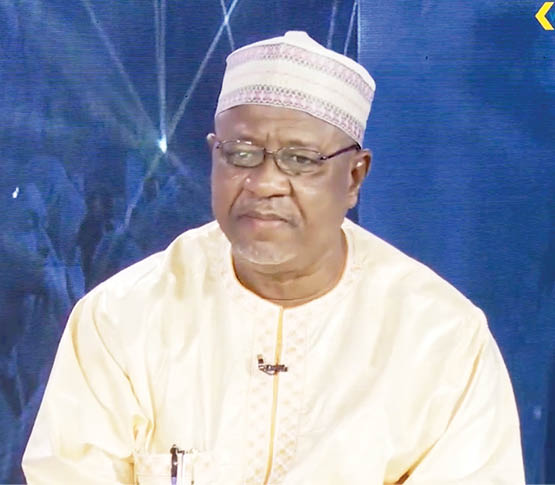
Dr Umar Ardo
Dr Umar Ardo is the convener of the Northern League of Democrats, one of the key groups championing the recent coalition of opposition leaders. The former governorship candidate in Adamawa State also served as secretary of the coalition’s sub-committee on the registration of a new party, which submitted a memorandum to the Independent National Electoral Commission (INEC) for the registration of the All Democratic Alliance (ADA) before the coalition eventually adopted the African Democratic Congress (ADC) as its platform. In this interview with Daily Trust, Ardo reflects on the ruling All Progressives Congress’ (APC) ongoing overtures to opposition figures, the internal weaknesses undermining the opposition, and the strategies needed to unseat President Bola Ahmed Tinubu in 2027.
Many believe the APC is using different tactics, including the use of state apparatus, to lure opposition leaders. Has the government or the APC reached out to you?
Of course. A minister called me, saying, “We know what you’ve done. We know your capacity. You haven’t been approached yet, and we want you to work with us. I’ll arrange for you to meet the president, and if he approves, we’ll work together.”
I didn’t say yes, and I didn’t say no. When the government approaches you, you don’t outright reject them. The government has the power to do good and the power to do harm. The best thing is to keep quiet and continue with your work.
- Battle for 2027: How APC ‘coerces’ opposition politicians
- Battle for 2027: Ordeal won’t change my political leaning — Tambuwal
But others allegedly approached by the government, who didn’t play along, have ended up facing EFCC trouble. Meanwhile, you’re comfortably at home, travelling freely.
That’s because I’ve done nothing to warrant EFCC attention. I’ve never awarded a contract or engaged in anything illegal. In 2021, while I was being very critical of Buhari, I received an EFCC invitation.
And you went?
Of course. Refusing to honour an EFCC invitation is an offence in itself. They questioned me about my properties. I explained they came from consultancy proceeds, specifically from my work in forming the APC and bringing Buhari to power. The issues were thereafter resolved amicably.
But isn’t that why people think you’ve compromised?
No. I refuse to compromise.
Is history repeating itself with EFCC’s current investigations into coalition leaders?
I won’t speculate. EFCC has also arrested APC members like Yahaya Bello and Hadi Sirika. So let’s not politicise criminal matters.
With 2027 approaching and the opposition fragmented, won’t APC still have its way?
I don’t see how APC can win in 2027. Even without a single coalition, a four-party, four-candidate race can deny APC victory. Tinubu’s 2023 support came largely from the core north, and that base is unhappy. Unless he changes policies and appointments to win them back, his chances are slim. Even though it’s unlikely that Obi will add significantly more to his 2023 votes but Atiku can gain more from Tinubu’s northern votes because of the disenchantment.
Who is your candidate—Obi, Atiku, or Tinubu? Because you seem to have something good to say about all of them.
I’m not endorsing anyone. I’m analysing the political realities as an academic, not as a partisan.
But some northern leaders recently met at Arewa House, declaring Tinubu the man to beat.
I monitored that meeting. It was dominated by pro-government figures, including the NSA and the Chief of Defence Staff—military involvement in politics is dangerous. The applause they expected wasn’t there. I have nothing personal against Tinubu, but I reject claims he has served the north well.
So where do you belong?
I’m with the ADA, though the coalition moved to the ADC. There are thousands nationwide still believing that a new party should be and can be registered for the opposition coalition.
Which came first, ADC or ADA?
ADA.
But doesn’t your refusal to merge weaken the coalition’s original goal?
The goal was to unite against the APC government. That’s still possible. Stabilised opposition parties—ADC, PDP, Labour—can still align without a formal merger.
You believe this is possible before 2027?
Absolutely. The 2013 strategy-makers are still around. They have the capacity to remove Tinubu. I’m as certain of that as I am that a plane from here to Yola will land safely.
Will you still run for governor in 2027?
If ADA is registered, yes. If not, no. The SDP has virtually collapsed; its structures in four or five states have already transformed into ADA.
First, will APC’s alleged intimidation of the opposition succeed and where does former President Jonathan fit in your assessment?
I took Jonathan to the Supreme Court in 2014, arguing he was not eligible to contest. The court ruled that no governor or president can serve more than eight cumulative years. Jonathan completed Yar’adua’s term—one year and 23 days—then served a full term from 2011 to 2015, making five years and 23 days. If he served another term, it would total nine years and 23 days. The court said those eight years are like the Rock of Gibraltar—they cannot be moved. So, Jonathan is not qualified to contest.
All those clamouring for Jonathan are building on nothing. I even wrote an article reminding Nigerians about my 2014 suit. That case was never determined; it was withdrawn without resolution, meaning the issue is still alive.
As I’ve told the opposition, in 2015 two things removed PDP from power: first, registering a brand-new party; second, mass protest.
When lawmakers like Aliero and others in Delta State defected to APC—violating Sections 101 and 68 of the Constitution—I said, “Let’s go to the National Assembly with placards. Let’s demand: ‘Akpabio, declare these seats vacant. Speaker, declare these seats vacant.’” The Constitution gives legislative leadership the responsibility to declare seats vacant, but they refused. If these legislative leaders refused, we should have stood at the gate of the National Assembly until they acted. Start with 500 people. If nothing happens, come back the next day with 1,000. Still nothing? Come back with 5,000. By Thursday, they would declare the seats vacant.
Once that happens, dictatorship can’t survive. That’s exactly what happened under Jonathan—though then, it was over fuel subsidy policy, not the Constitution. People mobilised under “Occupy Lagos” and “Occupy Abuja.” Leaders like Buhari, Tinubu, and Akande marched from the Unity Fountain to the National Assembly, then occupied Tinubu Square in Lagos. Jonathan was forced to roll back the subsidy removal. That was the day he was politically defeated.
Suppose we register a new party and mobilise over a constitutional issue—not just policy—and refuse to leave the National Assembly until the law is enforced. In that case, I guarantee you Akpabio will declare the seats vacant. The Speaker will declare the seats vacant. Do the same at state assemblies, and they will reverse illegal decisions. From that day, APC will have been defeated.
With all sense of responsibility, we interviewed an ADC leader who believes you are working against the party on behalf of the government; that ADA is in some way being sponsored by the government. How do you respond to this?
How can that be? Even the highest leadership of the ADC has accused me of being a mole—for God’s sake, a mole to whom? The government? Who is more critical of this government than I am? On television, in the press, every day, I’ve been openly and sharply critical of the regime.
I’m the one who came up with the idea that the most strategic way to unseat this government is by registering a new party. That’s based on my experience in the 2015 coalition.
Don’t forget, I’m one of the original architects behind the formation of the APC. Yes, Tinubu worked very hard to consummate it after Buhari approached him with the idea of a merger that would make Buhari president and Tinubu, vice president. Tinubu knew Buhari approached him, but he didn’t know the groundwork that had been laid before that meeting. I knew—because I did it along with a few others.
What do you mean?
I’ve explained this in many interviews. It’s also documented in my book, Court and Politics, published in 2020. Chapter 7 narrates the entire story. I even gave copies to the government and to President Buhari. We launched the book publicly at the Yar’adua Centre, with critical stakeholders from across the country in attendance. The DSS bought 50 copies.
Has anyone—Buhari while alive or any of the other actors—ever come out to say I was lying? No. Buhari never disputed it, because it’s the truth. Apart from him, the key members of the Buhari group—Tunde, Malami, Adamu Adamu, Abba Sarki—are still alive. Tony Momoh is gone, but the rest can testify. They worked on this project from March 2012 until the APC’s registration in July 2013.
So, when I say we can succeed in 2027 by following a similar plan, it’s not theory, it’s proven experience.
Some still believe the government is using certain people to blackmail opposition figures into joining the APC. What’s your take?
I can only speak about what I know. On 19 June, when we filed our ADA registration application, we made a small clerical error; we wrote “Independent National Commission” instead of “Independent National Electoral Commission”.
We submitted late on Friday after prayers at the Customs Headquarters mosque, which is near INEC. Early Monday morning, another group submitted an application to register ADA. The risk was that if we withdrew ours to correct the error and refilled, theirs would come before ours and knock us out. So instead, we wrote to INEC, explained the error, and confirmed that all other content remained valid. That kept us at number 109 on the list and placed the other ADA at number 110, automatically eliminating them.
If I were working for the government, would such a scenario even arise? Certainly not. And I’ve never been a double-faced person in my life.
Are you surprised by the challenges currently facing the coalition-led ADC, or did you anticipate them?
Well, if you’ve read some of my writings or interviews I’ve granted in the past, you’d know I anticipated these issues. I even presented my concerns to the National Coalition Committee led by David Mark. I explained that fusing with an existing political party carries more risks than people realise. First and foremost, there’s an ideological problem. If you want to salvage a nation through politics, you should ideally register your own party. To register a new political party, you must submit its name, logo, an explanation of the logo’s symbolic meaning, a manifesto encapsulating the party’s ideology, and a constitution to guide the implementation of that ideology. You lose all these defining elements when you merge into an existing party. Why? Because that party already has its own ideology—unless, of course, its ideology, logo, and constitution are perfectly aligned with your own vision.
That’s the first point—you lose ideological ownership. Yes, you can amend those things later, but it doesn’t speak well of you at the start.
Secondly, with a new party, you have more control and less political risk. All you need to do is meet the legal requirements for registration. Once you meet those laws, you have no problem. But many of our colleagues believe INEC won’t register a new party.
Why?
They claim INEC is compromised. That’s one of the arguments used by some of those behind the ADC adoption. They deliberated for nearly 18 months and concluded that adopting an existing party would prevent INEC from allegedly blocking the emergence of a new one.
Who, in your view, is throwing a spanner in the works for the ADC?
Frankly, I don’t see anyone actively doing that. Some may think the government is behind it, but as we say in Hausa, people can only interfere if you give them a reason to. If, after 18 months of deliberations, they still couldn’t resolve the teething issues, then, with all due respect, it reflects poor preparation.
If I had worked on it for 18 months, I’d have crossed all the T’s and dotted all the I’s. Once a party is registered, it has at least 24 state structures plus a national structure—meaning a minimum of about a thousand people. Any one of them can cause issues, as we’re seeing in places like Nasarawa and Benue, where chairmen have gone to court.
Given that they’ve already gone into the ADC, the focus now should be on managing these risks—risks that don’t really exist when registering a new party from scratch.
Are you still with them, or have you parted ways?
No, no, no, I’m still very much with them. I’m under the coalition. One of my concerns, though, is that Senator David Mark, as chairman of the coalition committee, oversaw two subcommittees, one on fusing into a party and another on registering a new party. The fusion committee recommended the ADC; the registration committee proposed the ADA. Both reports went to him. Under those circumstances, I think it would have been better for him to stay above the fray, allowing others to chair the ADC and ADA separately. That way, if problems arose, he could mediate from a neutral position. But by chairing the ADC himself, it appears he’s taken sides, leading many to believe the coalition equals ADC—which is not true. The coalition had two parallel strategies: ADC adoption and ADA registration.
Who is leading the ADA?
Chief Akin Ricketts from Cross River State is the chairman, and the secretary is from Nasarawa. However, the secretary’s name also appears in ADC records, so in our meeting, it was resolved that he would step down from ADA and be replaced.
Would I be correct to say the ADA was birthed by the League of Northern Democrats, which you convene?
Not exactly. Yes, the League of Northern Democrats formally joined the coalition, and yes, as convener, I’ve always advocated for registering a new party. Maybe in that sense you can make a connection, but the truth is the only link between the League, the coalition, and the ADA is me personally.
And what about Malam Ibrahim Shekarau? Is he still leading ADA?
No. Shekarau is chairman of the League of Northern Democrats, and he was initially supposed to chair the ADA registration committee, but he declined. That role then moved to Rotimi Amaechi.
On what grounds did Shekarau decline?
He’s heavily involved in PDP affairs. As we speak, he controls the party structure in Kano, sits on the PDP Board of Trustees, and is even tipped to become its deputy chairman—possibly even national chairman. These are likely the factors he considered before respectfully pulling back.
It seems you’re going solo. With Mark on one side and Shekarau in another direction, yet you were discussing an office for registration before this interview. Are you still pursuing ADA’s registration?
Absolutely. We are working hard to meet all legal requirements for ADA’s registration. We already have structures in about 28 states, and we’re pushing to complete all 36 before INEC opens its portal. Our hope is that ADA will be pre-qualified and given provisional approval, pending verification of our documents by INEC.