
Bauchi gov advocates regional integration
Bauchi State Governor Bala Abdulkadir Mohammed has emphasised the importance of regional unity, economic integration and inclusive governance in addressing West African challenges. The governor had joined distinguished leaders and scholars as a key discussant at the Christ Church College University of Oxford on 9th May, 2025 to commemorate the 50th anniversary of Economic Community […]
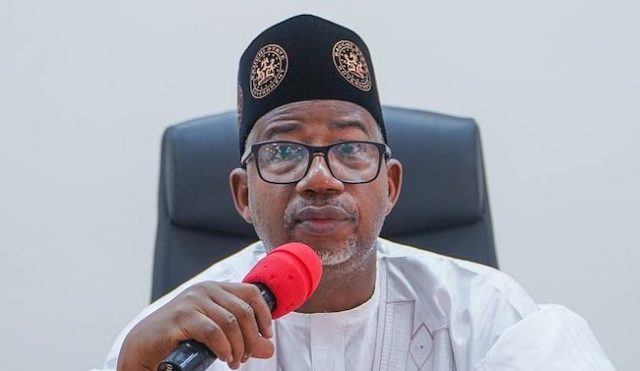
Bala Mohammed
Bauchi State Governor Bala Abdulkadir Mohammed has emphasised the importance of regional unity, economic integration and inclusive governance in addressing West African challenges.
The governor had joined distinguished leaders and scholars as a key discussant at the Christ Church College University of Oxford on 9th May, 2025 to commemorate the 50th anniversary of Economic Community of West African States (ECOWAS).
Other discussants include Ghana’s Acting High Commissioner and Burkina faso People’s Representative abroad.
Discussions centred on strengthening democratic institutions, enhancing security cooperation, political, economic, social shifts and promoting sustainable development across member states where former President Olusegun Obasanjo was the keynote speaker.
- Don’t hold more than 60,000 Riyals for Hajj, NAHCON cautions pilgrims
- Web3 ai, Aptos, Sui: 3 Crypto Projects That Raised Millions Overnight & Are Still Climbing
The forum primarily to encourage open dialogue had brought together policymakers, academics, students, scholars, and political leaders to reflect on the bloc’s legacy and its uncertain future.
Former president Obasanjo and Governor Bala were hosted at the Hammond Hall of Christ Church College by Katherine Jane Willis, Baroness Willis of Summertown. As a gesture of academic and civic goodwill, the visitors were presented with books and the city’s coat of arms.
Obasanjo, a key figure in ECOWAS development, recalled their collective efforts in promoting free movement, economic integration, and social inclusion.
He warned that these gains are now threatened by political divisions, inconsistent leadership, and the recent formation of the Alliance of Sahel States (AES), a process that signals growing regional fragmentation.
“The trust that once existed among West African leaders is eroding,” he said, adding that “Without cooperation and committed leadership the region cannot move forward.”
Echoing this concern, Governor Mohammed, in a release on Wednesday by his Special Adviser Media and Publicity, Mukhtar Gidado, stated that the West African Community is failing due to poor governance, a trust deficit among leaders, and weak institutional accountability.
“These failures are not abstract, they impact peoples lives every day,” he said.
Highlighting lessons learned from this reality, the governor pointed to the ongoing reforms in his state-Bauchi. He spoke on the importance of leadership rooted in responsibility, transparency, and empowerment.
Governor Mohammed highlighted Bauchi State’s strides in education, healthcare, infrastructure, and economic empowerment as a microcosm of the broader regional aspirations. He called for increased cooperation among West African nations to harness shared resources and address common challenges, reinforcing the vision of united and prosperous ECOWAS.
Delivering the keynote address, former President Obasanjo, one of the champions of ECOWAS, offered a sobering assessment of a bloc once hailed as a model for regional integration in Africa.
He recalled the early efforts to advance free movement, trade integration, and Pan-African solidarity, but warned that those gains now hang in the balance.
“The trust that once existed among West African leaders is eroding,” Obasanjo said, stressing that “Without cooperation and committed leadership, the region cannot move forward.”
His remarks came amid growing concern over regional instability and the rise of competing alliances such as the Alliance of Sahel States (AES), formed in defiance of ECOWAS by military-led governments in Mali, Niger, and Burkina Faso.
Echoing Obasanjo’s concerns, Governor Mohammed pointed to a deeper malaise afflicting the regional body: poor governance, a deficit of trust, and weak institutional accountability.
He also highlighted the imperative of evolving a leadership culture rooted in visionary principles and urged ECOWAS leadership to embrace it if the body is to survive another half-century.
During the question and answer session, the audience showed particular interest in Governor Mohammed’s emphasis on leadership and responsibility. He elaborated on his belief that good governance must begin at the grassroots, with leaders held to clear standards of accountability and service.
The forum closed with a renewed call for regional solidarity, though the tone was markedly sober.