
Before our palm oil goes under
The National Palm Produce Association of Nigeria (NPPAN) recently cried out over illegal importation of Crude Palm Oil [CPO] into the country. In a letter addressed to President Muhammadu Buhari, the group said local producers lose $500 million annually due to palm oil smuggling. Blaming the situation on the country’s porous borders, NPPAN said smuggled […]
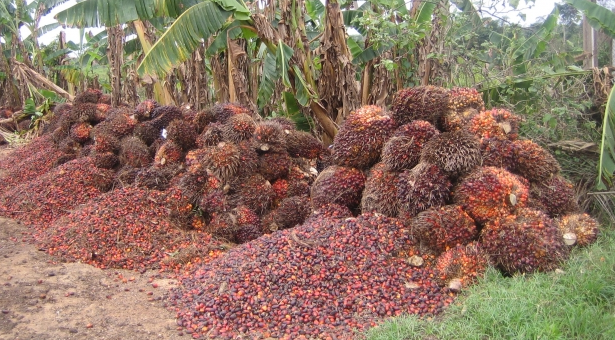
Palm oil
The National Palm Produce Association of Nigeria (NPPAN) recently cried out over illegal importation of Crude Palm Oil [CPO] into the country. In a letter addressed to President Muhammadu Buhari, the group said local producers lose $500 million annually due to palm oil smuggling. Blaming the situation on the country’s porous borders, NPPAN said smuggled palm oil is to the detriment of huge local investments, causing a down slide in the price of CPO.
NPPAN also said its members who responded to the federal government’s call in the last three years for private sector investment in the oil palm industry are now at the risk of losing billions of naira. It said, “Our members took the risk to obtain loans running into billions of naira from commercial banks and micro-finance banks to reactivate abandoned plantations within the last three years.” It said banks have now tightened the noose around investors due to unserviced loans running into billions of naira. NPPAN also said local producers get no leverage from the federal government, and that corruption in the industry threatens millions of jobs.
NPPAN said while CPO output increased tremendously just as the price remained stable at N300,000-N350,000 per metric tonne up to October last year, there has been a downward slide in CPO’s price since November 2018. It said the price dropped in January 2019 to N220,000-N240,000 per metric tonne when the February to June season was yet to commence. “We then wonder what the price would look like during the season when CPO production would be at its peak,” NPPAN said.
The palm oil producers’ group also said local demand has actually waned; that buyers from the northern part of the country were no longer seen in the CPO producing states of the South. It wondered if CPO was no longer used by industries or domestic consumers in such places. A plausible reason to explain this is that industries and domestic users are getting their supply of CPO from other sources, notably smuggling through the borders. The group therefore called on the federal government to immediately embark on pragmatic measures that would protect the sector from imminent collapse.
It would be recalled that in the early 1950s, Nigeria controlled 43 per cent of the global market of CPO. It is regrettable and scandalous of us as a nation that we indolently sat back to watch Malaysia and Indonesia become leading the palm oil producers today. This, when both nations obtained the seedlings from Nigeria at the time Nigeria was the world’s number one palm oil-producing nation. The immediate challenge is for the Customs Service to sit up and block palm oil smuggling. Next, government should place a high tariff on imported palm oil, whether crude or refined, for a period of time. We should use this period to support farmers to improve upon the quality of locally produced palm oil. The tariff could thereafter be lowered when the country has achieved high quality in its local production of palm oil and at affordable prices that would enable Nigerian palm oil to compete with imported product.
Significant improvement in the quality of Nigeria’s locally produced palm oil could be achieved through viable policies and incentives anchored by CBN. A litre of palm oil produced in Nigeria is at present more expensive than a litre of petrol. While a litre of petrol sells for N145, palm oil sells for N350 per litre. CBN’s intervention through incentives, which may include loan facilities to owners of palm oil plantations, would make finished product of palm oil cheaper than it is now. CBN must ensure that only genuine palm oil farmers, not politicians masquerading as such, access such loans. NPPAN had, in its letter, identified bank loans to its members as critical among the expected incentives from government.
The Customs Service should step up its surveillance at the country’s borders in order to apprehend and punish all collaborators that help Chinese and Indian importers to smuggle palm oil into Nigeria.