
Bemoaning rising tide of tree destruction
The many who responded to my last two pieces, The Neem Trees of Maiduguri (I & II), also lamented the increasing rates of tree felling around Maiduguri and elsewhere in the country. A reader, Dr Benedict Baamshal Mairiga, wrote: “Thanks for your article on the Neem trees of Maiduguri, which is full of pleasant and […]
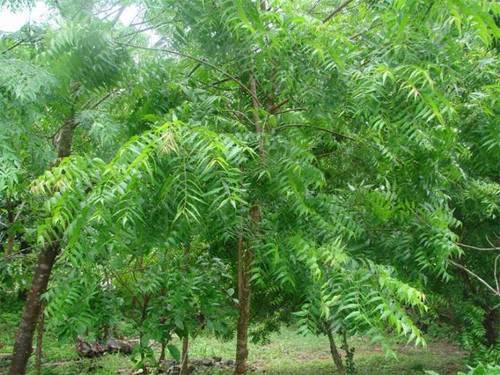
neem tree
The many who responded to my last two pieces, The Neem Trees of Maiduguri (I & II), also lamented the increasing rates of tree felling around Maiduguri and elsewhere in the country. A reader, Dr Benedict Baamshal Mairiga, wrote: “Thanks for your article on the Neem trees of Maiduguri, which is full of pleasant and enlightening history. One can identify some of the personae mentioned. Thanks so very much.
I was in Maiduguri from 1973 to 1987! I have not gone back since I left in 1987! But before I left, I witnessed the destruction of the trees you mentioned. In the name of urban renewal, the trees which used to beautify the streets and provide shade along major roads from the airport through the post office roundabout, Leventis/Specialist Hospital Road and UMTH/FGC/Mairi Village/Bama roads and indeed most areas in Maiduguri, were cleared for road dualisation and construction!! I used to wonder how we could stop desert encroachment by clearing the trees. I don’t know what’s happening now, but it was quite distressful then. Unfortunately, I saw the same phenomenon in Mubi and Jimeta!! So, when politicians talk about desertification and green wall, I wonder what they are saying when they are the ones who destroyed that beautiful scenery in Maiduguri, especially in other northern capital cities of Nigeria. Very unfortunate!!”
Indeed, it was a most unfortunate development at the time, clearing those tree-lined streets in the name of dualisation. Admittedly, it was a pragmatic gesture to dualise the roads due to increasing traffic, but without the cover of the trees, the streets, when completed, looked ungainly, bare and barren. Musa Daggash, whom I mentioned earlier as one of the pioneer foresters of the old Northern Region, was, at that time, serving as Chairman of the Borno State Civil Service Commission. He had been closely associated with the tree-planting exercise in the early part of his career in the 1940s. He was particularly pained by what he saw as sordid developments of having massive trunks of neem trees razed to the ground at the orders of the military governor.
Musa Daggash did not hesitate to protest in writing to the governor. And as he told his biographer, Yakubu Mukhtar, in the book, Musa Daggash, the Story of a Shuwa Boy, notwithstanding the need for development, an environment such as Borno requires more trees than the destruction of existing ones. To make matters worse, the government was not making any attempt to replace the fallen trees. There were protests from many other concerned citizens, but it all fell on deaf ears. It was only at the turn of the century, during the civilian reign of Governor Mala Kachallah, that tree planting along the major streets of Maiduguri returned in earnest.
However, as Maiduguri has grown over the last 25 years and rapidly expanded into the megacity it is today, it has become increasingly difficult for tree planting to keep pace with the developments. Residents indeed engage in planting trees in front of their houses and within estates, but those columns of neem trees of yore, with their leafy canopies, that once graced the Maiduguri streets are now gone, replaced, unfortunately, with hard, solid tiles. Road developments and tree planting need not be mutually exclusive. They can go along elegantly, pari passu, as I have seen elsewhere. In Abuja, where I currently reside, the city’s builders have deemed it fitting to incorporate tree planting with road construction.
There are streets in Wuse and Maitama Districts today lined with rows of dignified, tall Eucalyptus trees or the Flamboyant trees, which make canopies with their bright red flowers when in bloom. In the same vein, Kaduna seems to have retained the rows of mango trees that have lined up its streets for ages, bringing succour to both man and soil, despite the urban renewal programmes that included the dualization of the roads. However, it is surprising that some of the streets that the former governor, Ahmed El-Rufa’i, dualised in his last few months in office are still bereft of cover. The roads are still looking bare two years after El-Rufa’i left office.
It is time we go back to massive tree planting in our cities, towns and villages of the north, even beyond the annual ritual of the tree planting campaign. I recognise that Maiduguri, more than any other city, needs the cover of trees most because it is at the frontline of the advancing Sahara Desert. It is imperative that stakeholders and residents alike recognise the importance of restoring and maintaining robust tree populations in Maiduguri and across the northern region, for both ecological preservation and the well-being of the communities.
Fortunately, numerous agencies are involved in tree planting in this era, including the National Agency for the Great Green Wall, the River Basin Authorities, the Fadama projects, and the National Park Service, as well as a host of international organisations. The Borno State Government can always leverage their goodwill for support when needed.