
Benue prepares policy to address food shortage
The Benue State government has a plan underway to launch a Climate Change Policy (CCP) aimed at tackling food shortages, as shifting rainfall patterns and other climate risks continue to threaten the state’s agricultural sector. Mrs. Philomena Iwodi, Unit Head of Vulnerability and Adaptation at the Ministry of Water Resources, Environment and Climate Change, disclosed […]
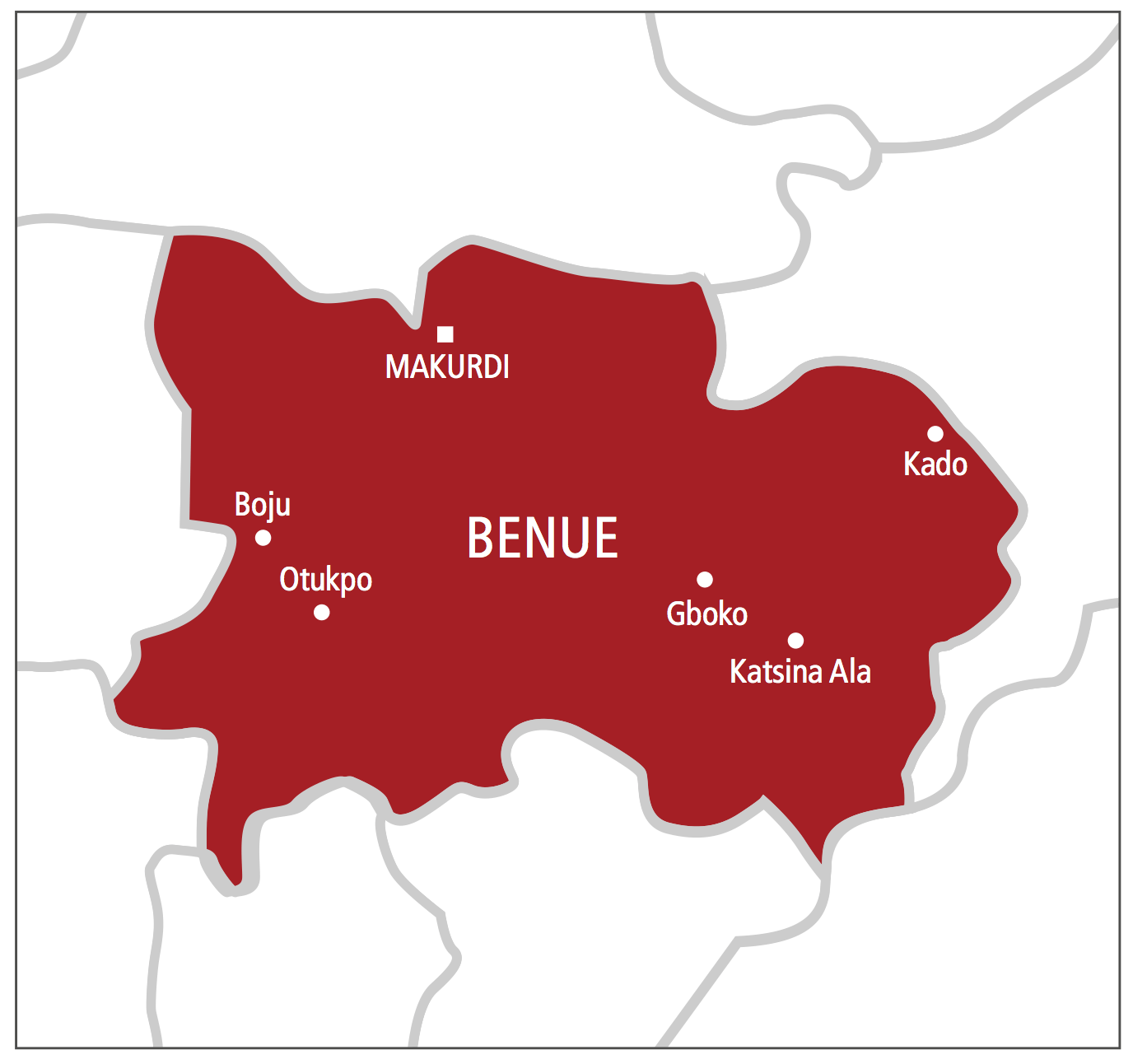
Map of Benue State
The Benue State government has a plan underway to launch a Climate Change Policy (CCP) aimed at tackling food shortages, as shifting rainfall patterns and other climate risks continue to threaten the state’s agricultural sector.
Mrs. Philomena Iwodi, Unit Head of Vulnerability and Adaptation at the Ministry of Water Resources, Environment and Climate Change, disclosed this during the Second Biannual Workshop for the Domestication of the National Climate Change Policy (NCCP) in Benue State, organised by the Elim Christian Vocational Training Center (Elim CVTC).
She explained that the policy, which Nigeria has adopted at the national level, serves as a roadmap for states to domesticate in tackling climate-related challenges.
Iwodi noted that Benue began work on the policy last year with technical and financial support from partners, especially Elim CVTC, even though the state government had yet to contribute resources.
She warned that changing rainfall patterns are already threatening the agricultural sector and raising fears of food shortages in the state, stressing the need for immediate implementation of the policy to mitigate the effects of bush burning, tree felling, deforestation, and other harmful human activities driving climate change.
Executive Director of Elim CVTC, Emmanuel Egbodo, said the workshop provided a platform to review progress on the domestication process and chart a way forward for effective implementation.
He noted that while climate change was once dismissed as a myth, its impacts are now evident across communities in Benue.
Egbodo further explained that the Enabling Resilience to Climate Change Related Risks project (ER2CC), funded by the European Union and Christian Blind Mission (CBM), is being implemented by Elim CVTC to strengthen local CSOs and build community resilience against climate-related hazards.
Representatives of civil society organisations also raised concerns about the misuse of chemicals in agriculture, with Iyoula Frederick of Angel Support Foundation, saying many of the foods consumed in Nigeria contain high chemical residues because farmers often apply inputs without adequate knowledge.