
Birthdays, tree planting and global climate crisis
Indifference to environment issues is a luxury long gone with ancient people who produced no toxic wastes from industries and motor vehicles, and who inhabited the earth when there were more trees than fossil fuel-powered machines. They lived without worries about either global climate or local weather. Today, every person living on earth is affected […]
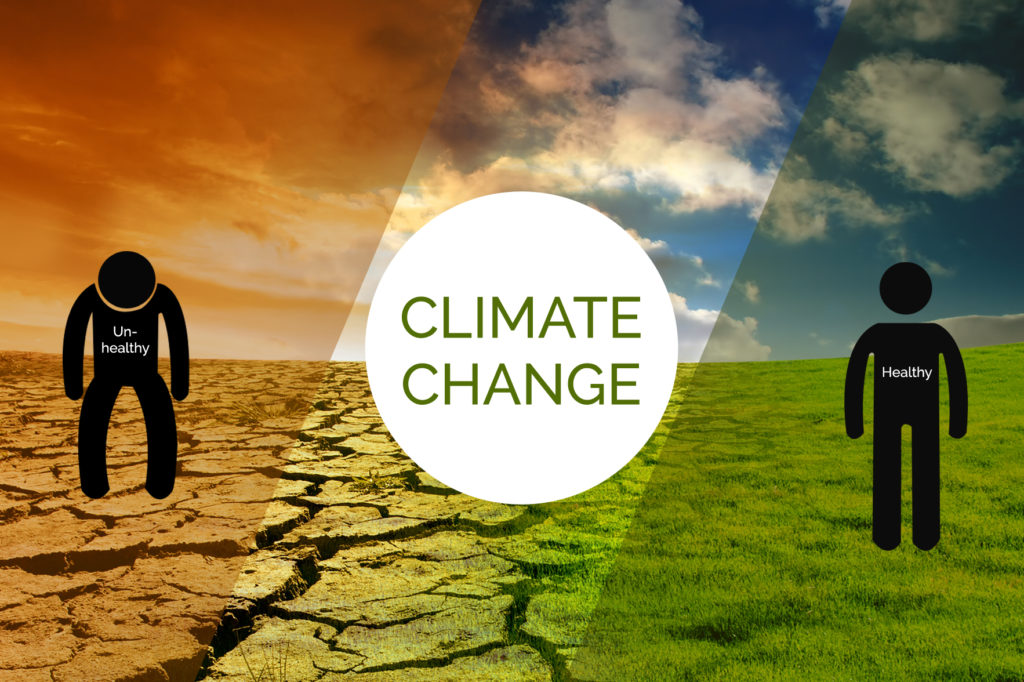
Climate change
Indifference to environment issues is a luxury long gone with ancient people who produced no toxic wastes from industries and motor vehicles, and who inhabited the earth when there were more trees than fossil fuel-powered machines. They lived without worries about either global climate or local weather. Today, every person living on earth is affected by climate crisis and the threat it poses to safe living.
In particular, the people inhabiting the northern part of Nigeria need to be more disturbed due to their geographical peculiarity. Their region, which lies within the tropics, is by nature one of the hottest in the world. It receives heat almost directly from the sun, unlike the cooler temperate regions farther away from the equator. Likewise, being in the Sahel Savannah, its vegetative cover is naturally as sparse as its rainfall is relatively low. And because it has fewer scattered trees per land area, its top soil, for most part, is exposed, and therefore, prone to erosion. In addition, they are located within just 500 kilometres to the 9 million square kilometre, encroaching Sahara desert, the largest of its kind in the world. Even now, it is closing in at an alarming rate of a football pitch every 15 seconds. According to research conducted by Yusuf Sarki Muhammad for the British Broadcasting Corporation (BBC), severe weather can make Sub-Saharan Africa inhabitable in 50 years time.
For now, the increasing heat during the hot months of March and April should be enough warning to us. Last year, for instance, temperatures reached up to 46 degrees, a record 10 degree rise above the known average, 36 degrees, of 10 years ago. It was so hot in Maiduguri, Kano and Sokoto that some people were hospitalised for severe dehydration.
Recall also the rising incidences of flood over the last five years. Some rivers in the North over-flooded their banks, leading to losses of foodstuffs, human and animal lives. Noteworthy in this regard is the collapse of the 50-year-old Gafan livestock dam in Kano State and the Auyo dam in Jigawa State.
Worst still, food production, and with it, food security, may also be undermined by more floods and irregular rainfall.
To the same extent, southern Nigeria too, will be affected, but in slightly different ways. Rising sea levels, for example, will submerge farmlands and communities in coastal areas, apart from the storms, floods, erosions, irregular rainfall and higher temperatures.
But this alarming narrative can be changed if all governments – federal, state and local – collaborate with citizens to plant many trees consistently over a long period of time.
According to scientists, trees regulate the environment by releasing both water and oxygen. The water, in vapour form, enters the main water cycle, and after conversion to clouds, finally falls back as rains. The oxygen enriches the ozone layer that protects the earth from harmful sun rays.
In a similar vein, trees also absorb carbon dioxide, the gas that retains heat in what is known as the greenhouse effect. Furthermore, they protect the soil from erosion by binding it together, beside enriching it with nutrients from their decayed remnants. In this regard, they also support food production.
Therefore, I suggest that every adult should celebrate each annual return of his birth date by planting at least one tree. Isn’t it more meaningful than parties?If many of us can voluntarily embrace this proposed tree planting culture on birthdays, we will not only surpass the rate our tree cover is being stripped, but as a result, also expand it within a short time.
The task seems frivolous or too demanding. But imagine how mother earth might have been, say, as recently as 300 years ago before the industrial revolution. The demand then for forest resources was both low and manually met.
Over the period, however, the widespread use of newly invented motor machines in meeting the increasing demand for land, minerals and wood has intensified tree-felling, deforestation in the world, including Nigeria. As a result, the global tree cover has declined to a dismal 13per cent, and Nigeria’s, to the current 5per cent from 10per cent in 1996. And while this rapid deforestation lasts, millions of tons of gaseous wastes from industries and motor vehicles are being continuously released into the atmosphere. These toxic pollutants rise up to the uppermost fringes of the atmosphere, where, after reacting with the protective ozone layer, they weaken its capacity to ward off excessive solar heat.
So far, the damage wreaked on the earth has raised the concern of scientists, some of who go as far as believing that it is already too late. Nevertheless, world leaders under the United Nations are making frantic efforts at addressing what, undoubtedly, is the worst humanitarian catastrophe ever to confront humanity.
Probably, as Nigeria’s commitment to meeting up with the UN global target of 25per cent vegetative cover for the earth, President Muhammadu Buhari recently told the General Assembly that this country would plant 5million trees. His promise came weeks after Ethiopia undertook to plant 25million trees. And I read somewhere that Philippines would grow 150million more trees in 10 years as no college student in the country would graduate unless he plants at least 10 trees.
Regardless of the means employed, trees must be nurtured and in large numbers too because the future survival of humanity depends on them.
I call on all the governments to mobilise the citizenry under the birthday tree-planting campaign, and to sustain it even after the 5million trees have been planted. I also call on Nigerians to endure all the necessary personal sacrifices that will make a success of the campaign, otherwise future generations will blame us for failing in our responsibilities when severe weather makes their lives difficult or impossible.
Yusuf, former secretary-general, Alliance for Democracy, Kano State, wrote from Tukuntawa Quarters.