
Budget deficit may widen as crude oil price drops to $60
Nigeria’s N13 trillion budget deficit for 2025 may widen with the continuous drop in the price of crude oil, Daily Trust can report. Our correspondent reports that crude oil, which makes the huge chunk of the government’s revenue, was benchmarked at $75 per barrel but external shocks like the tariff imposed by US President Donald […]
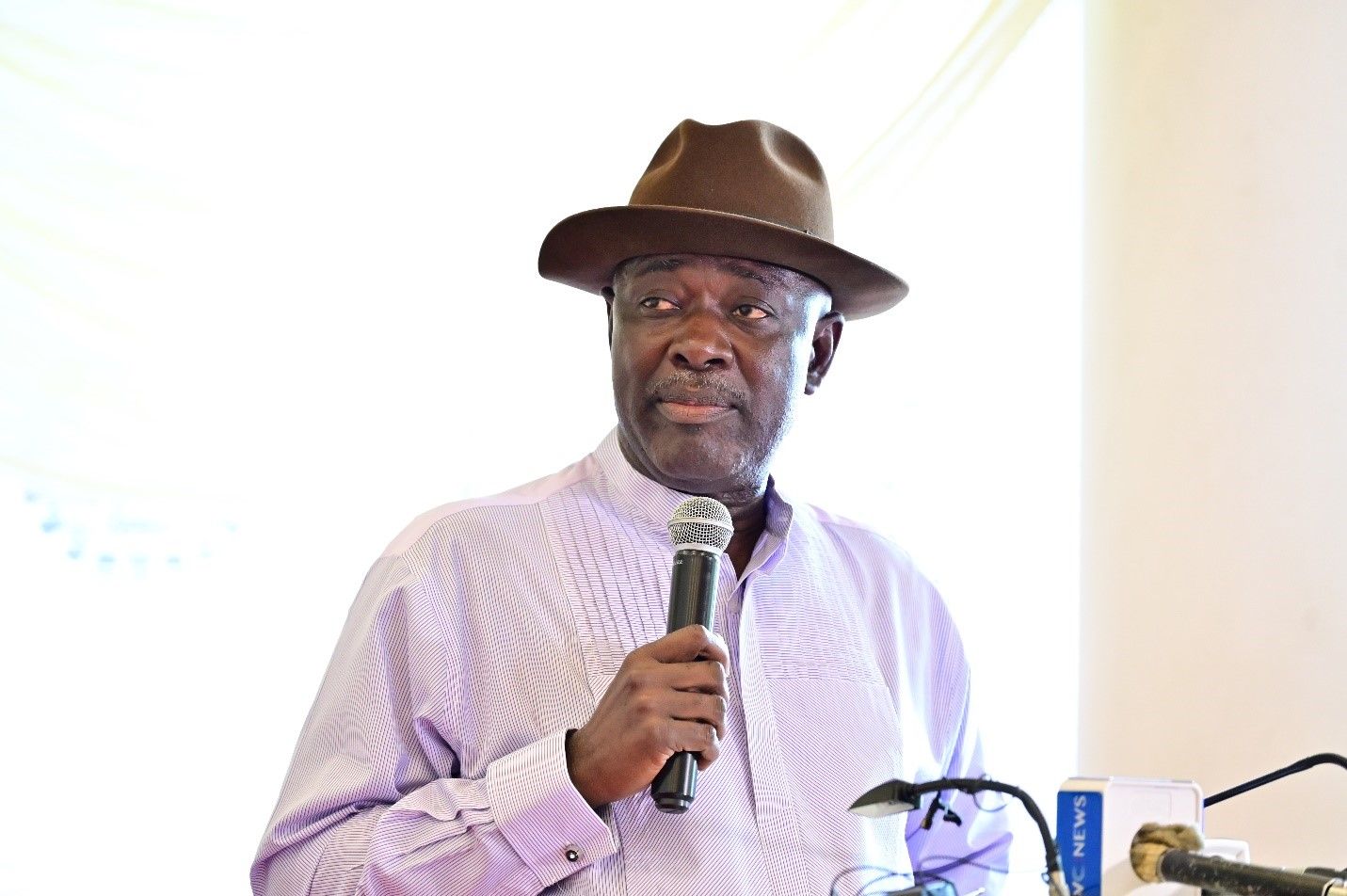
heineken lokpobiri
Nigeria’s N13 trillion budget deficit for 2025 may widen with the continuous drop in the price of crude oil, Daily Trust can report.
Our correspondent reports that crude oil, which makes the huge chunk of the government’s revenue, was benchmarked at $75 per barrel but external shocks like the tariff imposed by US President Donald Trump and approval for increase in oil production by the Organisation of Petroleum Exporting Countries (OPEC), among other factors, have seen oil prices dropping consistently in recent times.
This would further put a strain on the N35.05 trillion budgeted as projected revenue for the year from 54.99tr.
Already, the country has been falling behind the 2.06m barrels per day assumptions on which the budget was predicated.
- Poverty rising in rural Nigeria – World Bank
- Place governance issues above 2027, CPC forum urges Tinubu, APC
Data from the Nigerian Upstream Petroleum Regulatory Commission (NUPRC) showed the country produced 1,737,480; 1,671,953 and 1,603,776 barrels of crude oil and condensate per day in January, February and March respectively.
This means that the country failed to meet up with 1,166,791 bpd and in turn lost $85.5m.
Price dropped to $60
According to Reuters, the price of crude oil fell more than 1% on Monday after OPEC+ decided over the weekend to further speed up oil output hikes, spurring concerns about more supply coming into a market clouded by an uncertain demand outlook.
Brent crude further dropped by 70 cents, or 1.14%, to $60.59 a barrel while US West Texas Intermediate crude was at $57.54 a barrel, down 75 cents, or 1.29%.
It said the price is the lowest since April 9 after OPEC+ agreed to accelerate oil production hikes for a second consecutive month, raising output in June by 411,000 barrels per day (bpd).
“The June increase from the eight producers in the OPEC+ group will take the total combined hikes for April, May and June to 960,000 bpd, representing a 44% unwinding of the 2.2 million bpd of various cuts agreed on since 2022, according to Reuters calculations.”
Daily Trust reports that the development is threatening the implementation of the programmes in the 2025 budget amidst shocks in the economy.
The International Monetary Fund (IMF) recently observed that Nigeria’s economic outlook is marked by significant uncertainty, hinging this on “elevated global risk sentiment and lower oil prices.”
An economist, Dr Muda Yusuf, said the IMF’s advisory had warned that Nigeria’s economy is highly vulnerable.
He said, “Nigeria’s economy is highly vulnerable to development around commodity prices particularly crude oil price. We are vulnerable because we are highly dependent on crude oil.
“So if, as a result of the current developments in the global economy, there’s a major global downturn, if the current decline in crude oil prices persists, then it has very serious implications for our foreign exchange earnings and revenue.”
Nigeria not used to meeting revenue projection
Speaking with Daily Trust, an oil and gas expert, Dr Dauda Garuba, while stating that the drop in oil price will force the federal government to borrow if the situation remains, said the country has over time, failed to meet up with funding the budget.
Dauda, however, said the government’s revenue should not be tied to the current state of crude oil prices, as the price could change at any moment to be on the high side, which could also improve revenue generation.
“When the price is high, you would have saved for the time when the price will be dropping. And when the price drops, you are also supposed to be working ahead of producing what you’ll be selling when the price once more goes forward.
“But I think the challenge sometimes is usually when the price drops for a long time and there doesn’t seem to be any hope that it will rise soon.
“In that situation, you automatically know that what is beckoning to you is a fall in your revenue generation. What that means is there are always two options. One is to lean on borrowing to meet the gap, while the second is to cut down on your own plans.
“And of course, we also know that for a very long time in the history of this country, budgets have not been implemented up to a good percentage, sometimes, not up to 50%. So, like the Nigerians will say, you are on your own.”
On whether Nigeria can benefit from the increase in production as proposed by OPEC, he said it is not possible with the country not being consistent with the quota given to it.
Nigeria needs to shift focus from crude oil
The President and Chairman of the Council of the Chartered Institute of Taxation of Nigeria (CITN), Mr Samuel Agbeluyi, warned that Nigeria’s continued dependence on oil revenue is economically risky and unsustainable.
He urged the federal government to shift its focus towards taxation as a more stable and reliable source of funding for national development.
Speaking in Lagos during a pre-conference presidential chat ahead of the CITN’s 27th Annual Tax Conference, Agbeluyi stressed the urgent need for Nigeria to diversify its revenue base.
Agbeluyi said Nigeria cannot continue to rely on oil revenue due to its unpredictable nature. He pointed out that global oil prices are often determined by factors beyond the country’s control, such as geopolitical conflicts, natural disasters, or policy changes in foreign countries.
“You can’t put your destiny in something you don’t control. A single statement by a world leader or a crisis in another country can cause oil prices to crash. That’s why we’ve consistently warned that Nigeria must move away from this kind of economic dependence,” he said.
He advocated for a stronger, more transparent tax system that builds trust between government and citizens.
He maintained that when taxpayers see their contributions being used meaningfully to build infrastructure, improve healthcare and education—they are more likely to comply voluntarily.
“Nigerians are good people. If you are transparent with them and they can see that their taxes are making a difference, they will support the system. But when funds are mismanaged or wasted, it erodes public trust,” he said.
He further stated that developed countries with high standards of living, such as Sweden, are not necessarily rich in natural resources but have achieved prosperity through responsible taxation and efficient public service delivery.
Nigeria needs supplementary budget to meet reality
On his part, a renowned professor of Petroleum Economics, Prof. Wunmi Iledare, said there are usually potential opportunities embedded within the challenges Nigeria will face on the price drop.
He, however, said a budgeting process based on stochastic income sources will naturally yield a stochastic budget outcome.