
Buhari as a choice in 2019
This week I have a guest columnist sharing his views on my space. I hope you find it interesting. It was not only the northeast, there was Kano, Kaduna, the UN building, Police headquarters, Kuje, Nyanya, etc.— nowhere was safe. The guns and bombs were never silent. It was blood, tears and pain; all […]
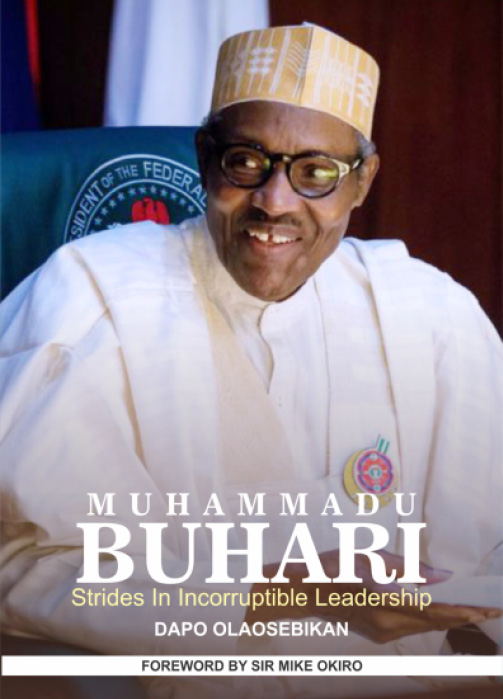
This week I have a guest columnist sharing his views on my space. I hope you find it interesting.
It was not only the northeast, there was Kano, Kaduna, the UN building, Police headquarters, Kuje, Nyanya, etc.— nowhere was safe. The guns and bombs were never silent. It was blood, tears and pain; all sense of security vanished. President Muhammadu Buhari took and embraced a country in ruins; a country about to collapse. Now, having doused the security challenges he inherited, and although we are still confronted with fringes of insurgency, nevertheless, there are compelling reasons to justify Buhari as a better option for Nigeria in the 2019 general elections. On account of governance, prudence and the capacity to absorb or lessen social, economic and political shocks and slops, we now have what can best be described as a nation recovering from one of its darkest histories. Is it even possible to have a genuine and honest criticism based on facts, figures and substance on Buhari? Probably.
The contextual baseline of my position for President Buhari’s second tenure is one that will lean towards the leading global standards that define the role of federal governments. Failing to contextualise these issues and putting them into the right perspectives has been the major undoing of most critics. We should be willing to interrogate these standards to understand that the federal government has little or no business in constructing drainages in market squares at Sabon Gari or stalls at Ariara. It is also not about providing public latrines in a primary school in Idumota. These are prerogatives of states and local governments, who have, even at the height of the recent recession, received sufficient money from the federal government to provide these essential local amenities. Ideally, the federal government should be concerned with substantive issues such as those on megastructures, economic safety nets, social harmony, etc.
It is remarkable to remember that Nigeria’s foreign reserve is now well above 47 billion dollars. To the ordinary citizen, this figure may make little or no sense. However, it was the lack of prudence in managing and enhancing this crucial area of monetary security and leverage that is at the heart of Nigeria’s economic shock caused by the fall in oil prices in 2016. What was squandered pre-2015 came biting hard in 2016, which ordinarily could have been substantially eased if we had cared to maintain a robust foreign reserve like we have today. In contemporary global monetary framework, the foreign reserve is a crucial component of a country’s safety net. The integration of markets, according to most experts, has made external reserves the most potent mechanism for lessening the effect of financial crisis. It also serves as the core component in gauging a country’s economic soundness and creditworthiness. Comparative evidence can be drawn from countries such as Angola and Venezuela that are still travelling that slippery slope.
Under the Buhari administration, the Nigerian economy was resuscitated by 1.95 percent in the first quarter of 2018 as against the perilous -0.67 percent when oil prices plummeted around the first quarter of 2016. Understanding the purposive mechanisms behind this resilience should not be rocket science. Instead, this government should be credited for absorbing such an abrupt and colossal economic shock and the ability to recover in such a manner and within a short period. There is a near unanimity among leading economists that our recovery was borne out of ideas, commitment to defined policies, actions and prudence in governance.
The railway and road infrastructure projects across the country, connecting all geo-political zones is also an important commitment by the Buhari administration. The capacity to engage in delivering mega projects that include roads, bridges, railways and power plants are not a coincidence but a product of painstaking policies that saw, for the first time, 30 percent of the entire national budget dedicated for capital projects. Also, it is worthy to remember that the improvement on power generation to an unprecedented 7500 megawatts was a product of a purposive resolve to get things working.
There are also a number of interventions going on in many parts of the country, especially on poverty reduction and education through different strands of the Social Investment Schemes, on which considerable resources are dedicated to achieving several goals. Another aspect that portrays the sense of justice and equity is the bailout intervention for states because of the massive debt accumulated. This sense of justice by President Buhari was, unfortunately, abused by some state governors who are still not committed to paying their workers’ salaries.
President Buhari, has, to a large extent, kept to his words and commitment to focus on rebuilding Nigeria’s decaying infrastructure; its pathetic image among the comity of nations and the cankerworm of corruption that has, for decades, subjected ordinary citizens to unwarranted and avoidable hardship, refusing our industrious citizens the space and opportunity to explore their full potential and gain from the enormous wealth that is meant to benefit us all. It is also true that there are promises he made that were merely aspirational and those that he sincerely wished to achieve. Some of these promises he had to forgo due to the unique challenges he faced in trying to right many wrongs, stabilise a crumbling economy and a nation in turmoil. These are some of the trajectories of leadership that every guileless principal makes for the greater good of the people.
In the end, it is vital to state that the fight against corruption has earned President Buhari a great respect within the international community. However, it is also important to reiterate that corruption still exists in many sectors and subdivisions of government. The states, local governments and a sundry institutions and parastatals cannot be patrolled by one man or even a team of men. It is a structural problem entrenched in our political system. Hence, it needs time and the willingness of every one of us to reduce it to minimal levels. To this extent, we all have a crucial role to encourage President Buhari to sustain the tempo of building mega infrastructures, improving our economy and enhancing the integrity of Nigeria. We should not dissuade from insisting on the state governors to replicate the same in their various constituencies.
Abubakar Kagu wrote in from Abuja.