
Buhari, Atiku and the impending 2019 elections
Muhammadu Buhari was sworn in as president in May 2015 and another election has come again, the outcome of which will determine if Buhari will continue as president until 2023 or vacate office in May, 2019. When Buhari became president many waited to see their wishes of a new Nigeria fulfilled. Prior to the Peoples […]
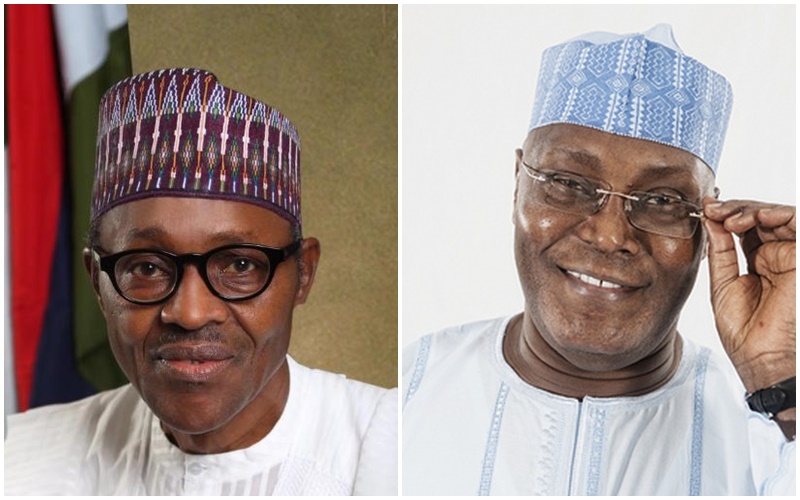
2019: We are neither for Buhari nor Atiku – British govt
Muhammadu Buhari was sworn in as president in May 2015 and another election has come again, the outcome of which will determine if Buhari will continue as president until 2023 or vacate office in May, 2019. When Buhari became president many waited to see their wishes of a new Nigeria fulfilled. Prior to the Peoples Democratic Party primary elections, it was almost certain that there might not be any opposition to Buhari’s second term bid, and the February, 2019 presidential elections many believed will be a walkover.
However, Atiku Abubakar’s unexpected emergence as the candidate of the PDP, raised doubts in the outcome of the elections. These doubts became especially clear after Atiku launched his campaign at Sokoto, Ilorin and Ibadan. After these rallies by Atiku, it became more difficult to predict Buhari’s outright victory in the 2019 elections, at least not at the moment.
What these rallies revealed is that anything is possible. Atiku has for quite a long time been considered a bad product, that belonged to the old bourgeoisie corrupt clique that has ruined the nation. And this is what makes it more difficult and complicated to understand why people would gather in very large numbers for an Atiku campaign rally. It is here that perhaps a brief evaluation of Buhari’s government becomes necessary. Did the Buhari administration create the right conditions for this to happen?
Buhari has on many occasions been shielded from taking responsibility of so many things that happened under his watch. Often simply because Nigerians believe he is honest and not corrupt, which may be true. Buhari’s government started on a very wrong footing and it took the government about six months or so to create a cabinet or a team that would run the affairs of the country. Why did it have to take such long time for a cabinet to be formed? Many assumed that a lot of scrutiny was going on to select the best of the best, but when the list was released it was a huge disappointment. Such actions were creating an impression about the administration in the minds of Nigerians.
Next were appointments into boards and parastatals under the federal government that took about two to three years to be made; many appointments have still not been made by the Buhari administration. Responsible governments are always looking for ways to create job opportunities for its citizens even where such opportunities do not exist.
If Buhari or anyone feels that there is no need for such appointments and that it is burden, a bill should have been sent to the National Assembly to make changes in the Nigerian constitution. It should be known that the government has made a budget that includes what is to be paid to all the appointees. Many described the administration as being simply callous or wicked by not making such appointments or delaying the appointments.
As mentioned previously such actions were continuously creating an impression about the regime. First, to many citizens it was a clear indication that the administration lacked focus. Secondly, it changed people’s impression about Buhari and the kind of government they expected he would run. The serious, no nonsense Buhari they had in mind quickly disappeared. As a military man, discipline and time were important and ethical, and that time was of no essence to an administration headed by no nonsense retired General was ridiculous. It is here that people began to understand that Buhari himself after all could be unjust. Third, it portrayed the regime as arrogant and insensitive. The administration did not see it necessary to do what is right at the right time, but rather do only what it wants do and when it feels it is convenient, becoming dictatorial gradually.
Buhari’s promise and effort at fighting insecurity and corruption are commendable, but remained undermined by atrocities committed by certain officials in his cabinet. Many roads, railways etc are being constructed in many different parts of the country no doubt. A lot has been and is being recovered from the EFCC every day. Politically, Buhari could not maintain control in both the Senate and the House of Representatives. And when the army and the Shi’ites clashed; Buhari did not see it necessary to address the nation or even appeal for calm.
Corruption has reduced and Nigeria enjoys the respect of the international community under Buhari, no doubt. However, the administration remained stained in the eyes of Nigerians. Buhari’s image even among his fanatic supporters is not the same. It is difficult to convince many that Buhari is corrupt, but is easy to tell anyone that Buhari is weak. Buhari’s wife accused some officials of hijacking the president and claimed most of the people appointed by Buhari were unknown to him, saying only two people have dominated the government and its activities. This simply explains the clone story; many believe that Mr Buhari is not in charge.
When it was rumored that Buhari will seek a second term I quickly put a call to someone close to Buhari and asked if was true that Buhari will seek re-election. I told him that if Buhari was serious about seeking re-election, the first thing to do was to make certain changes in his government.
I felt, Buhari needed a new image that will give him a new look. After that, Buhari visited Bauchi and in my presence told a gathering that it is true that he will seek a second term. And so here we are now, Buhari and Atiku contesting the coming February 2019 elections. The late Dr Ibrahim Tahir, the Talban Bauchi, a renowned intellectual once told me that “politics is not about performance but about how you govern”.
Dr. Gamawa wrote this piece from Bauchi