
Buhari incarnate: Imperative to halt one-party state
These days it is rare for one to tune any of the news channels or scroll the social media and escape the ugly cacophony of voices emanating more from eminent patriots, who are bemoaning our dangerous slide into one-party state. One is compelled to share their apprehension, because all indications point towards that direction. For […]
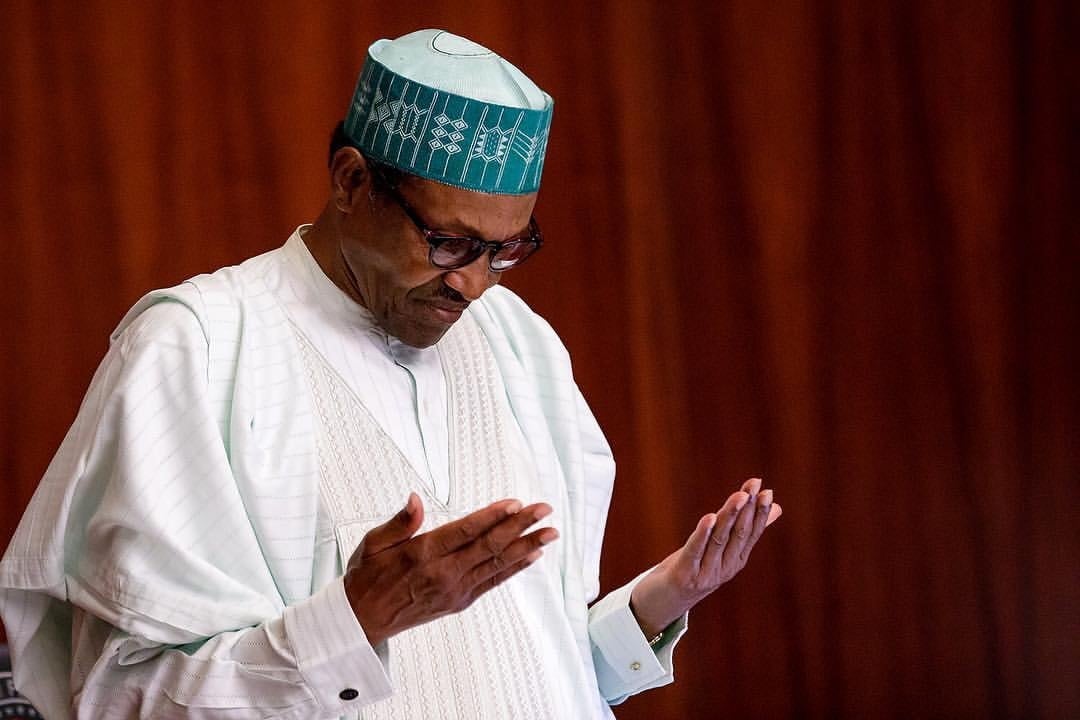
These days it is rare for one to tune any of the news channels or scroll the social media and escape the ugly cacophony of voices emanating more from eminent patriots, who are bemoaning our dangerous slide into one-party state.
One is compelled to share their apprehension, because all indications point towards that direction.
For it is impossible to ignore such resounding outrage- “Nigeria Sliding into One-party State, Opposition Under Threat.” Senator Bala Mohammed, Chairman PDP Governors Forum, “One-party states are often based on a defined ideology such as communism in China and Cuba. A one- party state is an authoritarian state.” Professor Adele Jinadu, a political scientist, scholar and theorist.
Methinks their apprehension is genuine because we had experienced one-party state in the 2000s, an unintended outcome of the first phase of the much cherished 4th Republic.
In this era (1999-2007), Chief Olusegun Obasanjo, as president, nearly subverted our fledgling democracy. He embarked on moves antithetical to liberal democracy, and multi-party system, which is adjudged as the hallmark of good governance and liberal democracy.
Multi-party system is democracy at its zenith, especially when it is spiced with two dominant political parties, where at each electoral circle, electorate have the inalienable rights to vote without encumbrance.
Accordingly, we start first by delving into why Buhari’s incarnate is imperative at this point, and how Buhari halted one-party state when it was stoked in the 2000s.
This brief exploratory journey will reassure us why a Buhari incarnate will definitely halt one-party state on or post 2027 general elections.
Methinks it is pertinent one recounts how Buhari’s entry into partisan politics in 2002 pulled Nigeria out of the dangerous slide into the illiberal autocracy cul de sac.
The mission commenced when Buhari sauntered into partisan politics in 2002 and set up The Buhari Organisation (TBO). His entry generated wild jubilation and some eminent politicians like Rt. Hon. Chuba Okadigbo of blessed memory celebrated it hilariously.
One remembers asking Okadigbo why such jubilation and he predicted that Buhari will one day win the presidency and that even if he did not win he would halt the dangerous slide of Nigeria into one-party state. At the fullness of time his prediction was absolutely correct.
Okadigbo and his ilk celebration was reinforced by the fact that one, Buhari enlisted in the defunct All Peoples Party (APP) main opposition party, not the comfort zone of the ruling party and secondly because of his stoic integrity quotient and strength of character.
Okadigbo reasoned that no amount of carrots and stick will sway him to the then president, Chief Olusegun Obasanjo’s grand plan to railroad Nigeria into one party state.
The phobia for Obasanjo’s design was based not only on the fact that he earlier in print canvassed his preference for one-party state. Rather they emphasised how prior to 2003 general elections Obasanjo capriciously maneuvered and wooed the defunct Alliance for Democracy (AD) governors to support his second term bid and pledged to reciprocate.
As foreseen by pundits Obasanjo’s pledge to the governors was breached, this led to the defeat of all the AD governors of the South West in the 2003 general elections, except the cat with nine lives – President Tinubu – then governor of Lagos State.
As the saying goes sequel is usually worse, with this Machiavellian plot President Olusegun Obasanjo, by 2004 had emerged as the dominant political force, controlling the presidency, a majority in the National Assembly, the judiciary and most state governments.
The other anti-democratic tendencies were gunpoint serial changes of PDP Chairmen and Senate Presidents. Indeed pundits blamed Obasanjo’s authoritarian antics for Okadigbo’s impeachment as Senate President.
The one-party plot was emphatically manifested when the then National Secretary of his party, Chief Vincent Ogbulafor openly declared that PDP will rule uninterrupted for 60 years, a prelude to railroad Nigeria into a de facto one-party state.
It was at this crucial juncture that Buhari emerged as a Daniel come to judgment, and the face of opposition politics, who frowned at the infamous PDP boast of ruling for 60 years.
Buhari stood firm and mobilised extensively, as proof that a credible opposition could exist. His defiance emboldened other parties and activists to resist what they perceived as Obasanjo’s attempt to railroad Nigeria into a one-party state.
To cap the figure face of opposition, Buhari not only contested the 2003 presidential election under the All Nigeria Peoples Party (ANPP), but polled unprecedented 12 million votes, the offshoot of the famed Buhari’s 12 Vote-Bank, garnered in four elections within a decade plus (2003, 2011, 2015 and 2019).
He though lost the first attempt, he showed his stern resolve by rejecting the results, became the rallying point and headed to the Presidential Election Tribunal with a team of lawyers headed by Chief Mike Ahamba, SAN.
The Presidential Election Tribunal led by the President of Appeal Court, Umaru Abdullahi, JCA, at the end of gruesome and torturous 18 months ruled against him.
Buhari’s extensive legal battle in pursuit of justice became the milestone, exposed deep flaws in Nigeria’s electoral process and kept the issue of multiparty system in the front burner of national conversation.
In his primed effort to halt one-party state authoritarianism, Buhari embarked on post-election tours and public engagements. These dramatic events galvanised opposition supporters, particularly in the North, solidifying his cult followership and creating a solid counterweight to PDP’s dominance.
Naturally his opposition and large following internationalised the struggle and drew global attention to Nigeria’s democratic deficits.
In essence, Buhari’s role in 2004 was not merely photo-up about contesting an election. It was about safeguarding Nigeria’s multiparty system at a critical juncture, as he made sure that he contested presidential elections in 2003, 2007, 2011 and eventually won in the 4th attempt in 2015.
This uncommon electoral victory was courtesy of the historic merger of opposition parties – ACN, ANPP,CPC, factions of APGA, DPP and CSOs into All Progressives Congress (APC) in July 2013.
It is with nostalgia that one remembers how Buhari rose to his feet when news filtered out that Obasanjo was allegedly plotting for 3rd Term, in 2006.
Buhari’s steadfast opposition, strategic meetings with National Assembly members, ensured that National Assembly did not allow the 3rd Term plot to stand.
He reinforced and made Ken Nnamani and Aminu Masari, Senate President and Speaker respectively, to appreciate the support of greatest number of Nigerians.
This is the death knell of one-party state, inspite of N50 million handout allegedly doled out to each member of the National Assembly.
This brief cursory analysis is how Buhari utilised his arsenal and halted the institutionalisation of one-party state. This one classify as the most dramatic and momentous episode in the annals of Nigerian democracy.
Consequently, the story of Nigerian democracy in the early 2000s cannot be told without acknowledging the critical role Muhammadu Buhari played in keeping multiparty system alive.
From the above analysis nobody in his right senses will outrightly blame those who continually hold the firm belief and insist that one-party state authoritarianism is hovering in our horizon.
Truly as aforementioned their fears are founded on the premise that it is becoming difficult by the day to locate the kind of Buhari’s personae.
For clarity purposes and without partisan or ethno-religious colouration, it is imperative for the multitude of eminent opposition personalities to as a matter of urgent national importance to fish out among its ranks Buhari incarnate.
Okechukwu is a former minister of aviation