
Buhari’s second term: A tall order
The swearing-in ceremony of President Buhari for his second and final tenure in office along with his unusual demeanor of silence is the easiest part of four-year long haul. The conventional wisdom that has forced Nigeria into a bird nest of circus show, which traditionally abhor innovations, critical thinking and imagination may well, prevail. Already, […]
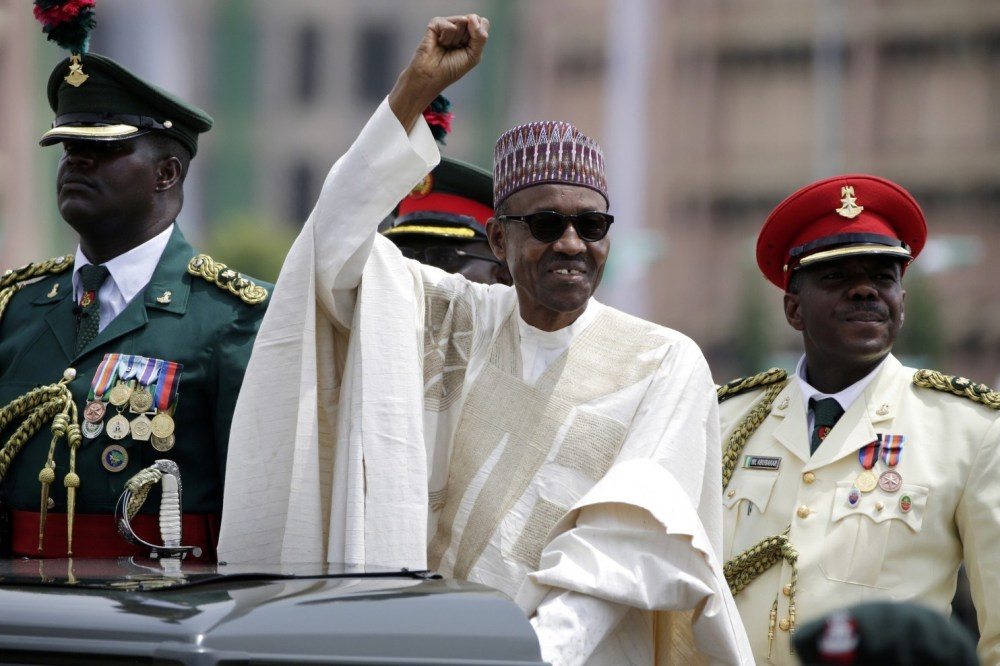
The swearing-in ceremony of President Buhari for his second and final tenure in office along with his unusual demeanor of silence is the easiest part of four-year long haul. The conventional wisdom that has forced Nigeria into a bird nest of circus show, which traditionally abhor innovations, critical thinking and imagination may well, prevail. Already, the political air is heavily inundated with everything that has prevailed in more than half a century of the country’s life; narrow elite accommodation superficially focused on political trade-offs and pecuniary benefits even as the result is the explosive social condition of increasing chaos and anomie. The perennial deficit in imaginative insight to contextualize the challenges of the largely unresponsive and socially insensitive political framework would ensure the widening gap between the allure of rhetorical flourish and the real critical existential condition.
By now, President Buhari’s integrity capital his obvious political mileage that puts him, beyond his peers has nearly evaporated, especially with alleged self-serving gangs of consort entrenched in his innermost circle. The depth of Buhari’s policy insight have always been suspect and was in the last four years worsened by host of political baggage carriers he amassed in his odyssey to the presidency. In the past four years, the three-pronged policy of securing the country, managing it efficiently and fighting corruption, consistently outlined by President Buhari as his government mantra has made some appreciable mark but not on account of consistent policy focus.
The nominal decline of the Boko Haram insurgency was largely on account of the declining fortunes of international terrorism fostered by the collapse of Syria’s anti-regime terrorist group and their support network of conservative Arab regime backers. The strong Russia’s military effort to thwart the regime-change agenda of the West that put into disarray the extremist forces lined-up to achieve it, mortally disrupted trajectories of local extremist group in the pursuit of both there military and political enterprise.
Boko Haram, a high flyer in the terror business first fractured along the line of the deconstructing international terror groups and with this, became more susceptible to local military pressure.
The fortune of the Nigeria military authorities in putting the Boko Haram in disarray, profited largely from the disintegration of the international terrorist movement than a focused military strategy. Though, funds and equipment were far more forthcoming than in the previous era, in asymmetric warfare of containing insurgency, these have little bearing because intelligence, infiltration and espionage is more critical to defeating insurgency, especially those without popular support.
In managing the economy in the past years, common sense has been more evident than thoughtful policy trajectory. while policy focuses on incremental consequences with value creation and multiplication as the core driver, common sense approach is fixated on filling the short term gap that whitewashes the incumbent actor as better than his predecessor but leaves him or her clueless, as to what next.
The fight to eliminate corruption has actually left the soap box, from where it has been passed off as fanciful rhetoric in the past.
But to attain any degree of meaningful success in combating corruption and turning its corrosive effects to genuine enthusiasm for national reconstruction, President Buhari must find ways, to as the Chinese leader, Xi Jinping said in his report to the 19th National Congress of the Communist Party of China last year that “we will strengthen deterrence so officials don’t dare to, strengthen the cage of institutions so they are unable to and strengthen their vigilance so they have no desire to commit acts of corruption.” While acts of corruption especially the humongous ones that Nigeria’s political fat cats and their surrogates in public and private sector like to perpetuate should be punished heavily, “the cage of institution should be strengthened so that those in bed with corruption are unable to perpetuate the act.”
It is likely that the festering atrophy that has defined the first term of President Buhari would usher him to retirement after the next four years except if he massively shakes down the perennial structures and strictures that sustains lifeless political process that perpetuates and reproduces indolence and hedonism.
The liberal democratic project espoused in the constitution has the entrenched deficit of foisting institutions defined by their dysfunction and rigid formalism than platforms of citizen engagement and service delivery.
The historical and social condition, conducive to functional and liberal democratic order is patently absent and politicians who are supposed to create the enabling conditions, rather take advantages of institutional weakness and ambiguity to turn it into a game of revolving doors.
The most evident result of the political paralysis is profound alienation and consequent exclusion of the large majority of citizens who seek several anti-social methods including wide-spread criminality and even insurgencies to force themselves into reckoning. The fundamental law of the country or the constitution designed out of the context of Nigeria’s social and even historical condition has been largely unable to foster some basic social and political consensus. It has generous definitions of public offices to hold and has little socially functional provisions that can generate consensus and solidarity. Law and more importantly, the basic law or the constitution is an instrument or mechanism for the regulation of the social order. Its essence is far beyond the stretch of legalism because it is the concentrated expression of the popular will outlined in letters. In searching to interpret the constitution, it is the spirit that must be invoked and not the letters.
The ubiquitous social constraint entrenched in the current constitution, shackles it from functioning as the key enabler in the construction of national consensus that is broadly inclusive of all the social strata.
President Buhari second term which just began is mostly likely to be lock down in a structural gridlock, constraining the best of his intentions to bring about improved living conditions for majority of Nigerians and tackle the debilitating elite scourge of corruption. The issue of improving living conditions for majority of the people and reining in, the excesses of the elite in abusing and manipulating public office, will not come about by mere threats or just goodwill to do the right things.
The will to re-frame the current political outlook and radically alter the narratives it has engendered will require a bold political action – a framework of social inclusion and broad political participation calls for a critical rethink of some of the traditional issues that are now entrenched in the country’s life.
The tall order of President Buhari’s second term is attainable but would require a serious reconsideration of the whole range of issues that appear settled and which, with a critical look at the conditions of the majority of Nigerians would simply be far from settled.
Mr. Onunaiju wrote this piece from Abuja