
Bwala faults EFCC chair’s press briefing on yahaya bello, says ex-kogi gov on media trial
Daniel Bwala, lawyer and public affairs analyst, has criticized the Economic and Financial Crimes Commission (EFCC) over the allegations against former Kogi state governor Yahaya Bello. Bwala, a member of the Peoples Democratic Party (PDP)’s presidential campaign committee in the 2023 general elections, condemned the “trial by media” approach by the agency. The legal practitioner […]
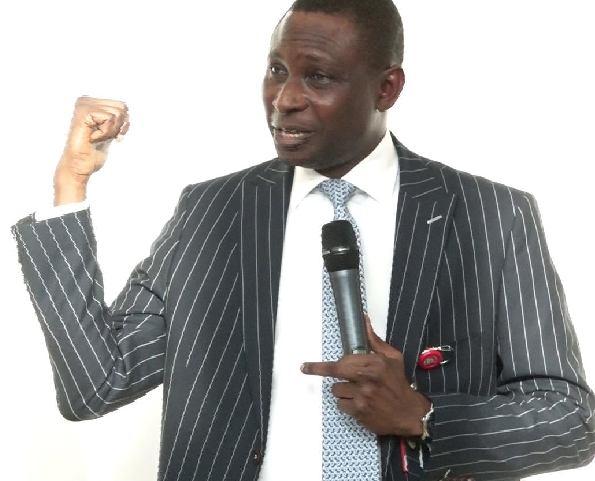
Daniel Bwala, lawyer and public affairs analyst, has criticized the Economic and Financial Crimes Commission (EFCC) over the allegations against former Kogi state governor Yahaya Bello.
Bwala, a member of the Peoples Democratic Party (PDP)’s presidential campaign committee in the 2023 general elections, condemned the “trial by media” approach by the agency.
The legal practitioner who was reacting to the recent press briefing by the EFCC chairman, Olanipekun Olukoyede, accused the commission’s boss of conducting public discussions akin to a courtroom trial, where media outlets act as judge and jury.
Speaking on Arise TV’s morning show today, Bwala said: ”What happened yesterday was like a prosecutor in court doing his opening address in the view of prosecuting the matter. And who was the judge yesterday? it was the pressmen.
”That same privilege, Yahaya Belo does not have to also state his own case. So, we can call it a complete trial by the media.
”This is one of the many reasons why people tend to ask the question, is the commission actually intending to prosecute, or is the commission indirectly giving an opportunity for the accused to escape?
”Because this same thing is like it has always been playing in EFCC’s approach to prosecution, which has led to so many high-profile cases going out of hand.
”Like, for example, if you give a forensic analysis of what he said in the press yesterday, a right-thinking member of the society would say this was a planned script to give Yahaya Belo an escape route.
“Why did I say that? One, the trial in Nigeria is a trial not by jury. Even trial by jury is not a trial by the media. Two, having submitted a charge to court with the evidence that he has been granted an order of substitution and he has served Yahaya Belo through his counsel, he has submitted to the jurisdiction of the court. Was there any need to hold a meeting and begin to argue the substance of the charge?
”Three, some of the things he said yesterday has created more doubt and fed into the allegation of Yahaya Belo that he would not seek justice because it was a persecution.
”Otherwise, let me tell you one or two things. One in the press yesterday, he said he accorded a special privilege and respect to Yahaya Bello. That same privilege was not given Bobrisky. That same privilege was not given to others.
”The procedure in EFCC is, except if they change it, they will write to you. That’s why there will be that evidence that you were invited because it falls on the fulcrum of the commencement of a trial that the accused must have been invited for investigation.
”He even said yesterday that we don’t need to even take his statement in order to charge him. That means you’ve already done what you needed to do. So why is the insistence to arrest him?
“And then when you open your mouth before the press to tell them that you said, okay, you come through the back, I’ll ensure you come to my office, then the operators will come to my office, the investigators, and then they will investigate.”
Bwala stated that the comments of Olukoyede suggest the EFCC chairman has been breaching the protocols of the anti-graft commission.
He accused the EFCC chairman of building a narrative against ex-governor Bello, using the media instead of the law courts.
He further queried the EFCC about when it would commence criminal trials to get the defendant convicted instead of running to journalists.
His words: ”You are trying to say that as chairman, you can breach protocol and procedure that you set. Does everybody you invite to that commission get the same privilege? Now, is the very concept that everybody is equal before the law and nobody is above the law applied?
”He now went ahead to talk about the substance in the charge sheet. So, what was he actually trying to achieve? He wants to convict Yahaya Bello before the media so that if the substance of the charge eventually fails, the media can then build a narrative that the judge was bribed or that nobody wants EFCC to succeed.
”There is no country in the world where you take that path, you end up succeeding. The energy can only be challenged in one direction. Unfortunately, EFCC chose to do it through the media rather than in court.”