
Cashless rollout chaos at airports
The recent drama over the rollout and quick reversal of Nigeria’s cashless policy at airports highlights ongoing issues with the country’s lack of planning. On March 1, 2026, the Federal Airports Authority of Nigeria introduced a cashless policy that required travellers to use digital payment channels such as the Go Cashless Card, E-Tags, VIP Stickers, […]
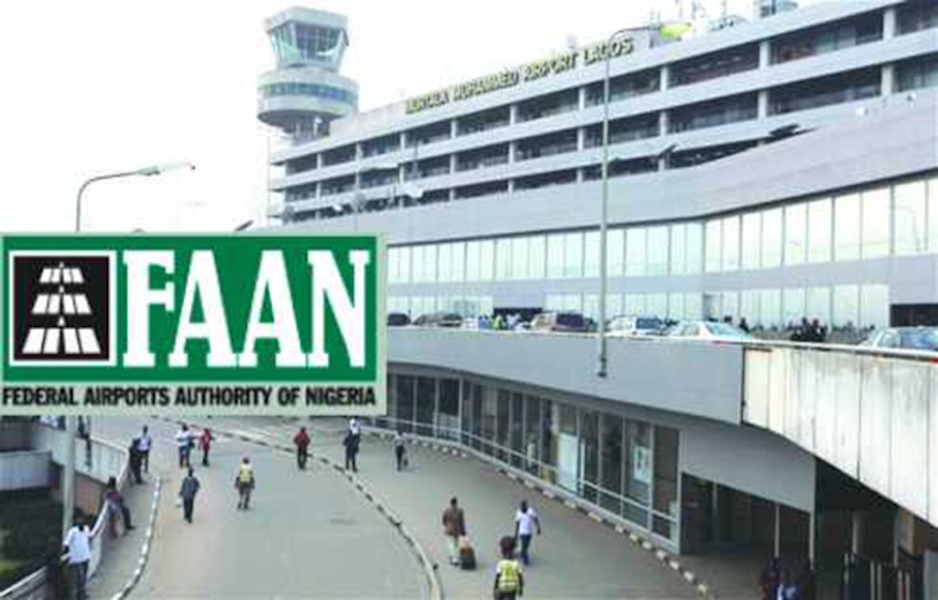
Federal Airports Authority of Nigeria (FAAN)
The recent drama over the rollout and quick reversal of Nigeria’s cashless policy at airports highlights ongoing issues with the country’s lack of planning. On March 1, 2026, the Federal Airports Authority of Nigeria introduced a cashless policy that required travellers to use digital payment channels such as the Go Cashless Card, E-Tags, VIP Stickers, or bank cards.
However, the policy, tagged “Operation Go Cashless,” was big only in name and not in implementation. Its introduction led to chaos at the nation’s major airports in Lagos, Abuja, and other cities due to poor prior preparation. The queues caused by the payment points led to traffic gridlock, as most passengers had not obtained the cards or pre-registered them. In a move characteristic of Nigeria’s policy framework, FAAN went into frenzy, issuing more than 40,000 of the cards within three days.
This is not new. It reflects the tendency in Nigeria’s policymaking to announce policies first before thinking through how such measures would be implemented. Our policymaking process, as amply demonstrated in this latest debacle, fails to ensure that the system for implementing a policy exists before the announcements. This kind of unprepared approach often leads to chaos and trouble for citizens rather than delivering the intended benefits.
A few cases come to mind in the wake of the latest wave of what Nigerians euphemistically regard as “policy somersault.” We witnessed in this country a disastrous recruitment exercise organised by the Ministry of Interior for the Immigration Department on March 15, 2014. The poorly organised exercise led to a stampede at the venues of the event in Abuja and other cities, leading to the death of at least 15 job seekers, purely due to inadequate planning for the recruitment.
Nigerians also recall the infamous naira redesign policy organised by a former governor of the Central Bank of Nigeria, Godwin Emefiele, in late 2022. Right under the watchful eyes of Muhammadu Buhari, and without the initial involvement of the CBN Board, the then governor went ahead with the exercise and inflicted upon Nigerians an uncommon suffering never felt in the nation. The naira currency dried up from circulation; Nigerians could not withdraw money from their bank accounts.
Nigerians were forced to “buy” naira with naira, such that a bank customer who wished to withdraw, say, N20,000 would have to part with as much as N5,000, effectively devaluing the currency. The currency exchange policy visited so much punishment on Nigerians, leading to some deaths. Some patients in hospitals died because their families could not access their funds in banks to make payments or purchase drugs. All these happened because of an ill-conceived, poorly implemented policy.
Daily Trust supports FAAN’s cashless policy. Its aim to reduce cash handling, improve transparency in revenue collection, curb corruption, and modernise the nation’s airport operations is quite commendable. All well-meaning Nigerians should support it since it has the potential to curb leakage from the public purse.
However, we insist that it must be executed properly. The policy should be implemented in phases, with an initial phase during which all potential challenges would be identified and addressed. That phase should be devoted to publicity that enables the public to be informed and buy into it. Every Nigerian has the right to be informed of the existence of such a policy, instead of it being imposed on them overnight.
A policy or measure embarked upon by the government should not result in chaos, not to mention death. During the short period the cashless policy lasted, the flying public was subjected to so much inconvenience, including people missing their flights. These were caused by unclear directives and guidelines as to what airport users were supposed to do.
The disruption attracted the attention of Bola Tinubu, who, at a Federal Executive Council meeting, ordered the suspension of the new policy. The president argued that the number of passengers missing their flights on the scale reported was at variance with the aim of the new policy.
These are signs of weak policymaking, which can only lead to disasters. The process should be seamless so that people and businesses do not suffer. The essence of every policy is to advance the social and economic system, not for it to constitute a wedge in the wheel of progress.
As the aviation minister and his lieutenants return to the drawing board, Daily Trust hereby calls for an overhaul of Nigeria’s policymaking framework. There is an urgent need to review the policy framework in Nigeria if the country hopes to advance meaningfully.
Similarly, this should serve as a lesson to other government agencies planning similar programmes. The interest and welfare of Nigerians should lead any such plan.