
CBN’s MPC jacks interest rate to 18%
Says money in circulation hits N1trn Allays fears over banks’ exposure to failed SVB The Monetary Policy Committee of the Central Bank of Nigeria (CBN) has raised the monetary policy rate (MPR), which measures interest rate, from 17.5 per cent to 18 per cent. This is coming on the heels of Nigeria’s inflation rate rising […]
- Says money in circulation hits N1trn
- Allays fears over banks’ exposure to failed SVB
The Monetary Policy Committee of the Central Bank of Nigeria (CBN) has raised the monetary policy rate (MPR), which measures interest rate, from 17.5 per cent to 18 per cent.
This is coming on the heels of Nigeria’s inflation rate rising to 21.91 per cent amid the lingering scarcity of cash.
The MPR is the baseline interest rate in an economy; every other interest rate used within an economy is built on it.
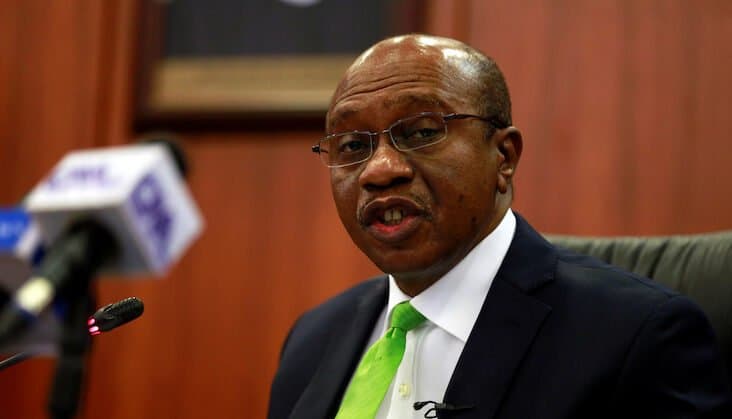
The apex bank governor, Godwin Emefiele, read the communiqué after the committee’s meeting at the CBN headquarters in Abuja yesterday.
Emefiele noted that the committee’s debate was whether to continue its rate hike to further dampen the rising inflation trajectory or hold on to observe emerging development and allow for the impact of the last five rate hikes to permeate the economy. Loosening, in the view of members, would gravely undermine the gains achieved so far.
The MPC noted that while the continued rise in headline inflation remained a significant problem confronting the economy, other macroeconomic variables are however moving in the right direction, despite observed headwinds.
It observed the continued upward risk to price development around expectations on the removal of the PMS subsidy; rising prices of other energy sources; continuing exchange rate pressure; and uncertain climatic conditions, which the members said, provide a compelling argument for an upward adjustment of the policy rate, albeit, less aggressively.
Emefiele said the committee members voted to hike the rate by 50 basis points to 18 per cent, retain the asymmetric corridor at +100 and -700 basis points around the MPR, retain the cash reserve ratio (CRR) at 32.5 per cent and liquidity ratio at 30 per cent.
Money in circulation hit N1trn
On the cash squeeze in the economy and compliance with the Supreme Court judgment, Emefiele said: “Before the naira design, we said there was about N3.23 trillion in circulation and about N500 billion in the banking system and N2.7 trillion outside the banking system.
“As of yesterday, the money in circulation is roughly close to a trillion naira and the CBN continues to pump the newly designed currency into the market but the truth is that at some point we need to reassess again to know whether the currency in circulation has attained an optimal level so as to be able to put in place measures that will ensure that we don’t go back to what we had before; where people were keeping a lot of money outside the banking system for their own personal benefit.”
Says no pass through Impact of SVB collapse on the Nigerian financial system
Emefiele further disclosed that the MPC also discussed the recent bank failures in the US and Switzerland, all of which occurred following the persistent interest rate hikes in the US, and how this has adversely impacted the broad portfolio of banks in the US.
The MPC pointed out that the Nigerian banking sector remains resilient due to stringent prudential guidelines. For emphasis, the liquidity ratio declined to 43.1%, but remained above its prudential limit of 30%, while the capital adequacy ratio increased to 13.7%, within the prudential limit of 10 and 15%.
Furthermore, the committee noted that the NPL ratio remained unchanged at 4.2%. However, a tight prudential regime is required to ensure that NPL remains below its prudential benchmark of 5%.
MPC concerned with inflation rather than price stability – Uwaleke
A finance expert and President of Capital Markets Academics of Nigeria (ACMAN), Prof. Uche Uwaleke, while reacting to the latest MPC decision, said the CBN should have maintained monetary parameters
“It’s apparent the MPC is still concerned about rising inflation and the pressure in the forex market against the backdrop of its primary mandate of maintaining price stability.
“However, I had expected MPC to maintain a hold position considering the significant drop in currency in circulation occasioned by the currency redesign policy and the fact that the inflation rate actually decelerated month on month between January and February 2023.
The adverse impact of the recent cash scarcity on productive activities as well as the conclusion of election season should have provided justification for a hold position,” Prof. Uwaleke also said.
He however noted that the increase in the MPR by 50 basis points is a signal to financial markets that the CBN has begun the process of a rate-hike pause, adding that he expects a complete halt in policy tightening will most likely happen at the next scheduled meeting of the MPC in May.
“This is necessary in order to stimulate economic activities and create job opportunities,” he added.
By Sunday Michael Ogwu & Philip Shimnom Clement