
Centre calls for national framework to track poverty reduction
The Development Research and Projects Centre, dRPC, a Nigerian indigenous non-profit organisation, has urged the federal government to develop a national framework to monitor and evaluate all humanitarian interventions in Nigeria and track implementation across the country as a way to ensure harmonisation and achieving collective poverty reduction across the country. In a memorandum submitted […]
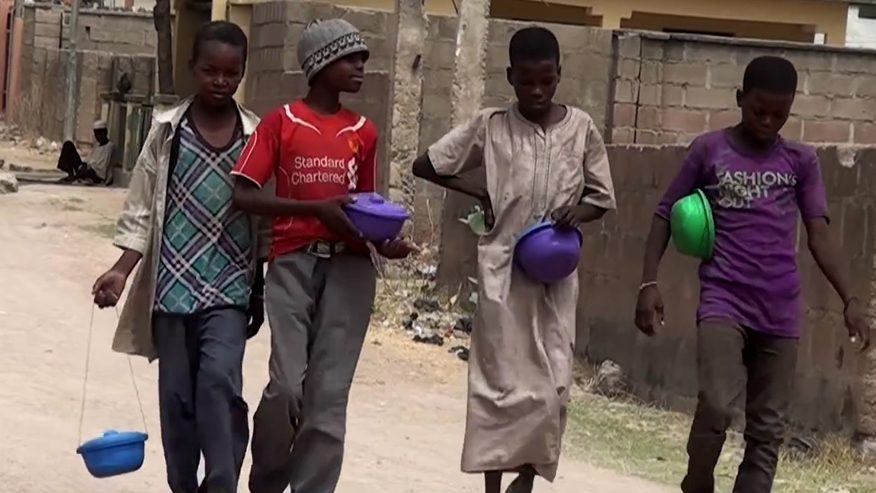
A section of Tsangaya school pupils in Kano.
The Development Research and Projects Centre, dRPC, a Nigerian indigenous non-profit organisation, has urged the federal government to develop a national framework to monitor and evaluate all humanitarian interventions in Nigeria and track implementation across the country as a way to ensure harmonisation and achieving collective poverty reduction across the country.
In a memorandum submitted to the maiden edition of the National Council on Humanitarian Affairs and Poverty Reduction in Calabar on Thursday, the executive director of the dRPC, Dr Judith-Ann Walker, challenged the council to develop a national framework that would enable the operationalisation and coordination of all humanitarian interventions to align with the central delivery coordination unit established by President Bola Ahmad Tinubu in 2022.
The memorandum provided for the harmonisation of all indicators, goals and objectives, timelines and all points of synergies between federal and sub-national to track related humanitarian and poverty interventions in Nigeria.
At present, she said humanitarian affairs and poverty reduction interventions varied from state to state, presenting a challenge to coordinated and harmonised monitoring and evaluation of poverty reduction in Nigeria
The memo, therefore, challenged the federal government to create a framework that would provide a clear objective and indicators to track humanitarian outcomes, such as beneficiary reach, service quality and impact on vulnerable groups in Nigeria.
The maiden Council on Humanitarian Affairs received 99 memoranda, out of which 37 were approved, 19 were merged, 25 stepped down and others had no recommendations.
Earlier, the Minister of Humanitarian Affairs and Poverty Reduction, Dr Bernard Doro, assured the federal government’s shared commitment to restore life and lift Nigerians out of poverty, adding that the theme of the council in 2026, ‘ Beyond the national; strengthening sub-national and multi stakeholder’s synergy for a unified approach to humanitarian response and poverty reduction, points to the fact that isolated interventions cannot restore hope to Nigerians.
The minister disclosed that the maiden national council on humanitarian affairs is a statement that no single institution or government can resolve the humanitarian challenges bedevilling Nigeria except through multi stakeholder intervention with all governments at all levels in the country.
He disclosed that the federal government had provided conditional cash transfer to over 34 million vulnerable persons and is targeting 50 million Nigerians before the end of the year.