
Changing narratives of education in Kebbi
Education has indeed suffered a nosedive in Kebbi state. The history of this unfortunate state of affairs has been intractable and long. Even though successive governments have done their level best to turn it around, not much of an improvement had been recorded. The testimony of this unfortunate fall is evident in the overall performance […]
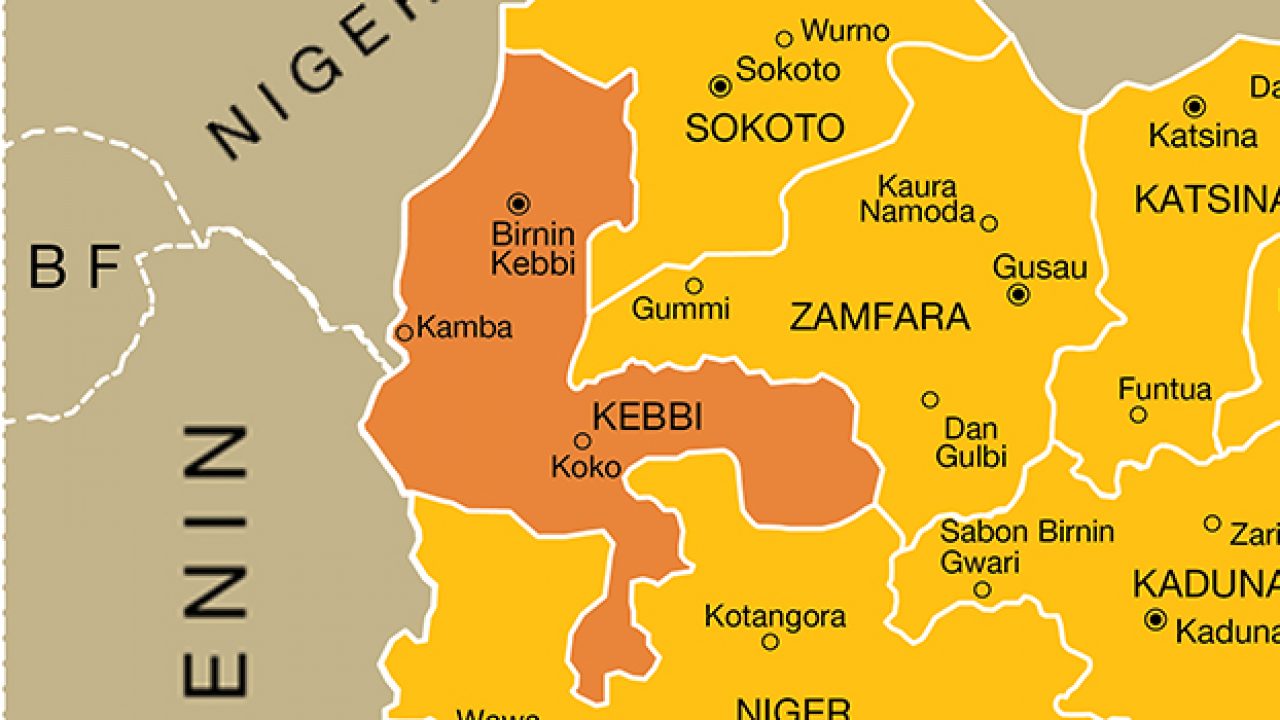
Kebbi State Map
Education has indeed suffered a nosedive in Kebbi state. The history of this unfortunate state of affairs has been intractable and long. Even though successive governments have done their level best to turn it around, not much of an improvement had been recorded. The testimony of this unfortunate fall is evident in the overall performance of Kebbi state students in qualifying examinations across the state.
In most of the examinations, especially WAEC and NECO, the plunge was noticeable on the table of performance nationwide year in, year out. Kebbi used to be in the forefront of stellar performance and evidently, the role Kebbi had played in nation building right from the early years of struggle for independence, to the effort to keep the nation as one indissoluble union had remained indelible and unmatched in the country. At all levels of nation building, educational pursuit, the military and other security forces, politics and farming, Kebbi state is seen as an important factor and player. The red flag, however, appeared in the WAEC, NECO and JAMB 2018/2019 examinations year when Kebbi was consigned to the bottom five.
It was therefore sad that instead of leapfrogging to the zenith of its own set standards, the state deteriorated so much that, by the time the present administration of Governor Atiku Bagudu took over in 2015, the situation had reached a crisis level, requiring very critical steps and measures to remedy it. Although the response of the administration did not immediately bear results, it was apparent that with time, some glimmer of improvement was bound to show. All the indices were showing some level of appreciation in the performance template of its students at all levels. How did it happen? The first of the actions taken by the present administration was a deliberate massive procurement of academic materials and rehabilitation of schools across the state. This provided the enabling environment for pupils and students to key into the overall objective of setting achievable standards to change the narratives.
The recruitment of qualified teachers which followed as soon as the signs of improvement became visible is continuing till today in a systematic game plan to sustain the tempo and improve the situation. Just recently, another recruitment exercise of teachers for tertiary, secondary and primary schools took place and fillers obtained from the state Ministry of Education, indicated that the plan was to leverage on the achievements obtained from the provision of instructional materials and massive rehabilitation of schools to change patterns and perspectives as well as to inculcate a different set of ideals for the students.
In another deliberate policy intended to maximize the remarkable improvement, the Kebbi state government set aside Millions of Naira to pay for the examination fees of all secondary schools as well as tuition fees for tertiary institutions including the Universities. This gesture was instrumental to the heightened sense of commitment that was shown by all Kebbi state students across the globe. A veteran labor leader in the state, Alhaji Abubakar Tanko was quoted to have expressed a deepest sense of appreciation to the government for finding it appropriate to help out with the payment of these fees, which he noted has sent signals of its readiness to sincerely address the most challenging problems besetting education in the state. Successive government’s inability to carry students along in the timely payment of such fees was seen as one of the banes of education in Kebbi state. Other challenges such as poor remuneration and lack of refresher training for teachers were also factored in as another problematic areas needing urgent intervention to make the progression suatainable.
Student scholarships too, have presented their own peculiar distraction, making it difficult for Kebbi students in institutions around the world to concentrate on their studies thereby slowing down the rate at which performances were expected to be built on. In its effort to safeguard its achievements, the Kebbi state government recently expended huge resources to settle the backlogs and this too is seen as another masterstroke that has helped greatly to bring about the much needed improvement in the overall performance index across the state. It is instructive to note that the problems associated with the drop in the standard of education in Kebbi state were legion and farfetched. Successive governments have done their best to keep the state at an acceptable level, but the measures put in place did not just work in a manner that will change the unfortunate situation.
There is no denying the fact that the problems are multi faceted and multi dimensional. Some of them have their origin from the environment: some were cultural while others have their roots from economic challenges facing parents. This explains why government’s intervention from the perspective of payment of fees and scholarships as well as expanding the frontiers of economic empowerment through social intervention programs became very instructive. From this point of view, it has become necessary for both the state and federal governments to streamline and harmonize their intervention programs to take into cognizance the need to provide lasting solutions to the most important problems. Parents and the community too have a greater role to play in the way they must inculcate a robust community effort to contribute not just from the perspective of sending their children to school, but from the angle of coming up with community extra mural lessons at ward and village level and strict adherence to societal norms as it affects their own settings.
We should borrow a leaf from how communities join hands with governments in the Southern part of the country to help in learning, moral and character molding of wards. The tendency for parents and communities to stand akimbo and hands off everything about a child’s education and morals must give way to active participation and interfacing to ensure that set educational objectives are attained for the betterment of the country.
Mamman wrote from Junju, Birnin Kebbi