
Charcoal trade threatens forest sustainability – FG
The federal government on Wednesday said the charcoal trade poses a growing threat to Nigeria’s forest sustainability, calling for urgent regulation and a shift toward cleaner energy alternatives. Dr. Aishetu Ndayako, Permanent Secretary of the Ecological Project Office (EPO), stated this at a one-day stakeholders’ dialogue in Abuja, themed “Trade and Trees – Rethinking Charcoal […]
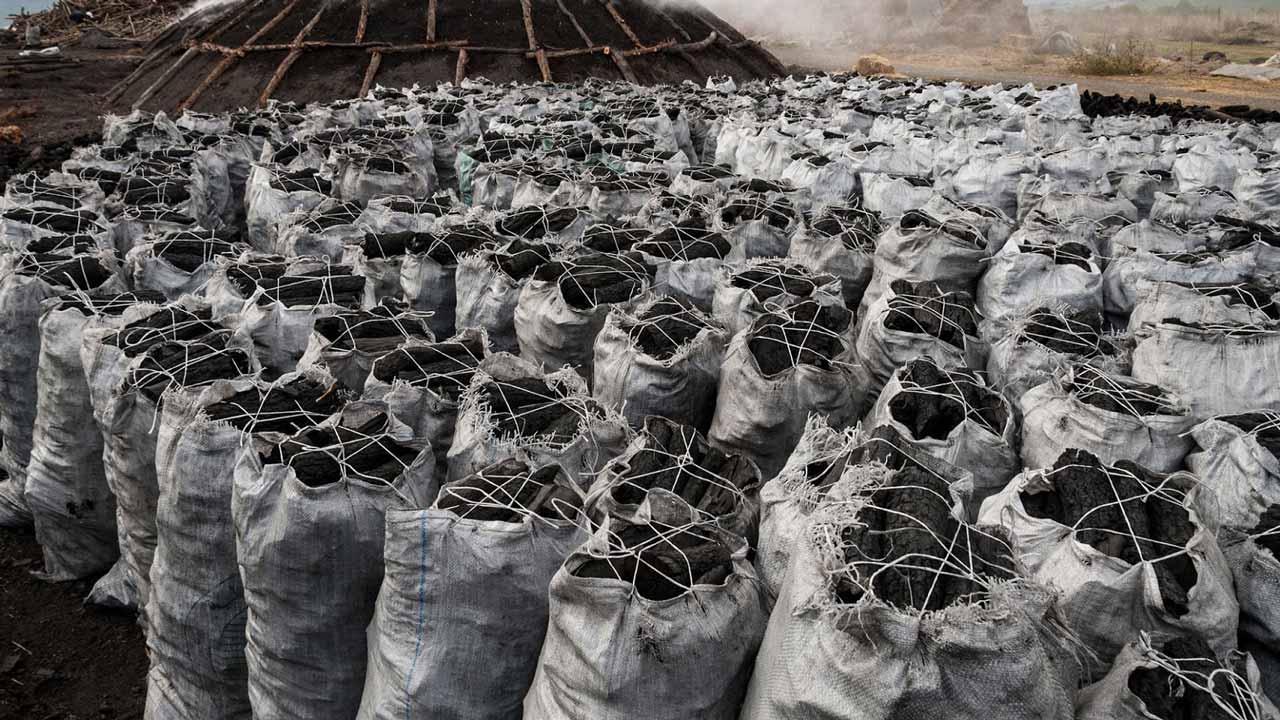
charcoal
The federal government on Wednesday said the charcoal trade poses a growing threat to Nigeria’s forest sustainability, calling for urgent regulation and a shift toward cleaner energy alternatives.
Dr. Aishetu Ndayako, Permanent Secretary of the Ecological Project Office (EPO), stated this at a one-day stakeholders’ dialogue in Abuja, themed “Trade and Trees – Rethinking Charcoal Production and the Vanishing Forests.”
The event was organised by the Centre for Renewable Energy and Action on Climate Change (CREACC-NG) with support from EkoEnergy.
Ndayako described charcoal as a vital energy source for rural and peri-urban communities but warned that its unregulated production has triggered alarming deforestation, ecosystem collapse, and biodiversity loss.
- SIM swap resumes as FG completes data migration
- Eagles B target win against Zanzibar in CHAN warm-up match
“Trees are felled indiscriminately, degrading entire ecosystems with little effort at regeneration,” she said.
She said there is an urgent need to harmonise national policies on forest and biomass energy, and to empower enforcement agencies to regulate charcoal production and trade effectively.
She also called for greater community involvement in sustainable practices like agroforestry, tree planting and a national shift to cleaner alternatives such as LPG, ethanol, and solar cookstoves.
CREACC-NG Executive Director Usman Muhammad noted Nigeria’s position as Africa’s top charcoal producer, with a daily loss of 1.5 million trees contributing to severe deforestation and environmental degradation.
Mohammad urged stakeholders to work together towards a sustainable future, adding that the dialogue marked the beginning of a collective effort to address these pressing issues.
The Minister of State for Education, Prof. Suwaiba Ahmad, said integrating environmental education into the national curriculum would raise a generation that values conservation and understands the environmental cost of unsustainable practices.
“Students are learning about tree life cycles, biodiversity and the importance of sustainability from an early age,’’ Ahmad said.
Ahmad, represented by Mrs Aminulai Modupe, Asst. Director, Environmental Science Education Technology and Science Education Department, called on stakeholders to support community workshops and outreach initiatives that promote charcoal production techniques.
“Producers must be equipped with knowledge that allows them to meet energy demands without destroying the ecosystems they depend on,” she said.