
Christian genocide claim: US designates Nigeria, ‘country of concern’
President Donald Trump’s administration has redesignated Nigeria as a “country of particular concern” over allegations of genocide against Christians. Trump, in a post on social media, on Friday, stated that Christianity in Nigeria faces an “existential threat,” announcing the West African country’s inclusion on a State Department watch list or “countries of particular concern.” “Christianity […]
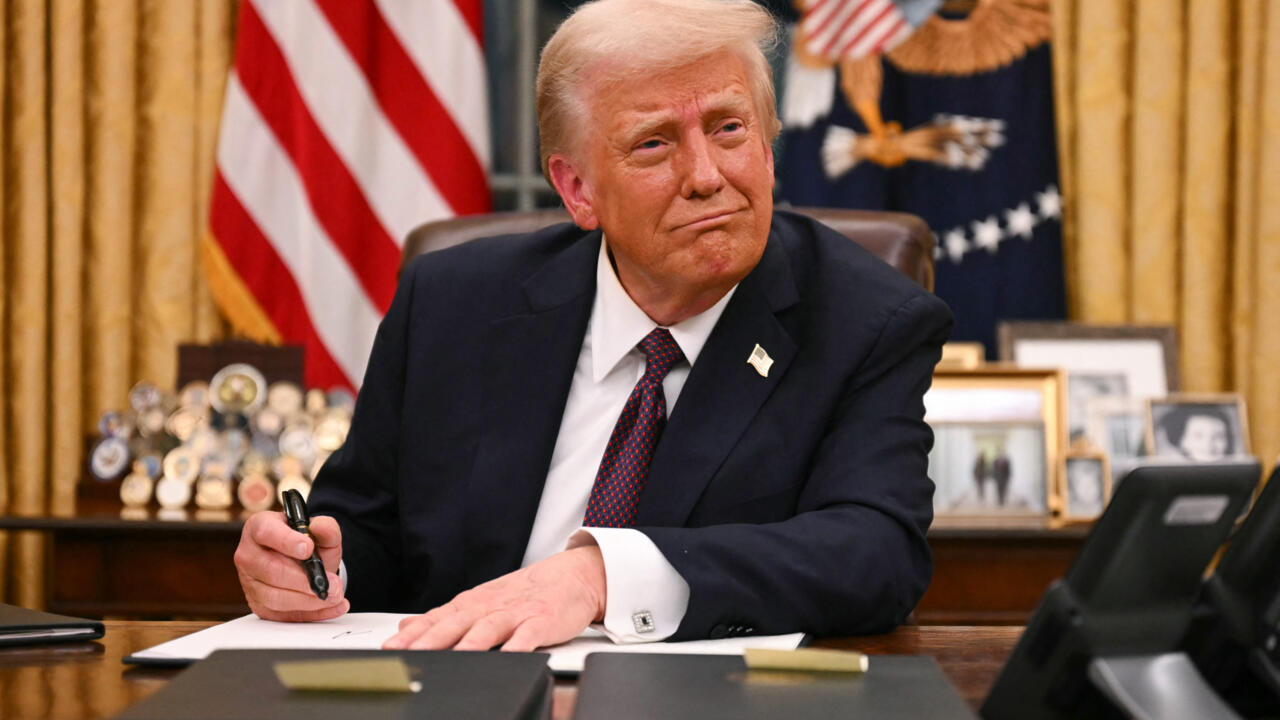
U.S. President, Donald Trump
President Donald Trump’s administration has redesignated Nigeria as a “country of particular concern” over allegations of genocide against Christians.
Trump, in a post on social media, on Friday, stated that Christianity in Nigeria faces an “existential threat,” announcing the West African country’s inclusion on a State Department watch list or “countries of particular concern.”
“Christianity is facing an existential threat in Nigeria. Thousands of Christians are being killed. Radical Islamists are responsible for this mass slaughter,” Trump wrote on Truth Social.
Continuing, Trump wrote: “When Christians, or any such group is slaughtered like is happening in Nigeria (3,100 versus 4,476 worldwide), something must be done! I am asking Congressman Riley Moore, together with Chairman Tome Cole and the House Appropriations Committee, to immediately look into this matter, and report back to me. The United States cannot stand by while such atrocities are happening in Nigeria, and numerous other countries. We stand ready, able to save our Great Christian population around the world!”
- Abuja light rail gains popularity amid operational questions
- Coup scare in Nigeria: Yet another view
According the Independent of UK, Senator Ted Cruz has been pushing for designation of Nigeria as a country of concern due to alleged “severe violations” of religious freedom in Nigeria. This designation, which currently applies to nations such as Pakistan, Afghanistan, and China, could lead to U.S. sanctions.
A bill introduced by the senator last month is awaiting action in the Senate, though its ultimate approval is not guaranteed.
Cruz’s assertions have been amplified by some US celebrities and commentators, often without substantiating evidence, with certain figures going as far as alleging a “Christian genocide.”
His office has not responded to questions, including those concerning his motivation for these allegations.
Efforts to get the reaction from the Presidency last night were unsuccessful.
However, the Federal Government had repeatedly dismissed claims of genocide against Christians in Nigeria.
In a recent statement, the Minister of Information, Mohammed Idris, described the claims as “false and baseless.”
“This is not true. This is not the reflection of what is on the ground. I mean it’s false, where you say over 20,000 churches have been burned. It’s also false if you say 52,000 (Christians killed),” Idris said.
“Where did he get those numbers from? I think this is absolutely absurd. It’s not supported by any facts whatsoever. The Nigerian government rejects that.”
Foreign policy failures fuel global pressure on Nigeria — Ambassador Sarki
A former Deputy Permanent Representative of Nigeria to the United Nations, Ambassador Usman Sarki, told Weekend Trust last night that the recent labeling of Nigeria by foreign governments did not come as a surprise to him.
According to him, the narrative has been in circulation for years, driven by vested interests both abroad and within Nigeria.
“Some Nigerians have long been pushing this narrative — it actually started here. It’s been sustained over the years, and now it has evolved into official foreign policy in countries like the US and Canada. Some Nigerians at home and in the diaspora are actively orchestrating it.”
Ambassador Sarki warned that the implications could be far-reaching, particularly in diplomatic relations.
“There will likely be a review of Nigeria’s relationship with the United States. This development clearly exposes a gap in our engagement with Washington. The US went ahead with its decision without hearing our government’s side or receiving any formal explanation. That points to a trust deficit between our president and theirs.”
He also criticised Nigeria’s foreign policy approach, describing it as reactive and lacking institutional depth. “We don’t manage our diplomatic relations in a professional or strategic manner. We wait for crises to erupt before responding, rather than anticipating and preparing for them.”
Highlighting structural weaknesses, he lamented the absence of senior diplomatic representation at key foreign missions. “Nigeria currently has no ambassador or senior-ranking diplomat at the UN. We lack spokespersons in our foreign missions, which further weakens our voice on the global stage.”
Ambassador Sarki cautioned that the situation could escalate further. “The Americans may now push the UN — through the Human Rights Council or the Security Council — to initiate investigations or other measures. This could lead to sanctions against individuals deemed responsible, followed by sanctions on the government, and eventually on the country itself. They appear ready to escalate step by step.”