
CJN’s Suspension is a Tragedy
President Muhammadu Buhari’s decision on Friday evening to suspend Chief Justice of Nigeria [CJN] Walter Nkanu Samuel Onnoghen based on the “order” of the Code of Conduct Tribunal, with three weeks to go before presidential and general elections, is a tragedy. This is so because his action sidesteps the 1999 Constitution’s clear provisions for removing […]
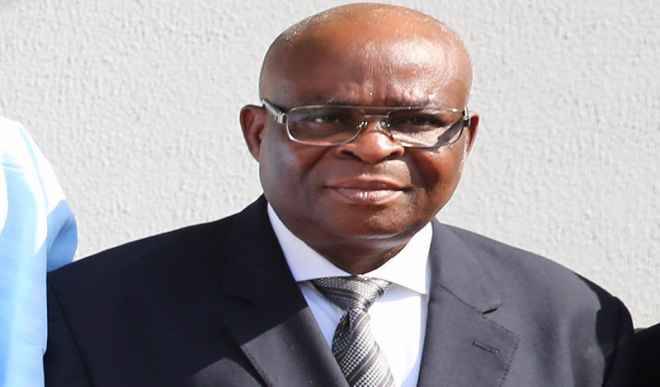
Onnoghen
President Muhammadu Buhari’s decision on Friday evening to suspend Chief Justice of Nigeria [CJN] Walter Nkanu Samuel Onnoghen based on the “order” of the Code of Conduct Tribunal, with three weeks to go before presidential and general elections, is a tragedy. This is so because his action sidesteps the 1999 Constitution’s clear provisions for removing a CJN, assaults the constitutional doctrine of separation of powers, violates the Judiciary’s standing as an independent arm of government, amounts to an Executive attempt to muzzle the judiciary just before elections, heightens the opposition’s fears about abuse of incumbency powers in the elections, caused tension in the country, and sends the wrong signal to Africans and the international community about the fairness of our election process.
Section 292 of the Constitution said a CJN “shall not be removed from office” unless by the stated terms. The President made no reference at all to this section in his statement justifying the suspension, only to a purported Code of Conduct Tribunal order. As some senior lawyers have pointed out, one cannot be ordered to exercise a constitutional power that he does not have. A Supreme Court ruling since 2008 [Atiku versus Obasanjo] made it clear that nothing can be added to the Constitution when it makes a clear provision on an issue. On the matter of removing a CJN, it expressly said it should be done by the president “acting on an address supported by two-thirds majority of the Senate.” A CCT ex-parte order cannot override this provision. This probably explains why the Senate, which is on recess, is urgently reconvening on Tuesday.
In his speech, President Buhari justified his action as an attempt to prosecute the anti-corruption war despite efforts by Onnoghen’s lawyers to stall it. He also added that Onnoghen’s remaining in his position as head of the judiciary intimidated judges at all levels and made them to act speedily in order to help his stalling efforts. We agree with the president that the ideal thing, given the seriousness of the charges against Onnoghen, was that he should have stepped aside until his trial is concluded. He lost a lot of moral authority by not doing so but then, morality cannot trump express provisions of the law.
This country does not have very good traditions about how powerful persons should behave in the face of a moral dilemma. If truth be told, the Buhari Administration did little to deepen this tradition either, because it was seen to shield its own folks who were accused of committing grave misdeeds. Then there is the issue of timing. An all-out effort to remove the CJN on the eve of elections cannot but raise suspicions in many quarters. Onnoghen’s asset declaration forms were lying in the Code of Conduct Bureau’s vaults for many years and should have been interrogated and brought to trial much earlier.
In his speech on Friday, President Buhari spoke about “an unholy alacrity between the time of filing, hearing and delivery of judgment in same” at various courts seeking to impede Onnoghen’s trial. Unfortunately, the same thing can be said about the Executive’s efforts to get the CJN. CCB received a petition on Thursday, concluded investigation within 24 hours [a historical record in Nigeria], announced on Friday afternoon that it was charging him to court on Monday, thus allowing no time for the courts to intervene. Even though the Court of Appeal Abuja Division has put a stop to the CCT trial, the president still relied on its “order” to suspend the CJN. Morally therefore, both sides are on the same plane.
Some supporters of the president’s action have said that former President Goodluck Jonathan did something similar in suspending Appeal Court President Justice Isa Ayo Salami and Central Bank of Nigeria [CBN] governor Sanusi Lamido Sanusi. It is unfortunate that an ugly PDP precedent is being used to justify a current action. Wrongs, however many, never add up to a right and in any case, this Administration was supposed to signify change based on the rule of law. The haste with which the issue is being pursued, the poor timing and the willingness to sidestep due process creates the impression that government has a private agenda to do with the upcoming polls.
This situation has created an unprecedented crisis. As if to underline the seriousness of the situation, Acting Chief Justice of Nigeria Justice Ibrahim Tanko Mohammed said during his first official act of swearing-in members of election tribunals yesterday that “the judiciary is in trying times. You must stand to protect and uphold the integrity of this arm of government.”
Already, the US Embassy in Nigeria, the government of the United Kingdom and the European Union Election Observer Mission have spoken of this development as sending a negative signal on the credibility of our election process. We urge President Buhari to take steps to remove this unnecessary pall cast on the election process and the undue tension generated in the country by revoking his suspension order on Chief Justice Walter Onnoghen. We must stick to the path of law and constitutionality because to do otherwise is to erode the basis of constitutional rule.